Fitzwilliam Museum Travel

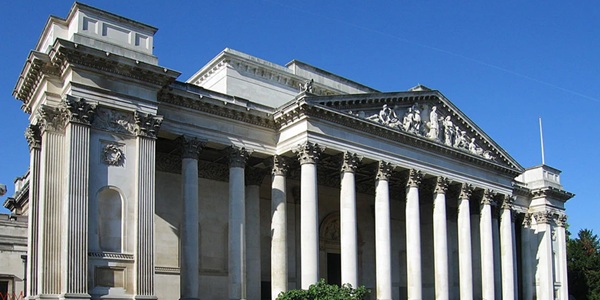
The Fitzwilliam Museum — founded in 1816 through the bequest of Richard FitzWilliam, 7th Viscount FitzWilliam of Merrion (1745-1816), it is the University of Cambridge's most dazzling art and archaeology museum, often described as "a condensed British Museum." FitzWilliam donated his lifetime collection of over 10,000 books, more than 40,000 prints and drawings, 144 Old Master paintings including Titian and Veronese, 130 illuminated manuscripts, together with £100,000 to his alma mater, stipulating that they "shall neither be sold nor lent," ensuring these treasures would serve scholarship and the public in perpetuity. The museum building was designed by George Basevi and completed by Edward Middleton Barry in 1875, its neoclassical style paying homage to the Parthenon in Athens — the Corinthian portico transports you to ancient Rome. The collection exceeds 500,000 objects, from Ancient Egyptian mummy cases to Van Gogh and Picasso, from Persepolis reliefs to Song dynasty celadon — five millennia of civilisation converge here. In 2026, it was shortlisted for the Art Fund Museum of the Year, the world's largest museum prize. The 1-day in-depth tour includes the Ancient Egypt Gallery, Painting Galleries, Decorative Arts and a rest stop at the Courtyard Cafe.

1816
Year Founded
500K+
Objects
£0
Permanent Entry
Grade I
Listed Building
Fitzwilliam Museum neoclassical facade with Corinthian portico and courtyard glass roof
Fitzwilliam Museum, Cambridge
The honey-coloured stone Corinthian portico pays homage to the Parthenon in Athens; the glass-roofed courtyard bathes in soft light, where 500,000 artistic treasures await your encounter in the heart of Cambridge

Fitzwilliam Museum 1-Day In-Depth Tour

From the neoclassical portico to the ceremonial grandeur of the Grand Staircase, traverse Ancient Egypt, the Renaissance, Impressionism and Contemporary art — complete a civilisational pilgrimage spanning five millennia through 500,000 objects

Duration
Half to full day (recommended 2-3 hours core visit)
Main Destinations
Founder's Entrance, Grand Staircase, Ancient Egypt Gallery, Painting Galleries, Decorative Arts, Courtyard Cafe
Best For
Art lovers, history enthusiasts, museum addicts, architecture photography fans, artsy travellers
Budget per Person
£0-£20 (permanent exhibition free, special exhibitions approx £10-£15)
01
Five Millennia of Civilisation & Artistic Pilgrimage
Founder's Entrance & Grand Staircase · Ancient Egypt Gallery · Painting Galleries · Decorative Arts · Courtyard Cafe
Highlights

In the morning, ascend the 18 stone steps of the Founder's Entrance on Trumpington Street — leading to the imposing entrance hall lined with knight armour and classical sculptures, with Richard FitzWilliam's portrait hanging on the main wall, bearing witness to the founder's eternal presence. Pass through to the Grand Staircase — a marble double sweep ascending gracefully under the dome's soft diffused light, as if entering a miniature palace. Turn left into the Ancient Egypt Gallery (Gallery 19) and face the Nespawershefyt coffin set — a painted wooden coffin from 800 BC, the golden faces of underworld gods gazing at you across three millennia; Fayum mummy portraits executed in encaustic capture the real faces of Egyptians under Greco-Roman rule, hailed as "the photography of the ancient world." In the afternoon, climb to the first-floor Painting Galleries to meet Titian's late tragic masterpiece *Tarquin and Lucretia* (1571), Rubens' fleshy *Christ as Saviour*, Tintoretto's *Adoration of the Shepherds*; turn a corner to find Seurat's preparatory study for *A Sunday on La Grande Jatte* — the precise colour dots of Pointillism germinating here; Van Gogh's *Autumn Landscape* (1885) has not yet ignited into flame-like colour, but the seeds of yellow and crows are already sown. Then wander through the Decorative Arts galleries, from Persepolis reliefs to Kangxi blue-and-white and Qianlong famille rose — Eastern and Western aesthetics in silent dialogue. In the evening, settle in the Courtyard Kitchen for coffee and cake under the glass roof, reflecting on the day's artistic pilgrimage.

Attractions
Founder's Entrance & Grand Staircase
The museum's main entrance is approached by 18 limestone steps leading to the imposing entrance hall, which houses a bust of John Tooke and a statue of Prince Albert, with the portrait of founder Richard FitzWilliam on the wall — his will stipulated that this painting must never leave the museum. The entrance hall connects to the iconic Grand Staircase: a marble double-sweep stairway rising elegantly under the dome's diffused light, flanked by 16th-century German knight helmets, polished steel breastplates and classical sculptural casts, creating a theatrical sense of arrival. The building was designed by George Basevi (who tragically fell from scaffolding at Ely Cathedral, after which Barry completed the project), finished in 1875. The Corinthian portico directly references the proportions of the Pantheon in Rome, representing the pinnacle of British neoclassical architecture and is now a Grade I listed building. Cambridge's "Night Climbers" once used the stone lion beneath the portico as their starting point for the famous "Lion to Chimney" climbing route.
Ancient Egypt Gallery (Gallery 19: Ancient Egypt)
The Fitzwilliam's Ancient Egyptian collection is among the finest university holdings in Britain. The gallery's centrepiece is the Nespawershefyt coffin set — the "overseer of craftsmen" from around 800 BC owned two nested painted wooden coffins, their surfaces covered with spells from the Book of the Dead and the golden faces of underworld gods (Osiris, Isis, Nephthys), donated to the museum in 1822 by two Cambridge scholars. The gallery also houses Fayum mummy portraits — 1st-3rd century AD faces painted on wooden panels using the encaustic (wax) technique, a remarkable fusion of Greco-Roman realism and Egyptian funerary tradition, bringing faces from two thousand years ago vividly to life. Other highlights include an alabaster jar from the reign of Seti I, fragments of a Lion Temple relief from the Kingdom of Kush, and a painted wooden model boat from 2000 BC — ancient Egyptians believed such boats would carry the deceased's soul across the underworld river. The 2026 special exhibition "Made in Ancient Egypt" explores ancient Egyptian manufacturing techniques.
Painting Galleries: From Titian to Picasso
The Fitzwilliam's painting collection ranks among Britain's finest assemblies of Old Masters. The Italian Renaissance reaches its peak with Titian's late tragic masterpiece *Tarquin and Lucretia* (1571) — the Roman prince's violence and Lucretia's despair explode with dramatic tension against a dark background; Tintoretto's *Adoration of the Shepherds* (1548) astonishes with the detail of a harpsichord in the foreground. Flemish Baroque is represented by Peter Paul Rubens' *Christ as Saviour* (1624) — Christ with ruddy complexion and steady gaze, subverting the tradition of suffering imagery; Van Dyck's *Madonna and Child* (1628) continues the aesthetic of fleshy sensuality. British painting excels with Gainsborough's elegant portraits and Constable's English countryside scenes. Impressionism and Pointillism: Seurat's preparatory study for *A Sunday on La Grande Jatte* (1884) — a partial experiment for the Art Institute of Chicago's masterpiece; Monet's *Poplars* (1891) captures the fleeting light among treetops. Picasso's *Still Life with Bowl of Apples* (1924) deconstructs everyday objects using the three colours of the French flag; Van Gogh's *Autumn Landscape* (1885) foreshadows the explosive colour to come.
Courtyard Kitchen Cafe & Shop
The courtyard, expanded in 2004, is the museum's modern heart — a glass roof bathing the space in natural light throughout the day, surrounded by greenery and contemporary seating, making it one of Cambridge's most elegant rest spaces. The Courtyard Kitchen, run by Cambridge Dining Co., serves brunch, lunch, cakes and pastries using fresh local ingredients, with hot food available until 3pm and drinks and desserts served all day. Friends of the Museum enjoy a 10% discount on food and shop purchases. The Courtyard Shop sells books, postcards, unique gifts and cultural products inspired by the collection, open 10:00-16:45. In summer months, a Kiosk on the lawn outside the courtyard serves hot and cold drinks, handmade sandwiches and ice cream (11:00-15:00). The courtyard is the perfect place to reflect after touring the galleries — let Titian's reds and Seurat's blue-green dots settle in your memory under the glass roof.
Practical Information
Transport
  • Train from London King's Cross to Cambridge ~50 min
  • ~20 min walk from Cambridge railway station to museum
  • U bus from station directly to museum entrance
  • City centre walkable or by bus (restricted driving zone)
Tickets
  • Permanent exhibitions: Completely free (donations welcome)
  • Special exhibitions: Approx £10-£15 (advance booking recommended)
  • Ages 18-25 & students: Join the Fitz List for free special exhibition tickets
  • Last Sunday of each month: Special exhibitions "pay what you wish"
  • Groups of 10+ must book 2 weeks in advance
Travel Tips
  • Non-flash photography allowed (compact cameras/mobile phones)
  • Large bags must be stored (refundable coin lockers £1)
  • Tuesday/Wednesday mornings are quietest for the best experience
  • Wheelchair accessible from the courtyard entrance

Must-Try Food Near the Fitzwilliam Museum

Courtyard Kitchen

Located in the museum's courtyard cafe, run by Cambridge Dining Co., serving brunch, lunch, cakes and pastries made with fresh local ingredients. Order a Full English Breakfast or smoked salmon bagel with a Flat White under the glass roof — the most elegant rest stop on your artistic pilgrimage. Hot food served until 15:00. Budget £8-£15 per person.

Browns Cambridge

Located diagonally opposite the Fitzwilliam Museum, next to Cambridge Judge Business School, this is a flagship branch of the well-established British chain Browns. Famous for classic Sunday Roast and creamy Welsh steak, the Victorian-style interior with floor-to-ceiling windows offers views of the museum's neoclassical facade. Budget £20-£35 per person.

Jamie's Italian

A 3-minute walk from the museum, part of the well-known Italian chain founded by celebrity chef Jamie Oliver. Famous for Wild Rabbit Casarecce pasta and a selection of Italian cured meats, with equally excellent seafood Risotto. Many Italian students consider it their "home kitchen." Budget £15-£25 per person.

Fitzbillies Traditional Bakery

Cambridge's most famous century-old institution, a 5-minute walk from the museum. Renowned nationwide for its Chelsea Bun, the three-tier traditional afternoon tea with Earl Grey is served in a Victorian wood-arched interior steeped in Cambridge's academic atmosphere. Single scoop ice cream from £4, Chelsea bun from £3.

Fitzwilliam Museum Travel Tips
Best Time to Visit
  • Tuesday/Wednesday mornings: lowest visitor numbers, quiet appreciation
  • Last Sunday of each month: special exhibitions "pay what you wish"
  • Avoid weekend afternoons and school holiday peaks
Must-Try Foods
  • Courtyard Kitchen brunch
  • Browns Cambridge Sunday Roast
  • Jamie's Italian wild rabbit pasta
  • Fitzbillies Chelsea bun
  • Jack's Gelato artisan ice cream
Budget Reference
  • Permanent exhibition entry: £0 (completely free)
  • Special exhibition tickets: £10-£15
  • Dining: £10-20/meal
  • Accommodation: £80-200/night (Cambridge city centre)
  • Total: £10-40 (half-day tour including dining)
FAQs
  • Do I need to book? → Permanent exhibition no; special exhibitions recommend advance booking
  • Can I take photos? → Non-flash photography allowed (compact devices)
  • Is there a Chinese guide? → Currently English-only guides; downloadable large-print label texts available
  • Open on Monday? → Closed Monday; public holidays 12:00-17:00

Explore More of Cambridge