Stanley Ghyll Travel

Stanley Ghyll, England's Lake District — a magnificent waterfall canyon hidden in the heart of Eskdale Valley, described by legendary walking writer Alfred Wainwright as "one of the loveliest valleys in the Lake District." A 60-foot (18-metre) waterfall thunders down from a 150-foot-deep narrow gorge, with ferns and rhododendrons clinging to the sheer rock faces, bridges every few steps and cascades at every turn. Ride the "La'al Ratty" narrow-gauge steam train, which has operated since 1875, from the coastal village of Ravengall winding deep into the valley, visit the 2,000-year-old Hardknott Roman Fort, and stroll the ancient Stepping Stones beside St Catherine's Church. This 2-day classic itinerary includes the waterfall canyon, steam train, Roman ruins and valley hiking.

60
Feet waterfall drop
1875
Year steam train first ran
7
Miles train journey
400m
Hardknott Pass elevation
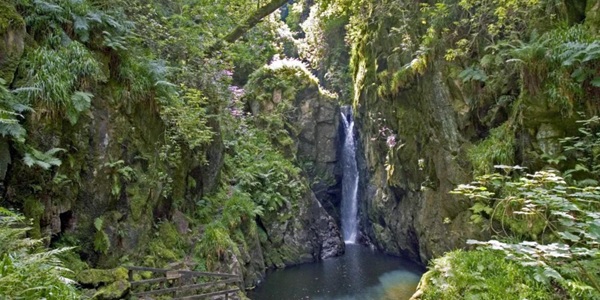
Stanley Ghyll Force waterfall canyon with ferns on rocks and wooden bridge crossing
Stanley Ghyll Force
A 60-foot waterfall thundering down from a 150-foot-deep narrow gorge, with ferns and wild rhododendrons clinging to the rock faces, and a series of rustic wooden bridges crossing the torrent — one of the Lake District's most spectacular waterfall canyon experiences

Stanley Ghyll 2-Day Classic Tour

Explore the Lake District's most spectacular waterfall canyon, ride the Victorian narrow-gauge steam train, visit the 2,000-year-old Roman fort, and stroll the Eskdale Valley Stepping Stones ancient path

Duration
2 days / 1 night
Main Destinations
Stanley Ghyll Force, La'al Ratty Steam Train, Boot Village, Hardknott Roman Fort, St Catherine's Church, Eskdale Valley Trail
Suitable For
Families, hiking enthusiasts, history buffs, railway fans, nature photographers
Budget per Person
£80-£195
01
Waterfall & Steam
Ravenglass · La'al Ratty Narrow-Gauge Steam Train · Dalegarth Station · Stanley Ghyll Force Waterfall Canyon · Boot Village · 1876 Station Café
Highlights

Arrive in the morning at Ravenglass — the Lake District's only coastal village, where three rivers (Esk, Irt and Mite) converge to form the estuary. Board the "La'al Ratty" narrow-gauge steam train, a 15-inch gauge miniature railway operating since 1875. The seven-mile journey crosses the hidden Miterdale valley, stopping at Muncaster Mill, Irton Road, The Green and Beckfoot before reaching the valley terminus at Dalegarth for Boot station in 40 minutes. Enjoy a hot sausage roll and ginger tea at the 1876 café in the station. Exit and walk towards St Catherine's Church — this small church once served a vast area including Wasdale, where the deceased had to be carried across the mountains via the "coffin route" to be buried here. Challenge yourself to cross the River Esk using the enormous Stepping Stones beside the church — the water is crystal clear, pebbles glittering in the sunlight. Enter Stanley Ghyll Forest, climb through the canyon, cross three rustic wooden bridges, and the sound of the waterfall grows louder — the 60-foot Stanley Ghyll Force thunders down at the canyon's end, mist filling the air, ferns clinging to the 150-foot-deep rock walls, rhododendrons blooming in the crevices. A newly restored viewing platform faces the base of the waterfall — the perfect spot for photographs. In the evening, return to Boot village and enjoy Cumberland sausages and local malt ale by the fireplace at Brook House Inn, with the twilight Eskdale mountains outside the window.

Attractions
Stanley Ghyll Force
One of the Lake District's most spectacular waterfalls, a 60-foot (18-metre) cascade thundering from the end of a 150-foot (46-metre) deep narrow gorge. The steep canyon walls are covered in ferns, moss and wild rhododendrons, creating a layered green curtain. The trail features three rustic wooden bridges crossing the torrent, and a newly restored viewing platform faces the base of the falls — mist sprays your face and the roar fills your ears. Wainwright called Eskdale "one of the loveliest valleys in the Lake District," and this waterfall is the jewel in its crown. Most spectacular after heavy rain when water flow is at its peak.
La'al Ratty Narrow-Gauge Steam Train (Ravenglass & Eskdale Railway)
England's first public narrow-gauge railway, opened in 1875, originally used to transport iron ore from Boot mines to Ravenglass harbour. Closed in 1913 and reopened in 1916 with a 15-inch gauge for granite transportation, saved and preserved by railway enthusiasts since 1960. The seven-mile journey takes approximately 40 minutes, passing through the hidden Miterdale valley and Eskdale heartland, with sightings of herons, greylag geese, red squirrels and buzzards along the way. 2024 fares: Adult return £20, Child £14. Widely recognised as "England's most beautiful train journey."
Boot Village & St Catherine's Church
A tiny settlement in the heart of Eskdale Valley, surrounded by mountains, with just one main street connecting a few stone cottages, two pubs and a mill. St Catherine's Church, built on ancient foundations, was once the burial destination for residents of the Wasdale area — bodies had to be carried across the mountains via the "coffin route" to be laid to rest here. The River Esk beside the church features enormous stepping stones — a fun way to cross the river. The churchyard holds generations of farmers and miners who lived and died in this valley.
Practical Info
Accommodation
  • Brook House Inn (Boot village family inn)
  • Woolpack Inn (Eskdale mountain-view inn)
  • YHA Eskdale Youth Hostel
  • Eskdale Campsite (National Trust)
Food Recommendations
  • 1876 Dalegarth Station Café
  • Brook House Inn Restaurant
  • King George IV Beer Garden
Travel Tips
  • Waterfall trail is slippery — wear sturdy hiking boots
  • Dalegarth station has free WiFi and toilets
  • Train ticket allows unlimited rides on the day — get off at intermediate stations
  • Stepping Stones can be fast-flowing after rain — take care
02
Fort & Valley
Hardknott Roman Fort · Hardknott Pass · Eskdale Valley Trail · Eskdale Mill · Muncaster Castle · Departure
Highlights

Head north on the A595 road in the morning to the foot of Hardknott Pass — England's steepest road (1:3 gradient, approximately 33%). Drive slowly up to the 400-metre pass, looking back to see Eskdale Valley unfolding like a green ribbon below, with the Irish Sea shimmering on the distant horizon. Park at the Hardknott Pass car park and walk five minutes to Hardknott Roman Fort — a 2nd-century AD mountain fortress garrisoned by the Roman army. The remaining stone walls clearly outline the barracks, headquarters and bathhouse, making it one of the best-preserved Roman military sites in Britain — and completely free to enter. From the fort platform, gaze at the massive bulk of Scafell Pike (England's highest peak) rising majestically to the southeast. Descend and drive to Eskdale Green, then follow the National Trust-marked "Eskdale Trail" — an 8.5-mile valley path stretching from Ravenglass into the valley heart, passing through meadows, stone walls, ancient bridges and riverside woodlands — an excellent route for spotting roe deer, otters and various birds. Stop at Eskdale Mill — the last working water-powered grain mill within the Lake District National Park, first recorded in 1294, with two cast-iron wooden-bucket water wheels (built 1830-1880) still driving the original millstones. In the afternoon, visit Muncaster Castle — the ancestral home of the Pennington family, famous for its spring gardens, owl and hawk centre, medieval armoury, and a famously "haunted" tower staircase. End the evening at a coastal pub in Ravenglass, enjoying fresh scallops and Cumbrian Ale to bring the journey to a perfect close.

Attractions
Hardknott Roman Fort
A 2nd-century AD mountain fortress built by the Roman army in northwest England, Latin name "Mediobogdum." Situated on the southern slope of Hardknott Pass at approximately 250 metres elevation, overlooking Eskdale Valley and the remains of the Roman road. Surviving stone walls clearly outline the headquarters, barracks, granaries and bathhouse (complete with hypocaust underfloor heating system). From the fort platform, enjoy views of Scafell Pike, Crinkle Crags and Bowfell peaks. Managed by English Heritage, free entry, hailed as "Britain's most dramatically situated Roman site."
Eskdale Mill
The last working water-powered grain mill within the Lake District National Park, first documented in 1294, with the core of the existing building dating from 1737. Two cast-iron wooden-bucket water wheels (built 1830-1880) drive the original wooden machinery to grind oats and wheat, while a third modern steel water wheel powers the building and feeds surplus energy back to the national grid. Hannah Dawson kept all equipment intact when she closed the mill in the 1930s, allowing today's authentic restoration. Reopened in 2019 after a million-pound restoration, featuring exhibitions, mill operation demonstrations and a 17th-century stone bridge. Admission approximately £5.
Muncaster Castle
The ancestral home of the Pennington family since the 13th century, set at the entrance to Eskdale Valley overlooking the Ravenglass estuary. Famous for its spectacular spring rhododendron and camellia gardens, Hawk & Owl Centre (daily bird of prey flying displays), medieval armoury collection and the famously "haunted" Tower staircase. The castle interior retains Victorian-era luxury decoration with fine tapestries and portraits. Camping and luxury glamping available on the castle grounds. Admission including gardens and bird show approximately £14.50.
Practical Info
Transport
  • Train to Ravenglass station (Cumbrian Coast line)
  • Change to La'al Ratty narrow-gauge train into the valley
  • Driving: M6 J40 → A66 → Whitehaven → Gosforth → Eskdale
  • Dalegarth station car park approx. 60 spaces (pay)
Tickets
  • La'al Ratty return train: Adult £20 / Child £14
  • Stanley Ghyll Force: Free
  • Hardknott Roman Fort: Free
  • Eskdale Mill: approx. £5
  • Muncaster Castle: approx. £14.50
Travel Tips
  • Hardknott Pass gradient 1:3 — large vehicles and novice drivers should exercise caution
  • Mobile signal is very weak in the valley — download offline maps beforehand
  • Waterfall canyon is most spectacular after rain but trails are slipperiest
  • Train runs weekends only in winter — check timetable in advance

Must-Try Foods in Stanley Ghyll

1876 Dalegarth Station Café

A cosy café located on the ground floor of Dalegarth for Boot station, named after the station's founding year of 1876. Serves hot sausage rolls, hand-made pies, Earl Grey tea and freshly baked scones, with lunch specials including Lake District roast lamb and shepherd's pie. Has a separate afternoon tea area (booking required), plus covered outdoor picnic tables and a children's playground. Open to both train passengers and the general public. Budget: £8-£18 per person.

Brook House Inn

A family-run country inn and restaurant in the centre of Boot village, named CAMRA West Cumbria Pub of the Year 2023. Eight en-suite rooms, with local craft ales from Lakes Brew Co, Fell and Cumbrian Ales regularly on tap, and a collection of over 200 single malt whiskies. The restaurant focuses on local ingredients: Cumberland sausages, smoked trout, Lake District cheese platter. Listed in the Good Beer Guide and Good Pub Guide. Budget: £15-£28 per person.

King George IV Inn

A 17th-century traditional tavern in Eskdale Green, with exposed oak beams, flagstone floors and a roaring fire creating an authentic old-world atmosphere. Serves up to ten rotating local cask ales daily (including Strands Brewery), with around 100 single malt whiskies in stock. Lunch offers sandwiches, jacket potatoes and fish & chips; dinner features steak and ale pie, scallops and daily specials. The beer garden faces the mountains and features giant skittles and a paddling pool. Budget: £12-£25 per person.

Woolpack Inn

A 17th-century coaching inn perched at the mountain pass in Eskdale, surrounded by England's highest peaks, with views of Scafell Pike from the garden. Focuses on "farm-to-table" cuisine: local venison burgers, Lake District mushroom pasta, honey-roasted beetroot. Six regular local craft ales and a curated natural wine list. Once revitalised by Harry and Paddington Berger, it's the perfect rest stop for hikers climbing Hardknott and Harter Fell. Budget: £14-£26 per person.

Stanley Ghyll Travel Tips
Best Time to Visit
  • May-Sep: Full train service, abundant waterfall flow
  • Apr-May: Muncaster gardens rhododendrons in bloom
  • Oct: Autumn colours paint the canyon, fewer visitors
Must-Try Foods
  • Cumberland sausage with mash
  • Lake District smoked trout
  • Hand-made pies (shepherd's pie/steak pie)
  • Cumbrian Ale local malt beer
  • Station Café hot sausage roll
Budget Reference
  • Train return: £20/person
  • Attractions: £5-£15
  • Accommodation: £60-£140/night (hostel bunk from £20)
  • Meals: £20-£40/day
  • Transport: £5-£15 (train/parking)
  • Total: £80-£195
FAQ
  • Is the waterfall trail suitable for children? → Yes, but adults should hold hands on slippery sections
  • How to get here without a car? → Train to Ravenglass then change to narrow-gauge railway
  • Is Hardknott Pass dangerous? → Extremely steep — large vehicles and novice drivers should be cautious
  • What if there's no phone signal? → Download offline maps beforehand and enjoy the "disconnected" time
  • What to do on a rainy day? → Station café and pub fireplaces are the best places to be

Explore More of the Lake District