Jiaxian Travel
Jiaxian County, Pingdingshan City, Henan Province — historically known as "Jiaru", is a "Millennium Ancient County". It integrates the literati spirit of Sansu Garden, the red stone legend of Linfeng Village, and the Confucian heritage of Confucian Temple. This 2-day 1-night in-depth tour decodes the cultural codes of "culture, village, and Confucianism", and experiences the historical precipitation and local customs of this ancient county in the Central Plains.
2-Day 1-Night Journey to Explore the Ancient County of Jiaxian
Pay homage to Sansu Garden to understand the moral integrity of literati, explore Linfeng Village to admire the red stone wonders, visit Confucian Temple to taste Confucian culture, try Heluo Noodles to enjoy intangible cultural heritage food, and unlock the historical memories and local customs of the ancient county in the Central Plains
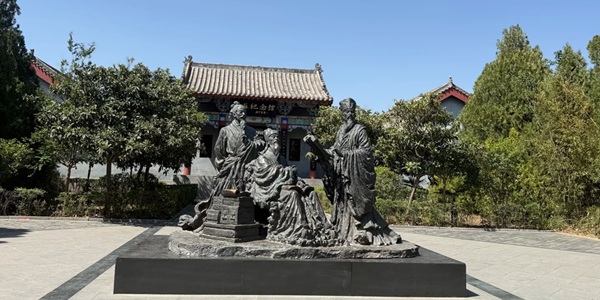
Visit Sansu Garden in the morning to pay tribute to the Three Sus and understand the moral integrity of literati; stroll through Jiaxian Confucian Temple in the afternoon to appreciate ancient architecture and Confucian culture; visit the county museum in the evening to systematically understand the thousand-year historical changes of Jiaxian.
- Hotels in the county center
- Three Sus Culture Theme Homestay
- Inns around Confucian Temple
- Jiaxian Heluo Noodles
- Tofu Vegetable Soup
- Jiaxian Beef
- Baked Wheat Cake with Meat
- Hanfu experience available at Sansu Garden (¥40 per set)
- Free Sinology lecture at Confucian Temple every Saturday morning
- Free guided tours available by reservation at the museum (for groups of 10 or more)
Explore Linfeng Village in the morning to appreciate the architectural wonders of the first red stone ancient village in the Central Plains; visit the Youth Educated Youth Park in the afternoon to recall the passionate years of going to the countryside; stroll through Jiaxian Specialty Street in the evening to purchase souvenirs such as Heluo Noodle seasonings, and end the trip and return.
- Take Bus No.7 from the county seat to Linfeng Village
- The Educated Youth Park is about 8 kilometers from the county seat, accessible by Bus No.12
- Take Bus No.1 or No.3 to Longshan Avenue Station for the Specialty Street
- Sansu Garden: ¥40
- Jiaxian Confucian Temple: ¥20
- Linfeng Village: ¥30
- Youth Educated Youth Park: ¥20
- Museum: Free (ID card registration required)
- It is recommended to hire a local guide for Linfeng Village (¥50 per time) to understand the defensive wisdom of the ancient village
- There are voluntary explanations by former educated youth at the Educated Youth Park (Saturday mornings)
- The best place to taste Heluo Noodles is "Li Ji Lao Zi Hao" (founded in 1906)
Must-Try Foods in Jiaxian
Jiaxian Heluo Noodles
A national geographical indication product, originating from the Western Han Dynasty. Made from buckwheat flour or wheat flour, pressed with a special Heluo noodle machine, the noodles are thin and chewy, served with mutton soup and mutton slices, sprinkled with scallions and coriander, with a unique flavor. Known as "the first noodle in China", its making technique is listed as a national intangible cultural heritage.
Jiaxian Tofu Vegetable Soup
A local traditional breakfast, mainly made of tofu, vermicelli and sheep offal, boiled with sheep soup, added with chili, Chinese prickly ash and other seasonings, fragrant and slightly spicy. Served with sesame seed cakes, it is the "energy supply station" for Jiaxian people in the morning, with a strong market atmosphere.
Jiaxian Beef
Selected from local free-range yellow cattle, made through multiple processes such as marinating and braising. The meat is firm, with a rich sauce flavor, can be eaten directly or cold mixed. It is a common dish on Jiaxian's banquet and family tables, and also a good gift.
Pohe Radish
A specialty of Pohe Village, Jiaxian County. Due to the special sandy soil and water quality in the local area, the radishes produced are crisp, sweet and juicy, without spiciness. They can be eaten raw or pickled, known as "fruit radishes". They were once used as tributes in the Ming and Qing dynasties, and are a characteristic winter vegetable.
- Spring (March-April): Ancient cypresses in Sansu Garden sprout new leaves, and crabapple blossoms bloom in Confucian Temple
- Autumn (September-October): Red stones of Linfeng Village contrast with golden rice fields, suitable for photography
- Winter (December-February): Experience folk customs such as pickling radishes and making Heluo Noodles in farmhouses
- Jiaxian Heluo Noodles (Li Ji Lao Zi Hao)
- Tofu Vegetable Soup (East Street Old Market Store)
- Jiaxian Beef
- Pohe Radish (Winter)
- Baked Wheat Cake with Meat
- Tickets: About ¥110
- Accommodation: ¥100-180 per night
- Catering: ¥50-80 per day
- Transportation: About ¥50
- Total: ¥300-600
- Are there sacrificial activities in Sansu Garden? → A sacrificial ceremony is held every year on the 19th day of the twelfth lunar month (Su Shi's birthday)
- Can I stay overnight in Linfeng Village? → There are 2 homestays in the village, where you can experience overnight stay in the ancient village
- Can Heluo Noodles be taken away in vacuum packaging? → Vacuum-packed finished products are available on the Specialty Street, with a shelf life of 3 days
- Is Confucian Temple suitable for visiting with children? → There is an "Enlightenment Ceremony" experience project, suitable for parent-child enlightenment