Tenby Tudor Merchant's House Travel

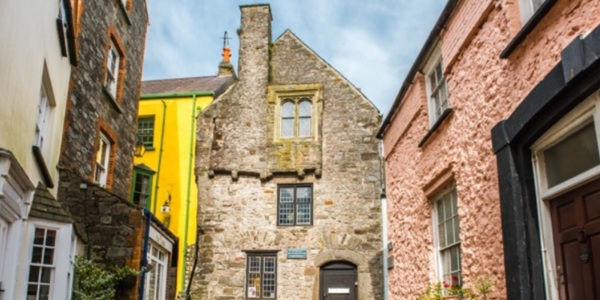
Tenby Tudor Merchant's House — a time capsule hidden in the cobbled alley of Quay Hill, one building transporting you back five hundred years to the golden age of Welsh trade in 1500. Around 1490, a wealthy Tudor merchant built this three-storey stone house with lime mortar and sandstone rubble, a Flemish-style circular chimney soaring against the sky, hand-painted murals (in red ochre, black and white) adorning the walls — it is Tenby's oldest unaltered building and one of Britain's best-preserved medieval merchant dwellings. Donated to the National Trust (NT) in 1938, meticulously restored over decades, it now comes alive as an immersive museum: the ground floor is a shop-cum-kitchen stocked with replica goods and pewter, the first-floor hall hung with painted cloths depicting Jasper Tudor rebuilding the town walls, the third-floor bedroom inviting visitors to try on Tudor costumes and rock the cradle. Step inside, and you become a merchant family in 1500.

1490
Year Built
I
Grade Listed Building
3
Immersive Floors
£7
Adult Admission From
Tenby Tudor Merchant's House Panorama
Tenby Tudor Merchant's House
A five-hundred-year-old Tudor stone dwelling on Quay Hill, an immersive time travel through Flemish chimneys and hand-painted murals

Tenby Tudor Merchant's House In-Depth Tour

From the ochre red of hand-painted murals to the circular silhouette of a Flemish chimney, from the spice aromas of a Tudor shop to the lavender fragrance of a herb garden — travel through five centuries of Welsh trade history in half a day

Duration
1-2 Hours
Main Destinations
Medieval Stone Building, Tudor Shop, Hall Chamber & Bedchamber, Herb Garden
Suitable For
History Enthusiasts, Families, Architecture Lovers, Tudor Culture Fans
Budget Per Person
£0-£17.50
01
Five Hundred Years of Tudor Time
Medieval Stone Building & Hand-Painted Murals · Tudor Shop & Trading World · Hall Chamber & Bedchamber Tudor Family Life · Herb Garden & Tudor Games
Highlights

Turn off Tudor Square beside the Lifeboat Tavern into the cobbled lane of Quay Hill, where five-hundred-year-old stone walls stand silently on either side. Step over three stone steps (9cm, 13cm, 19cm high) onto the threshold of the Tudor Merchant's House, greeted by a flagstone floor and a towering fireplace — this is the merchant's shop-cum-kitchen. Look up at the walls: geometric vine scroll patterns in red ochre, black and white emerge faintly from beneath the limewash — these were hand-painted freehand by 15th-century artisans using natural pigments on dry plaster, and during 2024 conservation work further extensions of the pattern were discovered beyond the north wall. Climb the steep wooden staircase to the first-floor hall, where painted cloths hang on the walls: one depicts Jasper Tudor rebuilding Tenby's walls in 1457, another recreates the dramatic escape of Jasper and the young Henry Tudor (later Henry VII) from Tenby harbour to Brittany in 1471. The third-floor bedchamber features an intricately carved four-poster bed, and from the lattice window, an unbeatable view of Tenby's rooftops and harbour. Finally, step into the L-shaped herb garden at the rear — lavender repels flies, rosemary seasons roasts, mint infuses tea — smell the aromas of a Tudor kitchen from five hundred years ago. Volunteers in Tudor costume engage visitors, children try on replica clothes and play nine men's morris and jacks, while adults are drawn to the "Sleep Tight" exhibition — learning that this bedtime phrase originates from the rope-tightening technique of Tudor bed frames.

Attractions
Medieval Stone Building & Secco Wall Paintings
A three-storey sandstone rubble building built around 1490, laid with lime mortar and a slate roof, Tenby's oldest unaltered building, Grade I listed in 1951. Its most striking features include: a Flemish-style circular brick chimney (a symbol of wealth and status — three fireplaces correspond to three chimneys throughout the house), original exposed roof trusses (five-bay collar truss structure on the first floor), and surviving medieval secco wall paintings. These murals, executed in red ochre, black and white on dry plaster freehand, depict geometric patterns and vine leaf scrollwork — a rare surviving example of 15th-century Welsh domestic interior decoration. In 2024, NT conservation teams stabilising the north wall murals discovered pattern extensions onto other walls, further revealing the building's artistic significance. The building stone is believed to have been quarried from nearby cliffs and transported by sea to Tenby, contrasting sharply with most Tudor buildings of the period, which were timber-framed.
Tudor Shop & Trading World
The ground-floor street-facing room is reconstructed as a late 15th-century Tudor merchant's shop and workspace. Shelves display replica goods typical of Tenby's import and export trade at the time: sea salt ("bay salt") from Brittany, Gascony wine (stored in iron-hooped tuns, one tun worth about £3 — equivalent to a maid's annual wage), cane sugar from the Canary Islands (one chest about £8, extreme luxury), Irish herring and coarse woollen cloth, locally produced anthracite culm balls, vinegar and earthenware pots. An oak counter, brass scales, parchment ledgers and quill pens recreate the daily routine of accounting, receiving goods and bargaining. Two hand-painted cloths hang on the walls — a popular Tudor alternative to expensive tapestries, painted by York artist Anthony Barton in 2011-12 using linseed oil pigments on coarse linen: one depicts Jasper Tudor rebuilding the walls in 1457, the other shows Jasper and Henry Tudor fleeing Tenby during the Wars of the Roses in 1471. Adjacent is the kitchen, centred around an open hearth with iron hooks, spits and cooking utensils.
Hall Chamber & Bedchamber — Tudor Family Life
The first-floor hall chamber was the core space for the merchant and his family's daily living, entertaining guests and displaying status. Two dining tables are set — one laid with pewter ware for the master and honoured guests, the other with wooden utensils for servants and lower-status visitors, visually demonstrating Tudor social hierarchy. Replica tapestries and remnant hand-painted murals decorate the walls, while the fireplace warms the entire space. From the hall, climb the narrow stair to the third-floor bedchamber — the shared sleeping space for the whole family (up to six people), centred around a carved four-poster bed with a rocking cradle for the baby. By the window, replica Tudor costumes are displayed for visitors to try on; the wardrobe holds linen shirts and wool coats fashionable at the time. Most distinctive is the "long drop" toilet turret projecting from the corner — a vertical stone shaft dropping straight to the cesspit below, a rare indoor sanitation feature for the late medieval period, effectively the ancestor of the "en-suite bedroom." Carpenter's marks are still visible on the original roof beams, silently recording the builders from five centuries ago.
Herb Garden & Tudor Games
Though small, the L-shaped herb garden at the rear is beautifully tended, enclosed by woven willow fencing, with plants grouped by culinary and medicinal use: lavender (repels flies + for making pomanders), rosemary (roast meat seasoning), mint (digestive tea), rue (eye treatment), fennel (essential for fish dishes). These plants were the core seasonings of a Tudor kitchen five hundred years ago, now lovingly maintained by volunteers. The garden features a Tudor game experience area: nine men's morris carved into a stone board, fox and geese testing strategic thinking, and jacks played with bone pieces. Since April, the special exhibition "Sleep Tight, Don't Let the Bed Bugs Bite!" reveals Tudor nighttime rituals — bed ropes needed regular tightening (origin of "sleep tight"), babies wrapped in long strips of swaddling cloth hung on wall hooks to keep them from rats, and the whole family sleeping semi-upright to prevent evil spirits entering through the mouth. The garden is a perfect afternoon contemplation corner and the most interactive space for children.
Practical Information
Transportation
  • Approx 15 min walk from Tenby train station
  • Enter Quay Hill via the signpost beside Lifeboat Tavern on Tudor Square
  • Also accessible on foot from Bridge Street or Crackwell Street
  • The entire town is walkable; no dedicated car park
  • Nearest public toilets: Castle Beach car park and behind Market Hall
Ticket Information
  • Adult (18+): £7.00 (incl. Gift Aid)
  • Child (5-17): £3.50
  • Under 5: Free
  • Family (2 adults + up to 3 children): £17.50
  • National Trust members: Free
  • Groups of 10+: 5% discount
Travel Tips
  • Allow 60-90 minutes for a full visit
  • Stairs are steep and narrow — mind your step
  • Floors are uneven flagstone — wear non-slip shoes
  • No flash photography inside the house
  • Wet days can get crowded; afternoons are usually quieter
  • No toilets on site — please use public facilities beforehand
  • Only assistance dogs permitted

Food Recommendations Near Tudor Merchant's House

Plantagenet House

Adjacent to the Tudor Merchant's House, parts of its structure date back to 1023, with a honeycomb stone vaulted ceiling that is a living fossil of medieval architecture. The ground-floor basement bar, The Quay Room, serves craft beers and wines directly opposite the Merchant's House front door. Signature slow-roasted Pembrokeshire lamb with rosemary jus, perfect for a candlelit dinner. Average £20-30 per person.

The Stowaway Coffee Co.

A specialty coffee shop just 85 metres from the Tudor Merchant's House, tucked around a corner lane. Flat White and cinnamon rolls are the signature combo, beans sourced from independent roasters, with summer outdoor seating facing the cobbles of Quay Hill. Perfect post-visit refreshment. Average £4-8 per person.

The Buccaneer Inn

One of Tenby's most popular pubs on St Julian's Street, just a few steps from the Merchant's House. Local Tenby Brewing Co. craft ales, generous fish and chips and street tacos are the signatures, with ridiculously friendly staff and a dog-friendly atmosphere making it the perfect afternoon pit stop. Average £10-18 per person.

Fecci's Handmade Ice Cream

Tenby's historic ice cream parlour, established in 1919, a 3-minute walk from the Merchant's House. Blackberry yoghurt is the locals' secret favourite, while salted caramel is a recent hit. An afternoon cone by the harbour, watching seagulls circle — Tenby's most classic ritual. Average £3-6 per person.

Tenby Tudor Merchant's House Travel Tips
Best Time to Visit
  • March-October: Fully open, volunteers in Tudor costume giving talks
  • Tuesday-Friday mornings: Quieter, ideal for detailed appreciation
  • Wet days can get crowded inside — consider afternoon visits
  • Winter (November-February): Partially closed — check NT website before visiting
  • Christmas and New Year: Entire town closed
Must-Try Foods
  • Tenby Seafood Platter
  • Fecci's Handmade Ice Cream
  • Welsh Rarebit
  • Harbour Fish & Chips
  • Local Craft Ale (Tenby Brewing Co.)
Budget Reference
  • Adult admission: £7.00
  • NT members: Free
  • Food & drink: £10-25
  • Transport: Walking/bus £2-4
  • Total: £0-50
Frequently Asked Questions
  • Do I need to book? → Peak season recommended to book time slots on NT website
  • Is there a Chinese audio guide? → Currently English commentary only; volunteer talks are very engaging
  • Can I take photos? → Photography allowed but no flash
  • Can wheelchairs access? → Ground floor accessible via Bridge Street ramp, but steep stairs prevent upper floors
  • Are children free? → Under 5 free, 5-17 £3.50
  • Are there toilets? → No toilets on site; nearest public toilets at Castle Beach car park

Explore More Areas of Tenby