Tenby Medieval Town Walls Travel

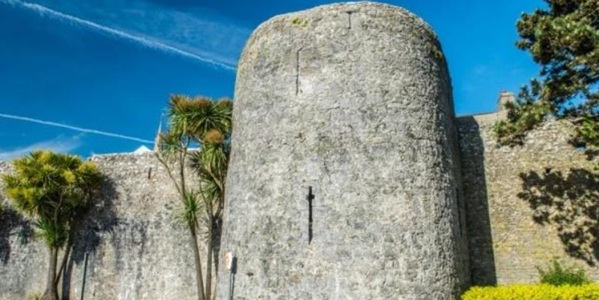
Tenby Medieval Town Walls — one of Britain's best-preserved urban defensive works, Grade I listed, rated by experts as "among the most important surviving medieval town walls in Britain." Begun in the 13th century by the Earl of Pembroke Marshal family, burnt by Welsh prince Llywelyn ap Gruffydd in 1260 then rebuilt and strengthened by William de Valence, raised and widened again by Jasper Tudor in 1457, hurriedly repaired in 1588 against the Spanish Armada — nine hundred years of coastal defence history crystallised in every limestone arrow slit and battlement. From the Five Arches Barbican's Crusader fortress design, to St Mary's Church's 75 carved roof bosses, from the Tudor Merchant's House (1490) rare medieval murals to the Georgian colourful houses' cliffside panoramic sea view — a 45-minute wall walk traverses three eras: medieval port prosperity to Victorian holiday golden age.

800+
Years of Wall History
I
Grade Listed Building
24→6
Original Towers Surviving
£0
Free All Day
Tenby Medieval Town Walls & Five Arches Panorama
Tenby Medieval Town Walls
The Five Arches Barbican and Georgian colourful houses complement each other — nine hundred years of coastal defence heritage above Carmarthen Bay

Tenby Medieval Town Walls In-Depth Tour

From the Five Arches Barbican's Crusader fortress design to St Mary's Church's exquisite choir roof, from the Tudor Merchant's House medieval murals to the Georgian colourful houses' cliffside sea view — a 45-minute wall walk traversing nine hundred years of Pembrokeshire coastal defence and port prosperity history

Duration
Half Day - 1 Day
Main Destinations
Five Arches Barbican, St Mary's Church, Tudor Merchant's House, Georgian Colourful Houses Walk, Castle Hill Panorama
Suitable For
History Enthusiasts, Architecture Lovers, Photography Enthusiasts, Families
Budget Per Person
£0-£20
01
Nine Hundred Years of Defence & Port Memory
Five Arches Barbican · St Mary's Church · Tudor Merchant's House · Georgian Colourful Houses Walk · Castle Hill Panorama
Highlights

Start your morning at the Five Arches on South Parade — this barbican fortress built in 1328 features an innovative design brought back from the Crusades: the entrance opens sideways, rendering battering rams useless, and invaders entering the courtyard immediately face crossfire from defenders on three sides of the walls. The iron portcullis lifting slot can still be clearly seen inside the right-hand original arch; the other four arches were cut in the 19th century to ease traffic. Walk east along the walls, where three tiers of arrow slits (round upper holes for muskets and crossbows, narrow lower slots for longbows) tell the story of weapon evolution from the 13th to 16th centuries. Ascend the square tower on St Florence Parade, overlooking the blue waters of Carmarthen Bay and St Catherine's Island's Victorian fort. Then step into 15th-century St Mary's Church, gaze up at the 75 carved bosses on the choir barrel roof — mermaids, mythical beasts, vines and flowers vividly alive — and seek out the painted tomb effigy of Elizabethan councilman William Risam (legend says Cromwell's soldiers mistook it for a living man praying and shot its face off). In the afternoon, descend the cobbled slope to Quay Hill, push open the oak door of the Tudor Merchant's House (1490), touch the vine-scroll patterns of the 15th-century mural, and imagine the bustle of wool and spice trade before replica ledgers. Finally, walk to the end of the cliff at the Georgian colourful houses (Lexden Terrace), letting the panoramic sunset over Carmarthen Bay mark the perfect end to your day.

Attractions
Five Arches Barbican & Town Walls Walk
Built in 1328, the Five Arches is Tenby's only surviving complete city gate and the international symbol of the Walled Towns Friendship Circle (covering over 130 walled towns across 22 countries). This barbican employs a side-entrance design brought back from the Crusades — attackers entering the 40×20 ft open courtyard immediately face fire from three sides of battlements. The right-hand original arch still retains the stone groove for the iron portcullis; the other four arches were cut in the 19th century for traffic. The best-preserved wall section runs west from South Parade, about 200 metres long with three tiers of arrow slits (narrow bottom slots for longbows, circular openings adapted for 15th-century muskets and crossbows), with the wall walk supported by arched arcades on the town side. Jasper Tudor raised the walls by 1.5 metres and widened them by 1.8 metres in 1457 for quicker troop movement. Six towers survive (of the original 24), including semicircular bastions and square turrets. In 1881 they narrowly escaped demolition, saved by a court injunction secured by the Historical Society and scholar Dr George Chater. Grade I listed.
St Mary's Church & Medieval Tombs
One of Wales' largest parish churches, Grade I listed (upgraded in 2022), its 152-foot spire a natural landmark for sailors and travellers. The earliest parts date to the 13th century (tower base and south porch lancet windows), with the main body rebuilt in the 15th century: a five-bay nave arcade, the choir barrel ceiling adorned with 75 exquisitely carved bosses — including mermaids, various mythical beasts, vines and floral patterns. The St Thomas Becket Chapel holds the painted tomb effigies of Tenby's legendary mayors Thomas White and his son John White — in 1471 they hid the defeated 14-year-old Henry Tudor and his uncle Jasper Tudor in their cellar (below today's Boots pharmacy), helping him escape from Tenby harbour to Brittany; fourteen years later Henry was crowned Henry VII at Bosworth Field. The mayor's effigy of William Risam has its face severely damaged — reportedly shot by a Cromwellian cavalryman who mistook it for a living man at prayer. The church also holds the Elizabethan mural monument of mathematician Richard Recorde (1512-1558), inventor of the equals sign (=). The 1634 pulpit and 1726 sundial are post-medieval highlights.
Tudor Merchant's House (National Trust)
A three-storey stone merchant's house built around 1490, Tenby's oldest and least-altered building, taken over by the National Trust in 1938 and opened to the public in the 1950s. The building itself is the exhibit: thick walls of local cliff stone, a Flemish-style giant chimney (extremely luxurious for its time), a privy turret projecting from the northwest corner, and a central gable with twin narrow lights set in corbels. The ground-floor front room preserves 15th-century mural fragments — black, yellow and red plant tendril patterns with star motifs, an extremely rare surviving example of medieval interior decoration in Wales. Rooms are furnished to recreate the daily life of a wealthy late-15th-century merchant: the ground floor displays the wool, spice and salt trading area and kitchen (open hearth), the first-floor hall for entertaining guests, and the attic bedrooms where visitors can try on replica Tudor costumes and play medieval games like Nine Men's Morris and Fox and Geese. The outdoor herb garden grows medieval culinary plants. Annual visitors approximately 25,000. Research has also revealed that a silversmith operated in Tenby around 1500 (see merchant Walter Rys's 1507 will), confirming the port's remarkable prosperity.
Georgian Colourful Houses & Harbour Panorama Walk
Winding up from South Parade along cobbled lanes, suddenly the six cliffside terraced houses of Lexden Terrace appear — built 1843-1845 by Captain John Rees, Grade II* listed (Cadw rates them "Tenby's finest terraced houses"). Rees drew the first accurate charts of China's coast for the First Opium War and profited from the opium trade to invest in Pembrokeshire real estate. The houses stand atop 14-metre cliffs facing Castle Beach, South Beach and St Catherine's Island — every window a panoramic painting. Legend says fishermen painted their houses different colours so they could identify their homes from sea on returning from long voyages. Follow the path at the end of the terrace to Castle Hill, pass through the 13th-century Norman gatehouse into the castle ruin core, and climb the circular lookout tower base for a 360° view — the blue waters of Carmarthen Bay, the golden sand of North Beach, St Catherine's Island's Victorian fort, and the distant abbey bell tower of Caldey Island. The Castle Hill circular walk (laid out in the 1860s) passes the Richard Riddell Geological Memorial and the Prince Albert National Memorial (unveiled 1865, the only one in Wales), ending back at the Five Arches — a perfect loop.
Practical Information
Transportation
  • Approx 10 min walk from Tenby train station to Five Arches
  • From the harbour, walk straight along St George's Street to South Parade
  • Nearest car park: Castle Hill Car Park (3 min walk)
  • Entire town walkable; cobblestone surfaces suggest non-slip shoes
Ticket Information
  • Town walls & Castle Hill: Free all day
  • St Mary's Church: Free (donations welcome)
  • Tudor Merchant's House: Adults £5.50
  • Tudor Merchant's House Children: £2.75
  • Tudor Merchant's House Family: £13.75
  • National Trust members: Free entry
Travel Tips
  • Full wall walk approx 45 min-1 hour
  • Allow 1 hour for Tudor Merchant's House visit
  • Cobblestone surfaces uneven — wear non-slip shoes
  • Tudor House murals are extremely fragile — do not touch walls
  • Five Arches is a photography hotspot, best light in early morning
  • Summer afternoons see crowded old town lanes — visit in the morning

Food Recommendations Around Tenby Town Walls

Mykonos Restaurant

A Greek family restaurant on St Florence Parade, just a few steps down from the wall tower. Signature moussaka and swordfish steak are locals' secret must-orders, served with traditional Greek salad and homemade yoghurt sauce. Warm family-style service, and on summer evenings sit outside facing the walls and harbour. Average £15-25 per person.

Plantagenet House

Just 30 seconds' walk from the Tudor Merchant's House, this restaurant occupies a medieval building dating from 1023, with a honeycomb stone vaulted ceiling that is a living fossil of 10th-century Norman architecture. Signature slow-roasted Pembrokeshire lamb with rosemary jus, served in the yellow-walled dining room overlooking the harbour, perfect for a candlelit dinner. Seamlessly linked to the wall walk for a one-stop dinner choice. Average £20-30 per person.

Fecci's Handmade Ice Cream

Tenby's historic ice cream parlour, established in 1919, just a 5-minute walk from the Five Arches along the harbour. Blackberry yoghurt is the locals' secret favourite, while salted caramel is a recent hit. An afternoon cone on a harbour bench, watching the wall silhouettes and circling seagulls — Tenby's most classic ritual. Average £3-6 per person.

The Hope & Anchor

A fisherman's restaurant right by the harbour, just 3 minutes from the end of the wall walk. Fresh fish delivered daily from the Bristol Channel is written on the blackboard — garlic butter baked spider crab claws, Cornish deep-sea cod, and Pembrokeshire mussels are the signature trio. Sit by the window watching fishing boats come and go — the most satisfying refuelling stop after a wall walk. Average £15-25 per person.

Tenby Medieval Town Walls Travel Tips
Best Time to Visit
  • Spring/Autumn (Apr-May/Sep-Oct): Fewer people, great light for wall photography
  • Summer (Jun-Aug): Tudor House fully open, but old town lanes crowded
  • Winter (Nov-Mar): Walls still free, Tudor House may be closed
  • Avoid Christmas Day (Dec 25) and New Year's Day (Jan 1) — entire town closed
Must-Try Foods
  • Tenby Seafood Platter
  • Fecci's Handmade Ice Cream
  • Welsh Rarebit
  • Harbour Fish & Chips
  • Caldey Island Monastery Chocolate
Budget Reference
  • Town walls & Castle Hill: Free
  • St Mary's Church: Free
  • Tudor Merchant's House: £5.50
  • Food & drink: £10-25
  • Total: £0-30
Frequently Asked Questions
  • Do I need to book? → Walls free, no booking needed; Tudor House recommended to book in peak season
  • Is there a Chinese audio guide? → Currently English commentary only; recommend downloading NT audio guide
  • Can I take photos? → Walls free to photograph; no flash inside Tudor House
  • Can wheelchairs access the walls? → Wall walk has steps and gravel; Tudor House ground floor accessible
  • Is there a guided tour? → Tourist centre offers £2 wall walk booklet

Explore More Areas of Tenby