Tenby Castle & Museum Travel

Tenby Castle & Museum — a hidden gem on a headland overlooking the blue waters of Carmarthen Bay, one building carrying nine hundred years of Welsh memory. In the 12th century, Norman conquerors built a stone fortress here, commanding the throat of the Pembrokeshire coastline; centuries later, as the walls crumbled, Victorian visionaries built Wales' oldest independent museum (founded 1878) upon the ruins, gathering prehistoric fossils, Roman treasures, pirate legends and the brush of Augustus John under one roof. Gaze out at St Catherine's Island from the Norman gatehouse, meet millennia-old artefacts in the museum galleries — in half a day, read the past and present of a town.

900+
Years of Castle History
1878
Year Museum Founded
II*
Grade Listed Building
£5
Adult Admission From
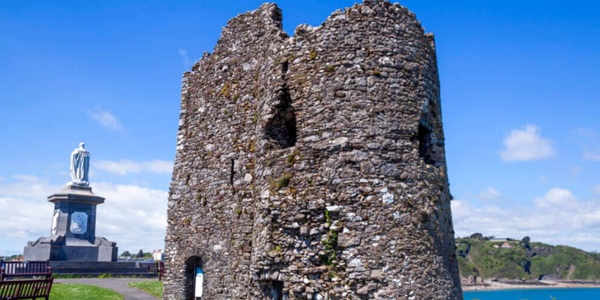
Tenby Castle & Museum Panorama
Tenby Castle & Museum
Norman ruins and Wales' oldest museum above the blue waters of Carmarthen Bay — a nine-hundred-year time capsule on a headland

Tenby Castle & Museum In-Depth Tour

From the weathered stone walls of the Norman gatehouse to prehistoric fossils in the museum, from the Golden Age of pirates to the brush of Augustus John — traverse nine hundred years of Pembrokeshire history in half a day

Duration
Half Day - 1 Day
Main Destinations
Norman Castle Ruins, Museum Archaeology Galleries, Story of Tenby Gallery, Art Galleries, Castle Hill Panorama
Suitable For
History Enthusiasts, Archaeology Lovers, Art Lovers, Families
Budget Per Person
£5-£15
01
Nine Hundred Years on a Headland
Norman Castle Ruins · Archaeology & Geology Galleries · Story of Tenby Gallery · Art Galleries · Castle Hill Panorama · Albert Memorial
Highlights

Start your morning with a 5-minute walk from Tenby Harbour up Castle Hill, passing through the 13th-century Norman gatehouse stone arch. Touch the rough limestone of the medieval curtain wall, imagining archers shooting down at attackers from the D-shaped battlements. Climb to the circular lookout tower base at the castle's highest point for a 360° view of the blue waters of Carmarthen Bay, the Victorian fort on St Catherine's Island, and the distant abbey bell tower of Caldey Island. Then enter Wales' oldest independent museum (founded 1878), where the Archaeology Gallery brings you face to face with 40,000-year-old Palaeolithic flint tools, mammoth teeth fossils and Roman-British pottery sherds. Follow the Story of Tenby gallery tracing Henry Tudor's dramatic escape from this port to eventual coronation as king, and reunite with the brushes of Augustus John and Gwen John in the Art Gallery — these two siblings, the greatest 20th-century Welsh artists, spent their childhood in Tenby. In the afternoon, stroll the 19th-century circular walk along the castle wall ruins, rest by the Prince Albert Memorial, and watch seagulls circling above the colourful rooftops.

Attractions
Norman Castle Ruins & Defensive Walls
A Norman stone castle begun in the first half of the 12th century, standing on a 14-metre-high headland with 30-metre cliffs plunging into Carmarthen Bay on three sides — natural barriers blending seamlessly with artificial fortifications. Main surviving features include: the square main gatehouse (pass through to enter the heart of Castle Hill), the medieval curtain wall extending along the ridge (with arrow slits and wall walk), the circular lookout tower base (the castle's highest point with 360° bay views), and the remains of a D-shaped barbican fortification added in 1328. The castle was captured and destroyed by Rhys ap Gruffydd of the Deheubarth kingdom in 1153, the town was sacked by Llywelyn ap Gruffudd in 1260, and during the English Civil War in 1648 Royalist defenders held out here for ten weeks. Grade II* listed building, one of Wales' best-preserved medieval coastal defence castle sites.
Archaeology & Geology Galleries
The museum's flagship permanent exhibition, spanning from the Precambrian era to the English Civil War. The archaeology section covers the Palaeolithic period (40,000-year-old flint tools from Hoyle's Mouth cave), Bronze Age cremation urns, Roman-British pottery and ironwork, a replica of the 6th-century Caldey Ogham stone, and a model of the 10th-century Penally Cross. The geology section centres on the Ridsdale Collection, encompassing rock and mineral specimens from Pembrokeshire spanning the Palaeozoic to the last Ice Age, including trilobite fossils from near Narberth. A mammoth molar unearthed on Caldey Island is one of the museum's crown jewels, silently telling the story of the Welsh coastline during the Ice Age.
The Story of Tenby Gallery & Pirate Legends
Using bilingual interpretation panels, historical photographs and original objects, this gallery traces Tenby's complete narrative from a 9th-century fishing village to a Victorian seaside resort. Key exhibits include: the dramatic escape of Henry Tudor (later Henry VII) from Tenby harbour in 1471, culminating in his coronation at Bosworth Field; original pages from the works of Tenby mathematician Robert Recorde, inventor of the equals sign (=); and Tenby's role as a secret training base before the D-Day landings in WWII. The pirate section "Beware! Pirates!" showcases pirate artefacts and oral histories from the 17th-18th century Bristol Channel, a firm favourite with children. The maritime collection also includes a series of boatswain's calls from 1785 to the present and a model of the first lifeboat from 1852.
Art Galleries & Castle Hill Panorama
The permanent art gallery focuses on major 20th-century artists connected to Wales: pencil sketches and portraits by Tenby-born Augustus John (born here in 1878), the only surviving oil painting of his childhood hometown by his sister Gwen John, stormy seascapes by Kyffin Williams, watercolours of castle stone walls by John Piper, and contemporary installations by Manic Street Preachers bassist Nicky Wire. Personal items acquired from the John family descendants in 2010 — Augustus's pipe, Gwen's silver crucifix and sewing box — bring art history to life. Temporary galleries rotate solo exhibitions by local and Welsh artists. Outside the museum, the Castle Hill circular walk (laid out in the 1860s) follows the original wall line, passing the Richard Riddell Geological Memorial and the Prince Albert National Memorial (unveiled 1865, the only one in Wales), ending at the perfect photography vantage point overlooking all of Tenby harbour and the Five Arches wall.
Practical Information
Transportation
  • Approx 10 min walk from Tenby train station
  • 5 min walk from the harbour along Bridge Street
  • Nearest car park: Castle Hill Car Park (2 min walk)
  • The entire town is walkable; no bus required
Ticket Information
  • Adult: £4.95
  • Concession (senior/student): £3.50
  • Children under 16: Free (must be accompanied by an adult)
  • Castle ruins: Free all day
  • Family ticket (2 adults + children): £10
  • Annual pass: £15, unlimited entry year-round
Travel Tips
  • Allow 1.5-2 hours for the museum
  • Castle Hill circular walk: approx 20-30 minutes
  • Museum may close in winter for maintenance — check website before visiting
  • Wear non-slip shoes — castle ruins have uneven ground and loose stones
  • No flash photography inside the museum
  • On clear days the bay visibility is excellent, perfect for photography

Food Recommendations Near Tenby Castle

The Castle Inn

A traditional Welsh pub at the foot of Castle Hill, housed in a 16th-century building retaining original stone walls and fireplace. The signature Welsh pasty is crisp outside and generously filled, paired with local craft ale and a sea-view terrace — the most convenient refuelling stop after conquering Castle Hill. Live music on summer evenings. Average £10-18 per person.

The Crab Shack

A seafood institution by Tenby Harbour, just a 3-minute walk from Castle Hill. Spider crab, lobster and mussels delivered daily from the Bristol Channel, with garlic butter baked crab claws as the signature must-order. Sit on the harbour benches watching fishing boats come and go. Average £15-25 per person.

Fecci's Handmade Ice Cream

Tenby's historic ice cream parlour, established in 1919. Blackberry yoghurt is the locals' secret favourite, while salted caramel is a recent hit. An afternoon cone by the harbour, watching seagulls circle — Tenby's most classic ritual. Average £3-6 per person.

Plantagenet House

A restaurant converted from a Norman building dating to 1023, with a honeycomb stone vaulted ceiling that is a living fossil of 10th-century architecture. Signature slow-roasted Pembrokeshire lamb with rosemary jus, served in the yellow-walled dining room overlooking the harbour, perfect for a candlelit dinner. Average £20-30 per person.

Tenby Castle & Museum Travel Tips
Best Time to Visit
  • Summer (Apr-Oct): Museum fully open, Castle Hill flowers in bloom
  • Spring/Autumn (May/Sep-Oct): Fewer people, peaceful, great light for photography
  • Winter (Nov-Mar): Museum may be closed for maintenance; castle ruins still free to visit
  • Avoid Christmas Day (Dec 25) and New Year's Day (Jan 1) — entire town closed
Must-Try Foods
  • Tenby Seafood Platter
  • Fecci's Handmade Ice Cream
  • Welsh Rarebit
  • Harbour Fish & Chips
  • Caldey Island Monastery Chocolate
Budget Reference
  • Museum admission: £4.95
  • Castle ruins: Free
  • Food & drink: £10-25
  • Transport: Walking/bus £2-4
  • Total: £5-50
Frequently Asked Questions
  • Do I need to book? → Peak season recommended to buy tickets online in advance
  • Is there a Chinese audio guide? → Currently English commentary only; recommend downloading the museum audio guide
  • Can I take photos? → No flash inside the museum; free to photograph castle ruins
  • Is the museum wheelchair accessible? → Ground floor accessible; Castle Hill walk has ramps
  • Are children free? → Under 16 free (must be accompanied by an adult)

Explore More Areas of Tenby