Birmingham Botanical Gardens Travel Guide

Birmingham Botanical Gardens — a 15-acre Victorian green jewel that has been Birmingham's undisputed "green heart" since opening to the public on 11 June 1832. Designed in 1829 by Scottish legendary garden planner John Claudius Loudon, the overall layout has remained virtually unchanged for nearly two centuries, and in 2010 it was listed as a Grade II* historic landscape. Four iconic Victorian glasshouses — the Tropical House (1851), Subtropical House (1871), Mediterranean House and Arid House — simulate four distinct climate zones, housing over 30,000 species of plants from around the globe. Standing in the grounds is a Copper Beech older than the gardens themselves, along with a Himalayan cedar specimen gifted by James Watt in the 1840s. From the National Bonsai Collection to the seasonal Butterfly House, from the 1895 Rock Garden to the restored Victorian bandstand, this is a tranquil oasis away from the city's hustle — a botanical ark nurtured amid the shadows of the Industrial Revolution.

1832
Year Officially Opened
30000+
Plant Species Collected
4
Victorian Glasshouses
£10
Adult Admission
Birmingham Botanical Gardens Victorian glasshouses and main lawn
Birmingham Botanical Gardens
Four Victorian glasshouses gleam on the emerald lawn, the deep purple leaves of the Copper Beech intertwining with the palm canopy of the Tropical House to create a botanical tableau spanning two centuries — this is Birmingham's green heart, where every step is a deep dialogue with nature

Birmingham Botanical Gardens Half-Day In-Depth Tour

From Victorian glasshouses to the National Bonsai Collection, stroll through 15 acres of green heart, crossing four climate zones of botanical wonder

Duration
Half to 1 day (extendable to a 1-2 day Birmingham trip)
Main Destinations
Four Victorian Glasshouses, Japanese Garden & National Bonsai, Rock Garden & Rhododendron Walk, Butterfly House & Main Lawn
Suitable For
Plant lovers, gardening enthusiasts, families, photography fans, travellers seeking tranquillity
Per Person Budget
£10-40 (ticket £10 + food & drink £10-30)
01
Green Heart Exploration
Four Victorian Glasshouses · Japanese Garden & National Bonsai · Rock Garden & Century-Old Cedar · Butterfly House & Main Lawn Bandstand
Highlights

In the morning, take bus 23/24/X8 from Birmingham city centre (approx 15 minutes) to Westbourne Road in Edgbaston, and this 15-acre botanical paradise opens before you. Start with the most stunning Tropical House — built in 1851, the oldest of the four glasshouses, where humid air carries the scent of earth and flowers. The enormous Amazon water lily (Victoria amazonica) floats on the central pond, koi carp swim beneath the lily pads, and climbing plants cascade from iron beams like green waterfalls. Next door, the Subtropical House (1871), once called the Palm House, dazzles with bird of paradise flowers, an 8-foot Japanese climbing fern (the only specimen of its kind in the world), Cretaceous-era conifers and carnivorous plant communities. The Mediterranean House fills the air with citrus and pomegranate sweetness, while the Arid House showcases the astonishing survival wisdom of cacti and succulents. Passing through the glasshouse area, the Japanese Garden's National Bonsai Collection invites contemplation with its exquisitely miniature ancient trees. The Rock Garden, built in 1895 using 250 tons of Yorkshire sandstone, and the Rhododendron Walk, a sea of blossoms in spring, surround the Copper Beech — older than the gardens themselves — casting vast purple shadows across the lawn. From May to September, the Butterfly House hosts hundreds of colourful butterflies from Africa, Central America and the Philippines dancing in the air. End your visit by spreading a picnic blanket on the main lawn with handmade pastries from Medicine Bakery, listening to occasional live music from the restored Victorian bandstand — this is Birmingham's gentlest half-day.

Attractions
Four Victorian Glasshouses (Tropical, Subtropical, Mediterranean & Arid)
The crowning treasure of Birmingham Botanical Gardens is this ensemble of four Victorian glasshouses, each simulating a distinct climate zone and housing over 1,000 plant species. The Tropical House (1851) is the oldest and most iconic — humid and steamy, the giant Amazon water lily (Victoria amazonica) spreads its enormous leaves across the central pond, koi dart between lily pads, climbing plants cascade from cast-iron beams like green curtains, and rose-pink orchids bloom like chandeliers. Originally built specifically to introduce the Victoria amazonica, this greenhouse has captivated visitors for over 170 years. The Subtropical House (1871), formerly known as the Palm House, dazzles with Bird of Paradise flowers, a globally unique Dicksonia x lathamii tree fern, Cretaceous-era conifers, orchids, and educational plants like pineapple, cinnamon and tea — also a paradise for carnivorous plant enthusiasts, with names like Pinguicula, Drosera, Nepenthes and Utricularia reading like a Roald Dahl menu. The Mediterranean House fills the air with lime, orange, lemon and pomegranate fragrances, reviving the romance of a Victorian orangery. The Arid House simulates desert climates with giant cacti, South African "living stones" and Central American succulents, demonstrating life's resilience in extreme environments. All four glasshouses are currently undergoing comprehensive restoration under the "Green Heritage" project funded by the National Lottery Heritage Fund, ensuring these Victorian engineering marvels endure for another century.
Japanese Garden & National Bonsai Collection
The most contemplative corner of the gardens is the Japanese Garden, home to the UK's National Bonsai Collection. This courtyard garden features meticulously pruned bonsai trees that embody millennia of Eastern aesthetic philosophy in miniature form — some rugged as dragons, others ethereal as clouds, every curving branch a dialogue between time and craftsmanship. The Japanese Garden follows traditional principles of dry landscape (karesansui) and pond garden (chisen-kaiyu) design, with moss-covered rocks, winding paths and carefully placed stone lanterns creating an atmosphere of profound serenity. As one of Britain's most important bonsai collections, each specimen bears a detailed label noting species, age and origin — an excellent classroom for understanding this ancient art. For visitors unfamiliar with bonsai, the most striking realisation is that a tree barely half a metre tall may have lived in its pot for over half a century, its growth rings recording more years than most human memories. This is a photographer's paradise and a perfect space for meditation and escape.
Rock Garden, Rhododendron Walk & Century-Old Himalayan Cedar
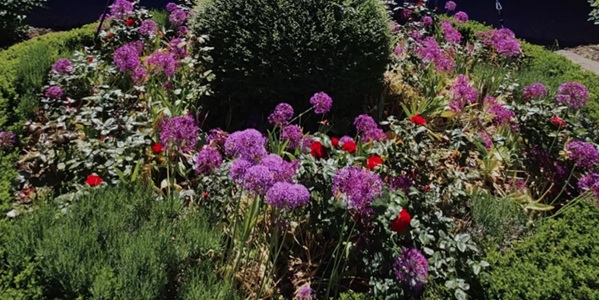
Beyond the glasshouses, the outdoor gardens offer equal wonders. The Rock Garden (Nettlefold Alpine Garden), built in 1894-1895 from 250 tons of Yorkshire sandstone, is one of Britain's finest alpine plant displays — primroses, snowdrops and alpine rhododendrons bloom in crevices come spring, simulating the harsh beauty of mountain tundra. The adjacent Rhododendron Walk transforms into a blazing sea of colour in late spring, with pink, purple, red and white rhododendrons layering into a floral tapestry, alongside the Fern Walk (planted in the 1890s) and Woodland Glade, forming a shaded strolling paradise. But the most awe-inspiring presence in the gardens is the Himalayan Cedar — donated and planted in the 1840s by the son of steam engine innovator James Watt, it still stands proudly in the Pinetum, its vast horizontal branches spreading like arms, its needles releasing a distinctive cedar fragrance. Even more remarkable is the Copper Beech on the main lawn — it stood on this land called "Holly Bank Farm" before the gardens were established in 1829, now over 200 years old, its deep purple leaves casting regal shadows across the lawn in summer, turning to copper flames in autumn. These ancient trees are living witnesses to history, having seen Birmingham's transformation from an Industrial Revolution powerhouse to a modern metropolis.
Butterfly House, Main Lawn & Victorian Bandstand
The social heart of the gardens is the sweeping main lawn, surrounded by manicured shrubs and flower borders. At its centre stands an octagonal cast-iron bandstand (Grade II listed) designed by F.B. Osborn in 1873, hosting summer concerts where brass band melodies echo through the treetops. The Coade stone fountain at the northern end of the lawn, designed and gifted in 1850 by prominent Birmingham architect Charles Edge, is an important landscape feature in Loudon's original plan. From May to September, the Butterfly House is a family favourite — hundreds of colourful butterflies from Africa, Central America and the Philippines fly freely in the greenhouse, blue morpho wings refracting metallic light in the sun, children holding sliced fruit waiting for butterflies to land on their fingertips. The southern end of the lawn features the Treetops Adventure playground, letting children burn off energy among treehouses and ropes. And the peacocks roaming everywhere — strutting elegantly across the lawn, fanning their tails among the flowers — add a fairy-tale quality to this Victorian garden. Grab a coffee and a handmade cake at Medicine Bakery café, sit on a bench by the lawn, listen to birdsong mingling with the distant murmur of the city, and you'll understand why Birmingham locals call this place their "green heart."
Practical Information
Getting There
  • Train from London Euston to Birmingham New Street: approx 1hr 20min
  • Bus 23/24/X8 from city centre to Westbourne Road stop, steps from entrance
  • Edgbaston Village tram stop approx 10-min walk
  • Self-drive: M5 Junction 3, follow A456 towards city centre
  • Free on-site parking available
Tickets
  • Adult: £10.00 (after March 2026 price adjustment)
  • Concession (students/65+/Blue Light Card): £9.00
  • Children (5-16): £6.00
  • Under 5s & essential carers: free
  • Family ticket: £31.00
  • Butterfly House: included in general admission, open May-Sep
Travel Tips
  • Glasshouses are hot and humid — wear light clothing and bring water
  • Picnicking on the main lawn is a must-do in summer; bring your own blanket
  • Arrive at 10am opening to avoid afternoon crowds and heat
  • Gardens open year-round (closed only Boxing Day and 27 Dec)
  • Cashless payments accepted; advance online booking recommended

Must-Try Eateries Near the Botanical Gardens

Medicine Bakery (Garden Café)

A cosy café nestled inside the gardens, famous for artisan bread, seasonal cakes and specialty coffee. After exploring the glasshouses, order a flat white with an apricot tart and sit by the window gazing at the Copper Beech's purple crown — this is Birmingham's most healing afternoon, £5-12 per person.

The White Swan

An elegant country-style gastropub on Harborne Road, just 0.2 miles from the gardens. Georgian sash windows, ancient fireplaces and heirloom furniture preserve 200 years of English charm. Signature slow-roasted pork ribs, crispy duck salad and Sunday roasts are unforgettable, £15-25 per person.

Soofi Restaurant

A warm Italian restaurant just 0.3 miles from the gardens. Handmade pasta, wood-fired pizzas and tiramisu are the stars, with a strong family atmosphere and attentive service. A few minutes' walk after your garden visit, £12-20 per person.

Colbeh Persian Kitchen & Bar

Approximately 6 minutes' walk away, this Persian restaurant serves stunning Jewelled Rice (saffron basmati with barberries and pistachios), Koobideh (grilled lamb mince skewers) and Fesenjan (pomegranate walnut chicken), rated by diners as the best Persian restaurant in the West Midlands, £15-25 per person.

Birmingham Botanical Gardens Travel Tips
Best Time to Visit
  • Open year-round (closed only Boxing Day and 27 Dec)
  • May-Sep: Butterfly House open + rhododendron blooms + outdoor concerts
  • Spring: Rock Garden primulas and alpine flowers in bloom
  • Autumn: Copper Beech turns copper, Pinetum at its most beautiful
Must-Try Foods
  • Medicine Bakery handmade pastries with coffee
  • The White Swan Sunday roast
  • Colbeh saffron Jewelled Rice
  • Soofi handmade tiramisu
  • Picnic on the main lawn (you can bring your own food)
Budget Reference
  • Adult ticket: £10.00
  • Student/senior concession: £9.00
  • Accommodation: £50-180/night (Birmingham city centre)
  • Food & drink: £5-25/meal
  • Total: £10-40 (incl. ticket & food)
FAQs
  • Do I need to book in advance? → Online booking recommended; walk-ins accepted
  • Can I bring my dog? → Only guide dogs are permitted
  • Are glasshouses wheelchair accessible? → All glasshouses and main paths are accessible
  • Is there a Chinese audio guide? → Not yet; download the Garden Explorer App instead

Explore More of Birmingham