Ulster Museum Travel Guide

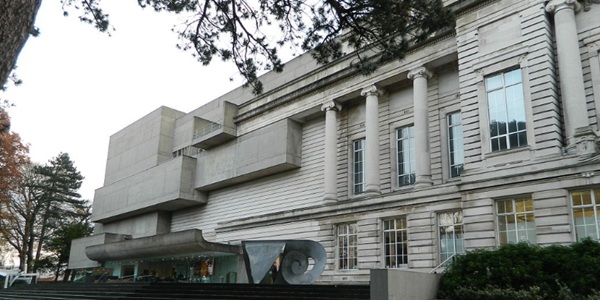
The Ulster Museum — Northern Ireland's largest comprehensive public museum, a cultural temple that fuses Neoclassical grandeur with Brutalist power. Its story began in 1821, founded by the Belfast Natural History Society, opening to the public for the first time in 1833. On 22 October 1929, the Neoclassical main building designed by Edinburgh architect James Cumming Wynne was officially unveiled in the Botanic Gardens — a seven-bay, four-storey Portland stone façade with giant Ionic colonnades, bearing a presence comparable to the Edward VII galleries of the British Museum. Due to the political turmoil of WWI, the Irish War of Independence and partition, the building took a full 16 years from the 1913 design competition to final completion; by the time it opened, its majestic Neoclassical style had already been left behind by the modernist wave. In 1972, architect Francis Pym achieved a rare architectural feat of "complete integration of old and new" with a radical Brutalist concrete extension — a spiralling circulation that seamlessly interlocks the white stone of the old building with the fair-faced concrete of the new wing, making it a masterpiece of Northern Irish Brutalism. From 2006 to 2009, the museum underwent a £17 million Heritage Lottery Fund-supported comprehensive renovation. Reopened with approximately 8,000 square metres of exhibition space spanning four major fields: Art, Archaeology, Ethnography and Natural Sciences. From the mummy of Takabuti from Egypt's 25th Dynasty (600 BC), to the gold jewellery salvaged from the 1588 Spanish Armada galleass Girona; from the 6-metre Edmontosaurus dinosaur skeleton to the 77-metre hand-stitched linen Game of Thrones tapestry; from Sir John Lavery's monumental portraits to "The Troubles and Beyond" conflict and peace gallery — here, using artefacts spanning 2,500 years, the complete story of Northern Ireland from antiquity to the present is told. Most heartening of all: permanent collection admission is completely free.

1821
Museum Founded
8,000㎡
Exhibition Space
£17m
2009 Renovation Cost
Free
Permanent Collection Entry
Ulster Museum Neoclassical and Brutalist fused architecture
Ulster Museum
Left: the 1929 Portland stone Neoclassical façade by James Cumming Wynne, giant Ionic colonnade overlooking the Botanic Gardens; Right: Francis Pym's 1972 Brutalist concrete extension — a spiralling geometric cantilever structure, the fusion of old and new considered a miracle of architectural history

Ulster Museum Half-Day In-Depth Tour

From the Egyptian mummy to Armada gold, from the dinosaur skeleton to the Game of Thrones tapestry — travel through 2,500 years of human and natural epic in 8,000 square metres

Duration
Half to 1 day (extendable to a 1-2 day Belfast trip)
Main Destinations
Ancient Civilisations Gallery, Archaeology & Girona Treasure, Natural Sciences Gallery, Irish Art Gallery, Botanic Gardens Palm House
Suitable For
History buffs, art lovers, families, dinosaur fans, Game of Thrones fans, academic travellers
Per Person Budget
£0-£25 (permanent collection free, special exhibitions £5-10, incl. coffee & souvenirs)
01
A Trio of Art, History & Nature
Egyptian Mummy & Ancient Civilisations Gallery · Girona Treasure & Irish Archaeology · Dinosaur Skeleton & Natural Sciences Gallery · Game of Thrones Tapestry & Irish Art
Highlights

Start your morning from Belfast City Hall, walking south along University Road for about 20-25 minutes (or take the Glider to Queen's University station and walk 5 minutes), passing through the Gothic Revival red-brick buildings of Queen's University campus to reach the main gate of the Botanic Gardens. The Ulster Museum stands surrounded by greenery — the Neoclassical colonnade and Brutalist concrete block creating a visually stunning dialogue. It is recommended to start from the fifth floor: take the lift directly to the top-floor George and Angela Moore Applied Art Gallery, then follow the spiral route turning left and descending floor by floor, passing through the Irish Art Gallery (originals by Sir John Lavery, Jack B. Yeats, Paul Henry), the Window on the World core gallery, coming face to face on the third floor with the 6-metre Edmontosaurus dinosaur skeleton, observing the polar bear Peter specimen and the life-size model of Irish wolfhound Patrick. Descending to the second floor, gaze upon Bronze Age gold jewellery and the Malone Hoard of 19 polished Neolithic stone axes in the archaeology gallery; on the first floor, confront the gold and silver coins and jewellery salvaged from the 1588 Spanish Armada galleass Girona — the most breathtaking treasure in the entire museum. Don't miss meeting the 2,500-year-old Takabuti mummy in the Egyptian gallery — a 2020 CT scan revealed the fatal knife wound to her upper left back and the rare H4a1 genetic marker. If a special exhibition is on, the 77-metre Game of Thrones hand-stitched linen tapestry unfurls along the labyrinthine display route on the top floor, sewn by 37 embroiderers over 1,000 hours — the detail is astonishing. When tired, the ground-floor Wynne & Pym Café, named after the museum's two architects, serves handmade sandwiches, Scotch eggs, scones and cakes, with floor-to-ceiling windows reflecting the green of the Botanic Gardens. Before leaving, pick up a souvenir from the museum shop — from Irish linen bookmarks to dinosaur fossil replicas, prices are reasonable. Exiting the museum, the Palm House within the Botanic Gardens (built 1852, one of Britain's earliest curved cast-iron glass structures) and the Tropical Ravine are open free of charge — the perfect ending for an afternoon stroll.

Attractions
Egyptian Mummy Takabuti & Ancient Civilisations Gallery
The Ulster Museum is one of the earliest institutions in the UK to conduct scientific research on mummies, completing over 20 interdisciplinary studies on Takabuti. This female mummy arrived in Belfast in 1834, first exhibited in 1835 — nearly two centuries ago. In 2020, a joint team from Manchester University and Queen's University used CT scanning, carbon-14 dating and DNA analysis to confirm: she dates from Egypt's 25th Dynasty (Kushite period, 600 BC), with a fatal stab wound to her upper left back almost certainly causing rapid death, and her mitochondrial haplogroup H4a1 is extremely rare in both ancient and modern Egyptian populations. The gallery also displays painted coffin fragments, canopic jars, amulets and funerary masks, alongside interactive screens showing 3D CT reconstruction images. Free entry. Allow 30-40 minutes.
Girona Treasure & Irish Archaeology
In 1588, the Spanish Armada galleass Girona ran aground off the coast of County Donegal, with nearly 1,300 crew and soldiers perishing at sea. In 1967, Belfast diver Robert Sténuit discovered a breathtaking hoard among the wreck of La Girona: hundreds of gold, silver and copper coins, gem-studded gold rings and crosses, enamel brooches, pearl necklaces and silk fragments embroidered with gold thread. This treasure is the museum's most dazzling star exhibit, forming a complete narrative chain of "Ireland from the Neolithic to the Middle Ages" alongside the Downpatrick Hoard Bronze Age gold ornaments, the Malone Hoard's 19 polished Neolithic stone axes, and the Shanmullagh Viking treasure. Roman and medieval coinage, early Christian cross-slabs and other artefacts are interspersed throughout. Free entry.
Dinosaur Skeleton & Natural Sciences Gallery (Window on the World)
"Window on the World" is the core gallery spanning three floors through the centre of the building, housing the most stunning specimens from each collection. Most eye-catching is the 6-metre-long, 2-metre-high Edmontosaurus (duck-billed dinosaur) skeleton — discovered in South Dakota, USA in 1979, with hundreds of bones excavated from the same site suggesting a mass die-off event. Beside it is a life-size Triceratops cast. The polar bear Peter specimen (died 1972 at Dublin Zoo, weighing 360 kg) silently tells a warning about global warming; the life-size model of Irish wolfhound Patrick (a champion dog standing 7 feet at the shoulder) astonishes visitors; plus thylacine (Tasmanian tiger) specimens, Japanese spider crabs, a giant squid model and a meteorite slice. Children can design their own dinosaur at the "Design-my-saurus" station. A phosphorescent mineral darkroom reveals the magical glow of fluorescent crystals at the push of a button. Free entry. A family favourite.
Game of Thrones Handmade Tapestry & Irish Art
The fifth-floor Irish Art Gallery houses painting, sculpture and decorative art treasures from the 17th century to the present: Sir John Lavery's grand society portraits, Jack B. Yeats' expressionist Irish landscapes and mythology, Paul Henry's misty Connemara hills, William Conor's sketches of Belfast working-class life, and John Luke's precise urban compositions. Matisse linen tapestries, Alexander McQueen and Vivienne Westwood fashion designs showcase applied arts mastery. But the biggest draw is the 77-metre Game of Thrones hand-stitched tapestry — a collaboration between Tourism Ireland and HBO, sewn by 37 embroiderers using ancestral Irish linen techniques over 1,000 hours, presenting key scenes from Seasons 1 to 7 — Daenerys' dragons are especially stunning. The tapestry has no glass barrier, allowing close viewing but strictly no touching. Free entry (the tapestry is occasionally loaned out; check the official website before visiting to confirm it is on display).
Practical Information
Getting There
  • 20-25 min walk from City Hall along University Road
  • Glider G1 to Queen's University station, 5 min walk
  • Botanic train station only 5 min walk
  • Metro bus 8/7 to Queen's University station
  • Self-drive: paid street parking on Stranmillis Road
Tickets
  • Permanent collection: completely free, no reservation needed
  • Opening hours: Tuesday to Sunday 10:00-17:00
  • Closed Mondays (except Northern Ireland bank holidays)
  • Special exhibitions may require ticket (approx £5-10)
  • Lockers £1 (non-refundable), located on ground floor
Travel Tips
  • Arrive at 10:00 opening to avoid afternoon crowds
  • Spiral route: turn left to go up (art), turn right to go down (history)
  • Do not touch exhibits; no eating or drinking in galleries
  • Some galleries prohibit loud conversation or photography
  • Wheelchair accessible with accessible facilities and family toilets

Must-Try Eateries Near the Ulster Museum

Wynne & Pym Café (Museum Café)

Named after the museum's two architects James Cumming Wynne and Francis Pym, this in-house café on the ground floor has floor-to-ceiling windows overlooking the Botanic Gardens. The menu includes hot soups, handmade sandwiches, Scotch eggs (sausage rolls), fresh scones, traybakes and cakes, paired with specialty coffee and leaf teas. Ingredients are primarily locally sourced, with affordable prices — sandwiches approx £4.50, soup with bread £3.95, cakes from £2.50. You can order a latte and sit by the window, or open your laptop for remote work. Opening hours match the museum (10:00-17:00), making it the perfect spot for a mid-visit break or a post-exhibition rest. Per person £5-10.

Café Conor

Located within the Crescent Arts Centre on Stranmillis Road, adjacent to the Botanic Gardens, this café was converted from the former studio of renowned Irish painter William Conor — his reproduced prints hang on the walls, and the menu items are named after him. The signature buttermilk pancake stack (£8.50), French toast with smoked bacon and Canadian maple syrup, and the Ulster Fry full Irish breakfast are all satisfying. Lunch options include homemade burgers, roast chicken salad and daily soup. Afternoon sunlight streams through Victorian sash windows onto wooden tables, creating a relaxed, artistic atmosphere. Just a 3-minute walk from the museum. Per person £10-18, open daily from morning until afternoon.

The Barking Dog

A stylish gastropub on Lisburn Road, about a 10-minute walk away. The menu is full of creativity: slow-cooked Irish lamb shoulder with mint quinoa, pan-seared sea bass with carrot purée, truffle fries and black garlic burger are all impressive. The bar area offers a curated selection of Northern Irish craft beers and cocktails. Industrial-chic decor with warm-toned lighting; weekend brunch is hugely popular. The signature sticky toffee pudding with vanilla ice cream is a must-order finale. Per person £15-28, advance booking recommended.

The Botanic Inn

Just a 5-minute walk from the museum, this is one of the most beloved traditional pubs for Queen's University students and locals. Classic fish and chips (£12), Irish stew (£11), roast meat platters and juicy burgers make up the hearty mains, perfectly accompanied by a pint of Guinness or local craft ale. Live music every evening — from folk ballads to indie rock — lively without being overwhelming. The upstairs restaurant area is suitable for family dining; the downstairs bar is the perfect place for a drink after exploring the museum, digesting half a day's cultural feast. Per person £10-20.

Ulster Museum Travel Tips
Best Time to Visit
  • Open Tuesday to Sunday; avoid Monday closures
  • Arrive at 10:00 opening for quieter mornings
  • Summer (Jun-Aug) has additional family activities and talks
  • Open on bank holiday Mondays
  • Botanic Gardens Palm House extends to 20:00 in summer
Must-See Exhibits
  • Takabuti 2,500-year-old Egyptian mummy & CT scan imagery
  • Girona Treasure Armada gold jewellery
  • 6-metre Edmontosaurus dinosaur skeleton
  • 77-metre Game of Thrones hand-stitched linen tapestry
  • Sir John Lavery & Jack B. Yeats Irish masterpieces
Budget Reference
  • Permanent collection entry: free
  • Special exhibition tickets: approx £5-10
  • Wynne & Pym Café: £5-10
  • Museum shop souvenirs: £3-20
  • Total: £0-25 (flexible spending)
FAQs
  • Do I need to book? → Permanent collection no reservation needed, walk-in anytime
  • Can I take photos? → Most galleries allow (no flash); some special exhibitions prohibit
  • Are there Chinese materials? → Official website provides Chinese-language museum map PDF for download
  • Suitable for children? → Very suitable; dinosaurs and Discovery Centres interactive zones are family favourites
  • Will the tapestry definitely be on display? → Occasionally loaned out for touring; check the official website before visiting

Explore More of Belfast