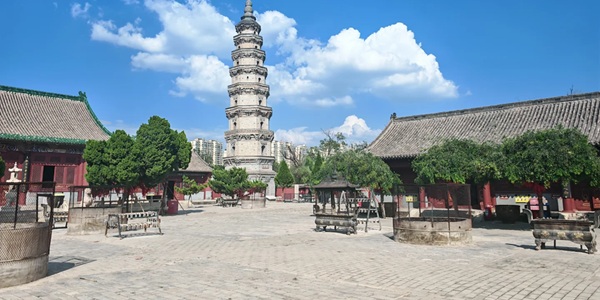
Taocheng District, the central urban area of Hengshui City in Hebei Province, integrates the historical sites of Baoyun Temple, the scenery of Hengshui Lake, and the Laobaigan liquor culture, combining natural ecology with historical heritage. A 3-day 2-night in-depth tour decodes the essence of Hengshui culture and appreciates the unique charm of the integration of the Lake City and humanities.
Visit the millennium-old historical sites of Baoyun Temple, admire the wetland scenery of Hengshui Lake, taste the mellow aroma of Laobaigan liquor, and unlock the ecological and cultural beauty of the Lake City
In the morning, visit the millennium-old Baoyun Temple and climb the Relic Pagoda to overlook the urban area. In the afternoon, visit the Hometown of Dong Zhongshu to learn about Confucian culture. In the evening, experience modern commerce and food at Hengbai International.
In the morning, stroll through Hengshui Lake Wetland Park to watch birds and enjoy the scenery, feel the beauty of natural ecology. In the afternoon, explore the Laobaigan Liquor Culture Museum to learn about brewing techniques. In the evening, admire the bright night view of Fuyang River.
In the morning, experience sports and leisure facilities at the Olympic Sports Park. In the afternoon, visit Hengshui Art Museum to feel the artistic atmosphere, then purchase local specialties and return.
A traditional famous snack in Hengshui, named for its shape like a sole. It is crispy on the outside and tender on the inside, and can be eaten with meat or fried dough sticks. It is one of the most favorite breakfasts of local people.
Made from fresh live fish from Hengshui Lake, slow-braised with traditional methods. The meat is tender and the soup is rich, making it the most representative food of the Lake City.
A traditional pasta around Hengshui, made by braising pancake shreds with eggs, shredded pork, etc. It has a chewy texture and a mellow taste, and is a local home-style food.
A famous Chinese liquor, originated in the Han Dynasty, flourished in the Tang and Song Dynasties, and prospered in the Ming and Qing Dynasties. It is famous for its "mellow and elegant, sweet and mellow taste", and is the most influential specialty of Hengshui.