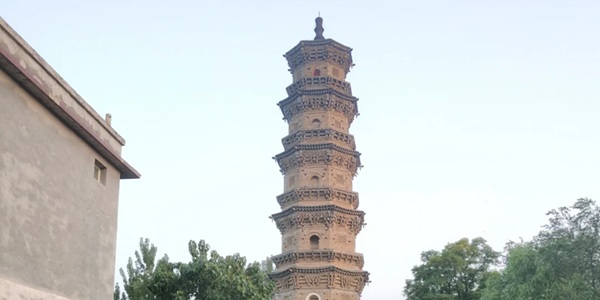
Gucheng County, Hengshui City, Hebei Province – a historic ancient city on the banks of the Grand Canal, integrating Qinglin Temple Pagoda, the Grand Canal Ancient Course, and Dongzi Cultural Park, blending canal culture with Confucian heritage. A 2-day 1-night in-depth tour decodes the essence of southeastern Hebei culture and appreciates the unique charm of the integration of ancient and modern times.
Explore the millennium-old vicissitudes of Qinglin Temple Pagoda, trace the relics of the Grand Canal Ancient Course, taste authentic Gucheng delicacies, and unlock the beauty of canal culture and Confucian inheritance
Explore Qinglin Temple Pagoda in the morning to appreciate the Song Dynasty architectural art, stroll along the Grand Canal Ancient Course in the afternoon to trace the history of water transport, and experience the integration of nature and humanity in the Canal Forest Park in the evening.
Visit Dongzi Cultural Park in the morning to appreciate Confucian culture, systematically understand local history at Gucheng Museum in the afternoon, and stroll around Zhengjiakou Ancient Town in the evening to experience the market customs.
A traditional famous food in Gucheng County, originated in the Qing Dynasty. It is made of high-quality pork through multiple smoking processes, with bright red color, rich aroma, fat but not greasy, and is a provincial-level intangible cultural heritage of Hebei.
Also known as "Dragon Beard Noodles", originated in the Ming Dynasty and once a tribute to the imperial court. Made of high-quality wheat flour and hand-pulled, it is as thin as hair, not mushy after long cooking, and has a smooth taste.
Derived from Dezhou Braised Chicken technology and improved with local characteristics, it uses local free-range chickens, made through more than a dozen processes, with tender meat and fragrant aroma.
Using wild mixed fish from the Grand Canal Ancient Course, cooked with farm-style methods, retaining the original flavor, with tender meat and rich soup, it is a traditional food of local fishermen.