Manchester Museum Travel

The Manchester Museum, part of the University of Manchester, was founded in 1890 and is one of the UK's largest university museums, housing approximately 4.5 million artefacts from the natural sciences and human civilisations. In 2023, following a £15 million "Hello Future" transformation, it reopened with a new exhibition hall, South Asia Gallery and Chinese Culture Gallery, and won the "European Museum of the Year Award" in 2025. Here, you can come face to face with Stan the 12-metre T.rex, encounter 20 human mummies in the Ancient Egypt gallery, wander through community-curated South Asian and Chinese culture galleries, and lock eyes with endangered frogs from around the world in the Vivarium. A half-day in-depth tour — from dinosaurs to mummies, from Victorian Gothic architecture to contemporary multicultural narratives — takes in 6 million years of human and natural stories in one visit.

1890
Year Founded
4.5M
Artefacts
3
Floor Galleries
Free
Entry
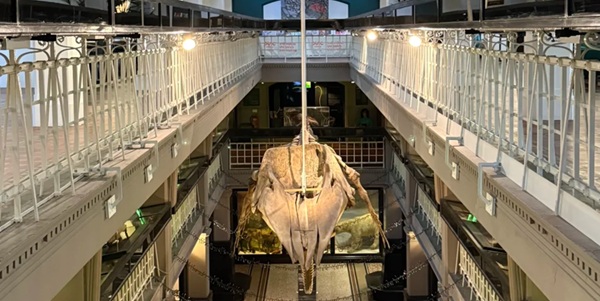
Manchester Museum Victorian Gothic Exterior and Atrium
Manchester Museum
Alfred Waterhouse's Victorian Gothic red-brick building, standing on the University of Manchester's Oxford Road campus, where 4.5 million artefacts tell the stories of humanity and nature

Manchester Museum Half-Day In-Depth Tour

From the roar of Stan the T.rex to the whispered secrets of Ancient Egyptian priests, from the nostalgia of the South Asian diaspora to the story of the Chinese acupuncture bronze figure — step deep inside Europe's Museum of the Year

Duration
Half Day (approx 2.5-3.5 hours)
Main Destinations
Fossils & Dinosaurs Gallery, Egypt & Sudan Gallery, South Asia Gallery, Chinese Culture Gallery, Vivarium
Perfect For
Families, natural history enthusiasts, cultural travellers, students, photography fans
Budget Per Person
£0-£30 (free entry + dining + special exhibitions)
01
A Journey of Discovery Across 6 Million Years
Fossils & Dinosaurs Gallery · Egypt & Sudan Gallery · South Asia Gallery · Chinese Culture Gallery · Vivarium
Highlights

Approximately a 15-minute walk from Manchester Piccadilly station, or take any Oxford Road bus corridor route (15/41/42/43/53 etc.) to the "Manchester Museum" stop. Entry is free but we recommend booking a time slot in advance on the official website. Open until 21:00 on Wednesdays, perfect for a relaxed after-work visit. Start on the ground floor in the Fossils & Dinosaurs Gallery — the 12-metre T.rex Stan charges towards you at full speed. Take the lift to the first floor and explore the Egypt & Sudan Gallery (18,000 artefacts), the Belonging Gallery and the South Asia Gallery. The Chinese Culture Gallery (Lee Kai Hung Chinese Culture Gallery) uses community co-curation to tell the story of Chinese immigration. Finally, head to the second-floor Vivarium for close encounters with endangered frogs from around the globe. The full tour takes about 2.5-3.5 hours — a comfortable half-day. The 2026 special exhibition "Human Natures" (22 April - 1 November) is free but requires separate booking.

Attractions
Fossils & Dinosaurs Gallery
The core exhibition on the ground floor, featuring the museum's crown jewel — Stan the T.rex charging at full speed: 12 metres long and 3.7 metres tall. Stan has never left the museum since arriving in 2004 (until 2027, when it will temporarily "holiday" at Victoria Baths). This fossil is one of the most complete T.rex specimens ever found, with bite marks from another tyrannosaur on its skull and a fractured neck bone telling the story of a life-or-death struggle 67 million years ago. Alongside Stan is the skeleton of April the Tenontosaurus, plus fossils of giant sea scorpions, ammonites and other prehistoric marine creatures. The ground floor also houses the Minerals Gallery, where Victorian-era mineral collections sparkle in Gothic display cabinets.
Egypt & Sudan Gallery
One of the largest Ancient Egyptian collections in the UK, with approximately 18,000 artefacts spanning from 3000 BC to the Roman period. Must-see star exhibits: The Two Brothers (Nakht-Ankh and Khnum-Nakht) — DNA analysis in 2014 confirmed they shared the same mother but had different fathers, solving a mystery dating back to 1907; the mummy of priestess Asru, first unwrapped at the Manchester Natural History Society in 1825; the "Rotating Statue" — which made global news in 2013 when CCTV appeared to show it turning on its own (later confirmed to be caused by vibration from nearby traffic); and the 12th Dynasty Riqqeh gold pectoral. The gallery is currently conducting a public consultation on whether to continue displaying human remains, with a decision expected in April 2026.
South Asia Gallery & Lee Kai Hung Chinese Culture Gallery
These two galleries, newly opened in 2023, are the museum's most innovative spaces. The South Asia Gallery was co-curated by the "South Asia Gallery Collective" of 30 community members in partnership with the British Museum. Six thematic sections cover everything from WWI uniforms to Bangladeshi rickshaws, Mughal emeralds to The Singh Twins' emotional map mural — the UK's first permanent South Asian diaspora experience gallery, winner of the 2024 European Museum Academy Award. Next door, the Chinese Culture Gallery displays over 300 artefacts in 190 square metres — a scroll celebrating Emperor Kangxi's 60th birthday, Qing dynasty embroidered official robes, an acupuncture bronze figure, umbrellas from the Chinese Labour Corps — told through five themes (Environment, Experiment, Migration, Trade, Medicine) spanning the story of Manchester's Chinese community from the 19th century to today.
Vivarium & Nature's Library
The Vivarium on the second floor is the museum's most unique space — a licensed live amphibian and reptile zoo running active conservation breeding programmes for globally endangered species (lemur leaf frogs, yellow-eyed leaf frogs, splendid tree frogs). Inside humid glass tanks, brightly coloured frogs leap among moss and vines, with children pressed against the glass, reluctant to leave. Next door, Nature's Library showcases a century of natural history collections in Victorian Gothic Revival style, with towering oak cabinets displaying bird, shell and insect specimens — stepping inside feels like entering a 19th-century scholar's study. The 2026 special exhibition "Human Natures" (until 1 November) is also located in the ground-floor Exhibition Hall, exploring the rupture and repair of the human-nature relationship.
Practical Info
Transport Guide
  • Approx 15-min walk from Manchester Piccadilly station
  • Approx 14-min walk from Oxford Road station
  • Buses 15/41/42/43/53 etc. stop directly outside the museum
  • Approx 17-min walk from St Peter's Square tram stop
  • No dedicated car park; nearest is University Car Park D
Ticket Info
  • Permanent galleries: Free (recommend booking time slot online)
  • "Human Natures" special exhibition: Free but requires separate booking
  • Guided tours: Some free, see official website events page
  • Closed Mondays (except August, open 10:00-17:00)
  • Wednesday late opening until 21:00
Travel Tips
  • Allow 2.5-3.5 hours (very extensive collection)
  • Saturday 8-10am is "Quiet Hour" — sensory-sensitive friendly
  • Fully accessible with Changing Places toilet facilities
  • Museum café serves freshly made brunch from 10:00
  • Gift shop specialises in fair trade and local handmade products

Must-Try Foods Near Manchester Museum

Museum Café

Located on the ground floor of the museum, accessible directly from Oxford Road. Following the 2023 renovation, the café features a brand-new kitchen serving freshly made breakfast, brunch and hot lunch menus — locally sourced ingredients with clear allergen labelling. Recommended: Manchester Full English Breakfast (with black pudding) and the daily homemade soup. Opens from 8:00 on Saturdays, perfect for early visitors catching the "Quiet Hour". Average £8-£15 per person.

Zouk Tea Bar & Grill

About a 10-minute walk from the museum, located at the entrance to the famous "Curry Mile" (Wilmslow Road). Zouk is one of the highest-rated modern South Asian restaurants on this strip. Charcoal-grilled Chicken Tikka and Lamb Biryani are the signatures, paired with a mango lassi. The contemporary décor contrasts sharply with the traditional old-school curry houses across the street. Average £15-£25 per person.

The Den Campus Food Court

Located inside the University of Manchester Students' Union, just a 3-minute walk from the museum. Multiple independent food stalls surround a communal dining area, ranging from Vietnamese Bánh mì to Middle Eastern hummus bowls. Affordable prices and a relaxed atmosphere make it the ideal quick lunch stop during your visit. Average £6-£12 per person.

Foundation Coffee House Oxford Road

Right opposite the museum on Oxford Road, this is a locally acclaimed independent speciality coffee shop. The signature oat milk latte and cinnamon bun are standouts, with beans roasted by local Manchester Coffee roasters and a rotating origin every week. The spacious, quiet interior is perfect for an afternoon break or reading an Ancient Egypt picture book bought from the museum gift shop. Average £5-£10 per person.

Manchester Museum Travel Tips
Best Time to Visit
  • Wednesday evening: Open until 21:00, fewer crowds, great atmosphere
  • Saturday 8-10am: Quiet Hour, sensory-sensitive friendly
  • Avoid school holiday midday: Peak family visitor traffic
  • Closed Mondays (except August)
Must-Try Foods
  • Museum Café Manchester Full English Breakfast
  • Zouk Charcoal Chicken Tikka & Mango Lassi
  • Foundation Coffee Oat Milk Latte
  • The Den Vietnamese Bánh mì
Budget Reference
  • Entry: Free
  • Special exhibition booking: Free
  • Dining: £5-25/meal
  • Souvenirs: £3-30
  • Total: £0-£30+
FAQs
  • Do I need to book? → Free but recommend booking time slot online; often full during holidays
  • Is half a day enough? → 2.5-3.5 hours covers the main galleries
  • Suitable for children? → Dinosaurs + live frogs + summer activities are very family-friendly
  • Is there a Chinese audio guide? → Not currently; download the official app for English audio tours

Explore More of Manchester