St Mungo Museum of Religious Life and Art Travel

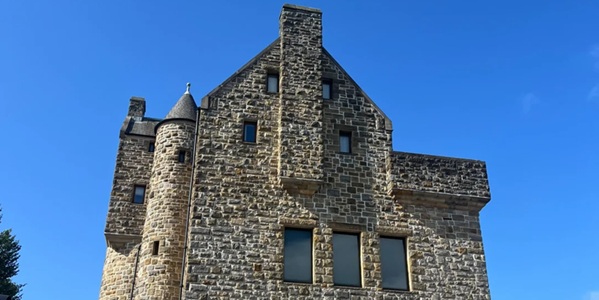
St Mungo Museum of Religious Life and Art — opened in 1993, one of the world's very few interfaith public museums, funded by the Friends of Glasgow Cathedral and designed by Ian Begg in Scottish baronial style, standing on the site of a medieval bishop's castle. Three galleries bring together sacred objects and masterpieces from Christianity, Islam, Hinduism, Buddhism, Judaism and Sikhism, and once housed Dali's Christ of St John of the Cross for 13 years. Outside, the UK's first Zen rock garden with raked white sand and moss islands is a spiritual oasis amid the city's clamour. A one-day in-depth tour includes a full museum visit, Glasgow Cathedral, the Victorian Necropolis and Provand's Lordship.

1993
Year Opened
£0
Free Entry
6
Major Religions Exhibited
1st
UK Zen Garden
St Mungo Museum of Religious Life and Art Scottish baronial exterior and Zen garden
St Mungo Museum of Religious Life and Art
Opened in 1993, one of the world's very few interfaith museums, standing on the site of a medieval bishop's castle. The UK's first Zen rock garden rests quietly among Scottish baronial architecture, a spiritual oasis in Glasgow's oldest quarter

St Mungo Museum 1-Day In-Depth Tour

From gazing breathlessly before a Dali masterpiece to silent meditation by the raked Zen garden, step into Glasgow's oldest medieval quarter and experience the harmonious resonance of six faiths and the timeless echoes of the Victorian Necropolis

Duration
1 day (extendable to 3-day Glasgow in-depth tour)
Main Destinations
St Mungo Museum, Cathedral, Necropolis, Provand's Lordship
Suitable For
Art lovers, religious scholars, families, photography enthusiasts, meditators
Budget per person
£0-£35 (museum free, includes East End craft food)
01
Interfaith Art, Gothic Vaults & Necropolis Panoramas
St Mungo Museum · Glasgow Cathedral · Glasgow Necropolis · Provand's Lordship
Highlights

In the morning, walk 15 minutes from George Square along the High Street to Glasgow's oldest medieval quarter. First enter St Mungo Museum — designed by Ian Begg in Scottish baronial style in 1993, standing on the site of a medieval bishop's castle, its honey-coloured stone exterior blending seamlessly with the neighbouring cathedral. In the Gallery of Religious Life on the ground floor, witness the striking juxtaposition of a Nigerian smallpox spirit carving, Egyptian mummy, Hindu bridal dress and Scottish christening gown. Upstairs in the Gallery of Religious Art, admire a Hindu bronze Shiva statue, a 17th-century Turkish prayer rug and Dora Holzhandler's Sabbath Candles in the dappled light of stained glass windows. Walk through the Scottish Gallery tracing the evolution of faith from 6th-century St Mungo to modern multicultural society. Step outside to the UK's first Zen rock garden, sitting in stillness amid the meticulously raked white sand patterns. In the afternoon, enter the neighbouring Glasgow Cathedral, gazing up at the 32-metre-high 14th-century wooden vaulted ceiling; descend stone steps to the Lower Church to find St Mungo's sarcophagus. Cross the 1833 "Bridge of Sighs" to climb Glasgow Necropolis hilltop, overlooking the city skyline from beside the John Knox monument. Descend to explore the 1471 Provand's Lordship opposite, touching the warmth of 500-year-old oak beams.

Attractions
St Mungo Museum of Religious Life and Art
Opened in 1993, one of the world's very few interfaith public museums, funded by the Friends of Glasgow Cathedral and designed by architect Ian Begg in Scottish baronial style, standing on the site of a medieval bishop's castle. Three permanent galleries: the Gallery of Religious Art brings together interfaith masterpieces including a Hindu bronze Shiva sculpture, 17th-century Turkish prayer rug, Dora Holzhandler's Sabbath Candles, and once housed Dali's 1951 masterpiece Christ of St John of the Cross for 13 years until its return to Kelvingrove Art Gallery in 2006; the Gallery of Religious Life presents birth, coming of age, wedding, healing and death rituals from Christianity, Buddhism, Hinduism, Islam, Judaism and Sikhism through an anthropological lens — Nigerian smallpox spirit carving, Egyptian mummy, Hindu bridal dress and Scottish christening gown in dialogue; the Scottish Gallery traces the evolution of faith from 6th-century St Mungo to modern multicultural society, featuring "New Scots" refugee exhibitions and "Faith Shared" banners. Outside, the UK's first Zen rock garden — meticulously raked white sand symbolising flowing water, moss islands and rocks creating the tranquillity of a Kyoto temple, visible from the second-floor windows. The Historic Scotland partnership shop sells local handmade jewellery, books and Scottish sweets with 20% member discount. Free entry, no booking required; allow 1-1.5 hours. Children's colouring and interactive telephone activity area on the second floor.
Glasgow Cathedral
Founded in 1136, Scotland's only complete surviving medieval Gothic cathedral, built over nearly 350 years, spared destruction during the Reformation thanks to the protection of Glasgow merchants. The building comprises an Upper Church and a Lower Church (crypt): the Upper Church's 32-metre wooden vaulted ceiling is Scotland's largest medieval timber ceiling, with dark beams carved with floral and mythological reliefs; the Lower Church, built in the mid-13th century, surrounds St Mungo's tomb with four pillars — the pillar attached to the wall at the southwest corner dates from the 12th century, the oldest stonework in the cathedral. The late 15th-century stone pulpitum features seven pairs of "Seven Deadly Sins" stone figures, vividly expressive and morally instructive. Post-war stained glass windows give the cathedral one of the finest collections of contemporary stained glass in Britain. Volunteer guides offer free tours (Mon-Sat); allow 1-2 hours.
Glasgow Necropolis
Opened in 1833, a Victorian "garden of death" with approximately 3,500 monuments spread across 37 acres of hillside, considered one of Europe's most spectacular Victorian cemeteries. Enter via the 1833 "Bridge of Sighs" from the cathedral, ascending the zigzag carriageway past Greek Revival, Moorish and Baroque mausoleums. The most spectacular is the Monteath Mausoleum (1850) — a circular temple form incorporating Hindu ornamentation, said to have been funded by jewels received by the owner for stopping a runaway elephant. At the summit stands the 1825 monument to Reformation leader John Knox, offering the best free panoramic vantage point in the city — overlooking the cathedral roof, the Victorian facade of Glasgow Royal Infirmary and distant hills. The cemetery contains the graves of 19 Commonwealth servicemen (15 from WWI, 4 from WWII) and numerous Glasgow lord provosts and industrial pioneers. Wear non-slip shoes — stone paths are slippery after rain; allow 45-60 minutes.
Provand's Lordship
Built in 1471, Glasgow's oldest surviving domestic building, one of only four surviving medieval secular buildings in Scotland, constructed by Bishop Andrew Muirhead of Glasgow as part of St Nicholas Hospital. The three-storey stone building is connected by a spiral staircase, furnished to reflect the life of a wealthy Glasgow merchant circa 1700 — 17th-century oak furniture donated by Sir William Burrell, Scottish royal portraits and a four-poster bed convey the warmth and solidity of the late medieval period. The original oak floor beams are protected by a false floor, allowing visitors to tread on 500-year-old timbers and feel the warmth of history. Behind the house, St Nicholas Garden features mysterious medieval "Tontine Heads" stone carvings. After serving as a sweet factory in 1906, it was rescued by the Provand's Lordship Society and reopened in the 2020s after a £1.6 million renovation. Free admission; allow 30-45 minutes.
Practical Info
Getting There
  • Approx 15 min walk from George Square along High Street
  • Nearest train station: High Street, 5 min walk
  • Subway: Buchanan Street station, approx 15 min walk
  • Bus 19/38/57 stops at Castle Street
  • Glasgow Queen Street station approx 12 min walk
Tickets
  • St Mungo Museum: Free (donations welcome)
  • Cathedral: Free
  • Glasgow Necropolis: Free
  • Provand's Lordship: Free
  • All four sites require no booking
Travel Tips
  • Museum open Mon-Thu & Sat 10:00
  • Fri & Sun open at 11:00 (note 1 hour later)
  • Lift to all floors, wheelchair accessible throughout
  • Guide/assistance dogs welcome; water bowls provided
  • Children's activity area with colouring and interactive phone on 2nd floor

Must-Eat Foods Near St Mungo Museum

Celentano's @ Cathedral House Italian Restaurant

A 2-minute walk from the museum, located in the historic Cathedral House at 28-32 Cathedral Square, praised by Guardian food editor Grace Dent as a Michelin Bib Gourmand recommended restaurant. A seasonal menu changes weekly based on local supplier produce, with handmade pasta widely regarded as the best in Glasgow — cacio e pepe and Scottish scallops with lemon butter sauce are signatures. A curated natural wine list complements the warm, Italian family dinner atmosphere. Per person £20-£35.

Drygate Brewing Co. Craft Beer Bar

A 5-minute walk from the museum, a craft beer殿堂 converted from a 1960s cardboard box factory, neighbouring the century-old Tennent's brewery. Floor-to-ceiling windows face the brewing equipment; roast duck breast with lentil bacon cassoulet, smoked fish and chips and Spanish Sobresada sausage are signatures, paired with house-brewed Outaspace Apple Ale or Mango Pale Ale. Beers can be sampled in 1/3 pint measures to try multiple flavours; the bottle shop sells limited-edition cans to take away. Per person £15-£25.

The Howgait Traditional Scottish Bistro

An 8-minute walk from the museum, a cosy bistro tucked away near the medieval quarter, specialising in authentic Scottish home cooking — haggis with Scotch whisky sauce, Cullen Skink fish soup and oatcakes are must-order combinations. Affordable prices and generous portions make it the ideal quick refuel after visiting the museum. Per person £8-£15.

Obsession of India Indian Restaurant

A 10-minute walk from the museum, one of Glasgow's highest-rated Indian restaurants (TripAdvisor 4.8). Butter chicken, grilled lamb chops and fragrant naan bread showcase authentic North Indian flavours with layered spices that are bold without being harsh. Walk south along the High Street from the museum to reach it — a feast for the senses after a cultural tour. Per person £15-£25.

St Mungo Museum Travel Tips
Best Time to Visit
  • Spring/Summer (May-Aug): Zen garden white sand especially tranquil in sunlight
  • Autumn (Sep-Oct): Best autumn colours from second floor overlooking cathedral
  • Winter (Nov-Mar): Museum warm and cosy, temporary exhibitions abundant
  • Tuesday-Thursday mornings have fewest visitors for best experience
Must-Try Foods
  • Haggis — Scotland's national dish
  • Cullen Skink (smoked haddock chowder)
  • Handmade pasta (Celentano's)
  • Craft Apple Ale (Drygate Outaspace)
  • Scotch whisky tasting
Budget Reference
  • Museum admission: £0 (free)
  • Cathedral/Necropolis/Lordship: All free
  • Dining: £15-25/meal
  • Transport: £3-5 (bus single or subway)
  • Total: £20-35 (day trip, all free attractions)
FAQ
  • Do I need to book? → All free, no booking required, walk in directly
  • Chinese information available? → Information sheets in 10 languages (including Chinese)
  • Can I take photos? → Yes, but please disable flash
  • Wheelchair accessible? → Lift to all floors, fully accessible
  • Parking convenient? → Paid parking at Castle Street

Explore More Glasgow Areas