University of Glasgow Travel

University of Glasgow — the fourth oldest university in the English-speaking world, founded by papal bull in 1451, with alumni including father of economics Adam Smith and Lord Kelvin, father of thermodynamics. The Gothic Revival main building designed by Sir George Gilbert Scott is famous for its spire, cloisters and quadrangle, inspiring the look of Hogwarts in Harry Potter, and has been used as a filming location for Cloud Atlas and Batman. The university houses Scotland's oldest museum — the Hunterian Museum (opened 1807), the world's largest permanent collection of works by Whistler and Mackintosh, and the Zoology Museum with nearly one million specimens. The 1-day in-depth tour includes a full tour of the main building, exploration of three museums and West End food discovery.

1451
Year Founded
1M+
Collection Items
3
Free Museums
#87
QS World Ranking
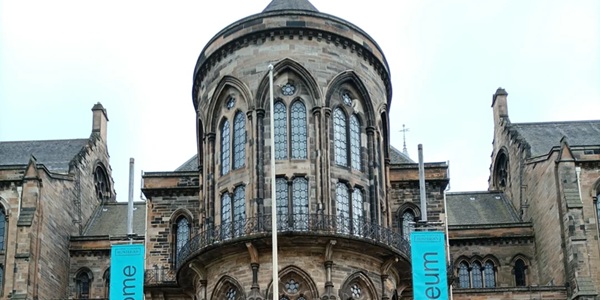
University of Glasgow Gothic Revival main building and cloisters exterior
University of Glasgow
Founded in 1451, the fourth oldest university in the English-speaking world. Sir George Gilbert Scott's Gothic Revival main building with its spire and cloisters inspired the look of Hogwarts. Three museums on campus are all free to enter.

University of Glasgow 1-Day In-Depth Tour

From the play of light and shadow through cloister arches to the dinosaur fossils of the Hunterian Museum, step into Scotland's oldest academic halls and experience a dialogue across time between Gothic spires and Mackintosh's Art Nouveau lines

Duration
1 day (extendable to 3-day Glasgow in-depth tour)
Main Destinations
Main Building, Hunterian Museum, Mackintosh House, Hunterian Art Gallery, Zoology Museum
Suitable For
Harry Potter fans, architecture lovers, art enthusiasts, history buffs, families
Budget per person
£0-£40 (campus and museums free, includes West End food)
01
Academic Halls, Museums & West End Slow Living
Main Building · Hunterian Museum · Mackintosh House · Hunterian Art Gallery · Zoology Museum
Highlights

In the morning, enter the campus through the Pearce Lodge entrance and walk along University Avenue towards the red sandstone Gothic Revival main building. Capture the magical play of light and shadow on stone pillars in the arched cloisters — this is where countless "Harry Potter Hogwarts" photo moments are born. Ascend the main staircase to admire the painted ceiling of Bute Hall and pause before the statue of Adam Smith. Then enter the Hunterian Museum to come face to face with dinosaur fossils, ancient Egyptian mummies and James Watt's prototype steam engine. In the afternoon, visit the Mackintosh House — the master's hand-designed interiors have been faithfully reconstructed on the third floor, with every chair and teacup serving as a textbook of Art Nouveau design. Finally, stroll to the Zoology Museum to see the giant squid specimen, or gaze upon masterpieces by Rembrandt and Whistler at the Hunterian Art Gallery. In the evening, enjoy modern Scottish cuisine at a lane restaurant on Byres Road.

Attractions
University Main Building (Gilbert Scott Building)
Construction began in 1866, designed by Sir George Gilbert Scott as a Gothic Revival masterpiece, second only to the Houses of Parliament as the largest building project in Britain at the time. The iconic cloisters with Palladian arches cast dramatic shadows in the afternoon light, providing the ultimate "Harry Potter Hogwarts" aesthetic — Cloud Atlas and Batman have both filmed here. The main staircase leads to Bute Hall, the grand graduation ceremony hall with a painted ceiling decorated in the heraldic colours (red, blue, silver, gold) of the 3rd Marquess of Bute, and five commemorative stained glass windows designed by masters including Burne-Jones and Douglas Strachan. At the foot of the staircase stands a memorial statue of Adam Smith, father of economics, who taught and served as rector at the university. The quadrangle casts rainbow light patches on sunny days, a must-photograph moment for enthusiasts. Arrive before 10am to avoid crowds.
Hunterian Museum
Scotland's oldest public museum, established in 1807 from the bequest of anatomist William Hunter. Located inside the main building, the collection exceeds one million items, with permanent exhibits including: the Bearsden shark fossil (a complete 33-million-year-old specimen), Cleopatra coins, an ancient Chinese world map, Roman commemorative sculptures from the Antonine Wall, scientific instruments of James Watt and Lord Kelvin, and the World Culture Hall's collection from Captain Cook's Pacific voyages. The Dinosaur Hall displays Tyrannosaurus Rex and Triceratops fossil skeletons, while the Mummy Gallery houses ancient Egyptian and South American mummies. Features a "Curatorial Discomfort" intervention zone reflecting on colonial history and Eurocentric narratives. Free entry, allow 1 hour.
Hunterian Art Gallery & Mackintosh House
The Hunterian Art Gallery houses masterpieces by Rembrandt (The Entombment), Chardin (Lady Taking Tea), Rubens and Gainsborough, with Scottish Colourists and Glasgow Boys works forming the most important Scottish art collection in Britain. The world's largest permanent collection of James McNeill Whistler — honorary doctor of the university — systematically presents his etchings and oil paintings. The centrepiece is the Mackintosh House: the complete interiors of the master's 1906-1914 residence — including living room, bedroom, dining room and study — have been faithfully reassembled across three floors, with every piece of furniture designed by Mackintosh himself, from high-backed chairs to silver cutlery, each a textbook example of Art Nouveau design. The newly opened Mackintosh House Interpretation Gallery (2024) uses video, drawings and objects to tell the century-long story of these legendary interiors that "moved three times." Gallery free, Mackintosh House £8 (£6 concession).
Zoology Museum (Hunterian Zoology Museum)
Opened in 1923, located in the Graham Kerr Building, displaying nearly 800 animal specimens arranged in classic taxonomic order — from African elephants to echidnas, from giant squid to glass sponges — a three-dimensional textbook of the diversity of the animal kingdom. Many specimens were purchased from 19th-century natural history suppliers, with some originating from Captain Cook's Pacific voyage collections. Approximately one-fifth of the species on display are now classified as threatened, making this museum an irreplaceable archive of life in the era of climate change. The massive sperm whale tooth and polar bear specimen are particularly impressive, making it a paradise for family science education. Free entry, about a 5-minute walk from the main building.
Practical Info
Getting There
  • From Glasgow Airport: bus 500 approx 20 min to city centre
  • Hillhead subway station: approx 10 min walk to main building
  • From city centre: approx 25 min walk via Sauchiehall Street
  • Bus 4/4A direct to University Avenue
  • Subway day ticket approx £4.50 unlimited rides
Tickets
  • Campus & Cloisters: Free (open all day)
  • Hunterian Museum: Free
  • Hunterian Art Gallery: Free
  • Mackintosh House: £8 (concession £6)
  • Zoology Museum: Free
Travel Tips
  • Main building interior open Mon-Fri only; weekends outdoor campus only
  • Best cloister photo time: 2-4pm when sunlight streams through
  • Hunterian Museum closed on Mondays
  • Campus parking permit-only; public transport recommended

Must-Eat Foods Near the University of Glasgow

Ubiquitous Chip

Deep in the cobbled lane of Ashton Lane, a legendary West End restaurant with Michelin recognition. Signature slow-braised lamb shoulder with whisky sauce, Cullen Skink fish soup and Scottish beef tartare are the must-order trio. The indoor garden conservatory space is romantically lit, making it the perfect dinner finale to a university culture tour. Per person £30-£45.

Sound Bite

Located on the second floor of the Queen Margaret Union, a 1-minute walk from the main building. Serves Southeast Asian fast food at lunchtime — creamy prawns, tom yum soup, salted egg chicken — and authentic Malaysian dishes with craft beer in the evenings, the most popular canteen-level eatery on campus. Per person £8-£15.

Café Antipasti

Right on Byres Road opposite the university's back gate, just a 3-minute walk. Authentic pasta, handmade pizza and tiramisu are the signatures; window seats offer views of West End street life while you eat. Affordable prices and generous portions make it the top choice for a quick lunch after visiting the museums. Per person £12-£20.

The Pot Still

An 8-minute walk from the university, one of Glasgow's most celebrated whisky bars with over 900 Scottish single malts on display. Tell the bartender your taste preference and they'll recommend a小众 distillery dram. Pair with haggis balls or Scotch eggs for an authentic local drinking culture experience. Per person £15-£30.

University of Glasgow Travel Tips
Best Time to Visit
  • Spring/Summer (May-Aug): Campus lush green, cloister light at its best
  • Autumn (Sep-Oct): Quadrangle golden fallen leaves stunning
  • Winter (Nov-Mar): Bute Hall warm and dignified, Christmas events
  • Mon-Fri for main building interior; weekends outdoor campus only
Must-Try Foods
  • Haggis — Scotland's national dish
  • Cullen Skink (smoked haddock chowder)
  • Whisky tasting (The Pot Still)
  • Scones with clotted cream
  • Handmade pasta (Café Antipasti)
Budget Reference
  • Campus tour: £0 (free all day)
  • Three museums: £0 (only Mackintosh House £8)
  • Dining: £15-35/day
  • Transport: approx £5 (subway day ticket)
  • Total: £20-50 (day trip)
FAQ
  • Do I need to book? → Campus no booking needed; Mackintosh House recommended to book ahead
  • Chinese guided tour available? → Currently English guide booklet and Bloomberg Connects digital guide only
  • Can I take photos? → Campus and cloisters free to photograph; no flash in museums
  • Can I enter the main building on weekends? → Interior open weekdays only; weekends outdoor campus only
  • Parking convenient? → Campus permit-only parking; public transport or Park and Ride recommended

Explore More Glasgow Areas