Stow-on-the-Wold Travel
On the highest point of the Cotswolds in Gloucestershire, England — Stow-on-the-Wold, 800 feet (244 metres) above sea level, is the **highest market town in the Cotswolds**, where the Roman Fosse Way meets eight ancient roads at a thousand-year-old market hub. Chartered by Henry I in 1107, granted two annual livestock fairs by Edward IV in 1476, at its peak trading 20,000 sheep in a single day. The Market Square, surrounded by 16th-17th century honey-coloured stone houses, is the "Antique Capital of the Cotswolds"; the yew-framed north door of St Edward's Church is rumoured to have inspired Tolkien's Doors of Durin in *The Lord of the Rings*; on 21 March 1646, the last battle of the English Civil War ended here. A one-day classic tour includes antique hunting in the square, finding the Tolkien door, tracing Civil War footsteps and walking the Cotswold Way.
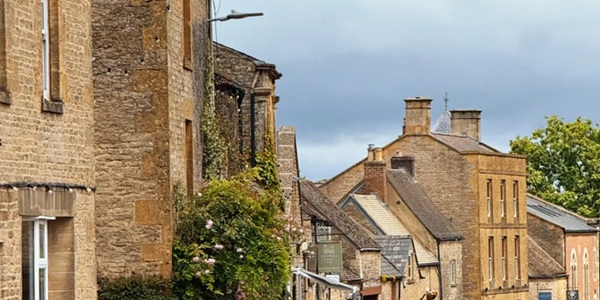
Stow-on-the-Wold One-Day Classic Tour
Wander the 800-year-old Market Square, explore St Edward's Church with its Tolkien-inspired door, hunt for antiques, trace Civil War footsteps, and walk the Cotswold Way, feeling the pulse of the Cotswolds' highest market town
Take Pulhams bus 801 from Moreton-in-Marsh station (approx 15 minutes) or drive up the A429 to reach Stow-on-the-Wold — where eight ancient roads converge, every approach is uphill, and the Market Square opens up at the summit. First explore the square: on the west side, the 1450 "Crooked House" (formerly the King's Arms) leans from 500 years of subsidence — legend says Charles I spent the night here on 8 May 1645 before heading to the Battle of Naseby; the medieval Market Cross in the centre served as a warning to merchants trading fairly, with a base plaque commemorating General Astley's last stand; the adjacent stocks are relics of medieval justice. Wander Sheep Street (named for the narrow Tures lanes used to drive sheep to market) and Church Street browsing antique shops — Tara Antiques Centre occupies three floors of a Grade II listed manor house on the square, Durham House Antiques has four showrooms with over thirty dealers, Styles of Stow specialises in longcase clock restoration — the heart of the "Antique Capital of the Cotswolds". In the afternoon visit St Edward's Church: the existing building dates from the 11th century, the tower completed in 1447 at 88 feet (26.8 metres), housing Gloucestershire's heaviest ring of eight bells; the north door framed by yew trees is the famous "Tolkien Door", rumoured to be the inspiration for the Doors of Durin in *The Lord of the Rings* — Tolkien visited frequently while teaching at Oxford but no firm evidence exists; inside, a painting of the Crucifixion by Flemish artist Gaspar de Craeyer hangs on the left wall, and a brass memorial to Hastings Keyte, a 23-year-old Royalist officer killed in action, is set into the floor before the altar. Evening dinner at The Porch House (claiming to be England's oldest inn, dating back to the 10th century) or The Old Stocks Inn (17th-century coaching inn) for Cotswold lamb.
- The Porch House Claims to be England's oldest inn
- The Old Stocks Inn 17th-century coaching inn boutique
- Number Four Fosse Way Romantic boutique with 18 rooms
- Huffkins 17th-century square tea room & bakery
- The Old Stocks Inn Cotswold lamb
- The Porch House Roast venison & seafood pasta
- Farmers market on 2nd and last Thursday monthly
- Many antique dealers prefer cash — bring pound coins
- Church north door best in early morning with no crowds and soft light
Stow-on-the-Wold is a key waypoint on the **Cotswold Way** National Trail — 102 miles from Chipping Campden to Bath, accessible directly from the town. Day 2 morning: walk south along the Cotswold Way for 4.5 miles (approx 7.2 km) gentle downhill to Bourton-on-the-Water, passing fairy-tale meadows and Cotswold drystone wall countryside, about 2 hours. Alternatively, take a short walk north to the Donnington village junction, follow the footpath sign west for 10 minutes to climb Donnington Ridge (OS SP187 281), overlooking the open battlefield of the last Civil War engagement on 21 March 1646, marked with a battlefield interpretation panel. In the afternoon, drive 10 minutes south along the A429 (the Roman Fosse Way, built mid-1st century AD from Exeter to Lincoln) to Lower Slaughter and Upper Slaughter — the "sister villages" with mill streams and unmarked stone roads preserving medieval character; then another 10 minutes to Bourton-on-the-Water to walk its five stone bridges. Return to Stow along the Fosse Way in the evening, finishing with a local ale at The Unicorn Hotel (17th-century massive stone fireplace).
- Train: Paddington to Moreton-in-Marsh then Pulhams 801
- Driving: A429 (Fosse Way) direct, free Fosseway car park on edge of town
- Bus: Pulhams 801 Cheltenham↔Bourton↔Stow↔Moreton
- Market Square/Antique Lanes: Free
- St Edward's Church: Free (donations welcome)
- Cotswold Way trail: Free
- St Edward's Hall Civil War collection: £10 by appointment
- Donnington battlefield: Free
- Allow half a day for antique hunting — many dealers accept negotiation
- Wear waterproof boots for hiking; Wold top is windy — bring a jacket
- Autumn golden-brown stone walls + low-angle sunlight = best photos
Stow-on-the-Wold Must-Eat Foods
The Old Stocks Inn Square Boutique Restaurant
A Travelers' Choice award-winning restaurant converted from a 17th-century coaching inn, right on the Market Square. Signature Cotswold lamb with sweetbreads, roasted cod, Sunday roast; terrace seating overlooking the square. Average £20-£40 per person.
The Porch House England's Oldest Inn
On Digbeth Street, claiming to date back to the 10th century, with exposed stone walls, floral fabrics and en-suite bathrooms blending rustic charm with contemporary comfort. Menu includes roast venison, prawn & chorizo pasta, cheese platter. Average £18-£35 per person.
Huffkins Square Tea Room & Bakery
Occupying a 17th-century listed building on Market Square, the flagship of the Cotswold chain. Artisan sourdough, cream teas, scones and takeaway hamper baskets. Mon-Fri 9:00-17:00, Sun 10:00-16:30. Average £6-£14 per person.
The Unicorn Hotel 17th-Century Stone Fireplace Pub
A 17th-century former coaching inn retaining a massive stone fireplace and low oak beams — the classic finish point after walking the Cotswold Way. Local ales, craft beers and light meals; fireside seats especially warm in winter. Average £12-£22 per person.
- 2nd and last Thursday monthly: Farmers market day
- April-June: Wildflowers and fresh yew growth at church
- September-October: Golden-brown Wold-top meadows + low-angle light
- The Old Stocks Cotswold lamb
- Huffkins cream tea & sourdough bread
- Porch House roast venison & seafood pasta
- Unicorn local ale with fireside snacks
- Cotswold Cheese Company 120+ types of cheese
- Tickets: £0-£10 (mostly free)
- Accommodation: £120-£260/night (Porch House/Old Stocks)
- Meals: £15-£35/day (tea room + dinner)
- Transport: £5-£20 (bus/driving fuel)
- Total: £10-£80 (day trip)
- Did the north door of St Edward's really inspire Tolkien? → Unproven legend, but the yew arch bears a striking resemblance to the Doors of Durin in *The Lord of the Rings* — worth seeing for yourself
- How to get there without a car? → Moreton-in-Marsh station then Pulhams 801 about 15 minutes direct
- Is High Street the same as Broadway/Chipping Campden High Street? → No, "High Street" is a generic term for the main street in English towns; here it refers to Stow's Sheep Street + Church Street antique district
- Suitable for children? → Yes — open square space + Tures narrow lane adventure + Unicorn fireplace