Xunxian Travel
Xunxian County, Hebi City, Henan Province — a national-level historical and cultural city, integrating the Buddhist culture of Dapishan Mountain, the Taoist heritage of Fuqiushan Mountain, and the Ming and Qing style of Xunxian Ancient City, famous for the "No.1 Ancient Temple Fair in Northern China". A 2-day 1-night in-depth tour to appreciate the thousand-year cultural accumulation and folk customs.
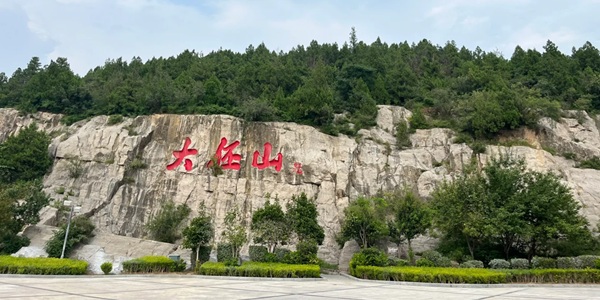
2-Day 1-Night Cultural Pilgrimage Tour in Xunxian
Climb Dapishan Mountain to pay homage to the thousand-year-old stone Buddha, wander through the ancient city to taste the customs of the Ming and Qing dynasties, explore Fuqiushan Mountain to comprehend Taoist mysteries, visit Liyang Granary to recall the prosperity of grain transportation, and attend the temple fair to appreciate intangible cultural heritage performances
Climb Dapishan Mountain in the morning to pay homage to the largest stone Buddha in northern China and visit Buddhist relics; stroll around Xunxian Ancient City in the afternoon to admire Ming and Qing architecture and ancient street customs; wander around the ancient city night market in the evening to taste special snacks and watch folk performances.
- Ming and Qing Style Guesthouses in the Ancient City (near East Street)
- Dapishan Mountain Scenic Area Hotel
- Business Hotels in Xunxian Urban Area (Liyang Road)
- Xunxian Zimo (Stuffed Bun)
- Xunxian Eight Bowls
- Pear Syrup Candy
- Fermented Bean Milk Rice
- It is recommended to hire a tour guide for Dapishan Mountain (¥60/time) to deeply understand Buddhist and Taoist culture
- Hanfu rental for photography is available in the ancient city (¥30/hour)
- Accommodation should be booked in advance during the temple fair (from the first day to the second day of the lunar new year)
Visit Fuqiushan Mountain in the morning to explore Taoist culture and Bixia Palace; visit Liyang Granary Ruins in the afternoon to trace the history of grain transportation in the Sui and Tang dynasties; visit Xunxian Museum in the evening to systematically understand local history, then purchase local specialties and return.
- Bus No.1 in the county connects Dapishan Mountain, Ancient City and Fuqiushan Mountain
- Bus No.3 directly to Liyang Granary Ruins
- Taxi fare between scenic spots is about ¥10-15
- Dapishan Mountain: ¥60
- Fuqiushan Mountain: ¥40
- Wenzhi Pavilion (climbing): ¥10
- Liyang Granary Ruins: ¥30
- Xunxian Museum: Free (reservation required)
- Traditional blessing ceremonies are held at Bixia Palace Temple Fair on the 9th day of the first lunar month
- VR experience project is available at Liyang Granary Ruins (¥15/person)
- Free guided tours are available at the museum on weekends (10:00/15:00)
Must-Try Food in Xunxian
Xunxian Zimo (Stuffed Bun)
The iconic snack of Xunxian, with the same origin but different evolution from Hebi Zimo. It is made by wrapping pork filling and eggs in dough and baking on a special griddle. The outer skin is crispy and the inner filling is tender. Evolved from military rations in the Ming Dynasty, it is also known as "Military Bun".
Xunxian Eight Bowls
A traditional banquet food in Xunxian, consisting of eight bowls (four meat and four vegetable dishes). The meat dishes are mostly braised pork, crispy pork, meatballs, etc., and the vegetable dishes include tofu, vermicelli, cabbage, etc. It emphasizes the combination of meat and vegetables, and is the standard banquet for local festivals and receiving guests.
Pear Syrup Candy
Intangible cultural heritage food of Xunxian, made from local duck pears with Chinese medicinal materials such as fritillary bulb and poria cocos. It is reddish brown in color, sweet in taste, has the effect of moistening the lungs and relieving cough, and was a tribute in the Ming and Qing dynasties.
Fermented Bean Milk Rice
A homemade food in Xunxian, cooked with mung bean fermented milk as soup, added with millet, peanuts, radish, tofu, etc. It is sour and delicious, relieves greasiness and stimulates appetite. It is said to be a characteristic staple food invented by Xunxian people in the Ming Dynasty to save grain.
- 1st to 2nd day of the lunar new year: Xunxian Ancient Temple Fair (national intangible cultural heritage, one of the four major ancient temple fairs in China)
- Spring (March-May): Dapishan Mountain and Fuqiushan Mountain are covered with lush vegetation, suitable for mountain climbing
- Autumn (September-November): Cool weather, suitable for strolling in the ancient city and exploring history
- Xunxian Zimo (Old Shop on East Street of Ancient City)
- Xunxian Eight Bowls (Folk Cuisine Restaurant on Liyang Road)
- Pear Syrup Candy (Intangible Cultural Heritage Workshop on South Street)
- Fermented Bean Milk Rice (Morning Market Stalls)
- Fried Shrimp (Specialty of Summer Night Market)
- Tickets: About ¥140
- Accommodation: ¥120-260/night (price increases by about 50% during temple fair)
- Catering: ¥60-100/day
- Transportation: About ¥30
- Total: ¥450-800
- What are the characteristic activities of Xunxian Temple Fair? → Intangible cultural heritage performances such as lion dance, stilt walking, back pavilion, carrying pavilion, etc. There is a custom of "climbing mountains to pray for blessings" on the 16th day of the first lunar month
- Which is more worth visiting, Dapishan Mountain or Fuqiushan Mountain? → Dapishan Mountain for Buddha, Fuqiushan Mountain for Taoism, it is recommended to experience both
- Which is the most authentic Xunxian Zimo? → "Wang's Zimo" (founded in 1920, East Street of Ancient City)
- How long does it take to visit Liyang Granary Ruins? → It is recommended to spend 1-1.5 hours, better with VR experience