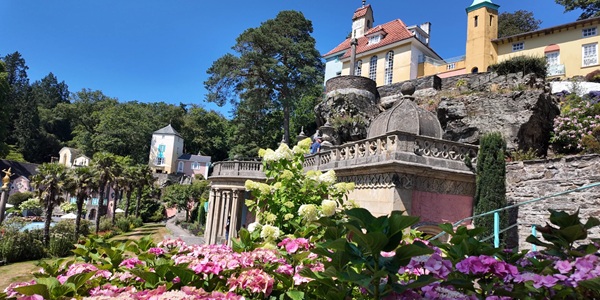
Portmeirion Village — an "unreal" Italian dreamlike village on the Snowdonia coast of Wales. Architect Clough Williams-Ellis spent half a century (1925-1975) transforming a disused private peninsula into a colourful Mediterranean-style architectural ensemble. Buttery yellow, sky blue and coral pink Italian domes and arcades cling to the hillside facing the sea, stone steps wind through subtropical plants, and the sea breeze carries the scent of eucalyptus and lemon. This is the mysterious filming location of the classic TV series The Prisoner (1967) — every frame looks like a surreal film. Step into Portmeirion and you'll wonder: is this Wales, or Tuscany?
From the colourful arcades of the Italian-style piazza to the fragrance of subtropical plants on the cliffside, from the mysterious sets of The Prisoner to the golden sunset over the estuary — spend half a day or a full day immersed in this dreamlike village that "doesn't belong to Wales"
In the morning, walk from the car park along the private driveway for about 10 minutes to enter the village — this path itself is a ritual-filled transition, gradually moving from the greenery of the Welsh countryside to the stunning arrival of Mediterranean colour. Your first sight is the central Piazza, surrounded by buttery yellow and sky blue Italian-style buildings, with the Roman temple-inspired Bell Tower as the village's highest point. Climb the stone steps, passing each building given an Italian city name — "Florence," "Venice," "Rome" — every window, archway and wrought iron detail is a carefully designed theatrical backdrop. In the afternoon, wander the cliffside gardens, where subtropical plants thrive in Wales' mild Gulf Stream climate, with eucalyptus, palms, rhododendrons and camellias interweaving into an exotic green oasis. In the evening, walk along the estuary path to the beach, where the golden sunset paints the entire village honey-coloured, and the exposed sand after the tide recedes reveals shells and sea glass. Stay overnight at Castell Deudraeth or the Portmeirion Hotel within the village, and enjoy the surreal peace of the almost empty village the next morning.
Located beside the central piazza, the terrace restaurant faces the greenery of the cliffside gardens and the distant estuary view. Signature classic English afternoon tea (£22/person) features a beautifully presented three-tier stand — cucumber sandwiches and smoked salmon rolls on the bottom, scones with clotted cream and strawberry jam in the middle, Welsh Cakes and lemon tart on top. Main courses recommend Welsh Lamb Cutlets with rosemary-roasted potatoes and red wine jus, using local Blaenau Ffestiniog pasture lamb. Terrace seating faces the Bell Tower, with the most beautiful light at sunset. Budget £18-35 per person.
A fine dining restaurant inside the Victorian Gothic castle above the village entrance, once Michelin-recommended. The chef presents traditional Welsh ingredients with a modern touch — the signature "Seven Tastes of Snowdonia" tasting menu (£65/person) includes pickled herring, slow-braised venison, black pudding crisp and wild mushroom mousse, each dish paired with a different Welsh craft ale or cider. The dining hall retains 1860s oak panelling and wrought iron chandeliers, with the solemn and romantic atmosphere of a castle banquet. Advance booking required 3 days ahead. Budget £30-65 per person.
An 18th-century country pub just a 5-minute walk from the Portmeirion entrance, with stone walls and wooden beams filled with the warmth of the fireplace and the aroma of malt. The signature Cawl (Welsh stew) uses local lamb and turnips slow-cooked for 8 hours, served with oat bread for dipping in the broth — the most comforting bowl after a walk. Fish and chips use fresh fish delivered daily from Cardigan Bay, crispy on the outside and tender inside. The pub also serves Purple Moose Brewery's local craft ales and Welsh cider. The landlord will enthusiastically share anecdotes about Portmeirion's construction. Budget £12-20 per person.
A wild garden cafe at the village entrance (the name means "Wild Cafe" in Welsh), operating from a converted gardener's cottage. Famous for freshly baked bread and handmade cakes — the signature Banana Walnut Loaf is moist and dense, perfectly paired with Welsh black tea (Tea Brechfa). Breakfast recommends the "Explorer's Platter" — scrambled eggs, smoked bacon, grilled tomato, mushrooms and homemade baked beans, generous portions. Outdoor seating is surrounded by wild roses and honeysuckle, with constant birdsong. Budget £6-14 per person.