Jiexiu Travel

Jiexiu City, Jinzhong City, Shanxi Province — the "City of Glazed Art" in the hometown of Shanxi merchants, a landscape wonderland where the Taihang and Lüliang mountains meet, centered around the 5A-level Mianshan Scenic Area, the world endangered cultural heritage site Zhangbi Ancient Castle, and Houtu Temple, one of China's three major glazed architecture complexes. It integrates Buddhist-Taoist culture, military wisdom, Shanxi merchant heritage, and natural wonders. A 3-day in-depth tour unlocks the diverse charms of this thousand-year-old city.

2600+
Years of City History
1
5A-Level Scenic Area (Mianshan)
12+
Core Attractions
15+
Specialty Foods

Explore Districts and Counties in Jinzhong

Mianshan Scenic Area, Jiexiu City, Jinzhong
Mianshan - Buddhist & Taoist Holy Land with Mountain-Water Wonders
National 5A-level scenic area, named after Jie Zitui who was burned while hiding with his mother during the Spring and Autumn period. It integrates mountains, water, forests, springs, and temples, featuring attractions like Longtou Temple, Daluo Palace, Yunfeng Temple, and Shuitao Valley. Known for its "spectacular, perilous, beautiful, and secluded" characteristics, it preserves numerous ancient buildings from Tang to Ming-Qing dynasties, making it a perfect fusion of Buddhist-Taoist culture and natural landscapes.

Jiexiu Three-Day Two-Night Shanxi Merchants & Landscape Tour

Climb Mianshan for Zen insights, explore ancient castles to uncover military secrets, admire glazed art and ancient architecture, taste Jiexiu flavors, unlock the cultural code of this thousand-year-old city

Duration
3 Days / 2 Nights
Main Destinations
Mianshan, Zhangbi Ancient Castle, Houtu Temple, Zoroastrian Tower, Jiexiu Ancient City
Suitable For
Culture enthusiasts, history buffs, nature explorers, families, photography lovers
Per Person Budget
¥600-¥1200
01
Mianshan Spiritual Journey
Mianshan Scenic Area (Longtou Temple · Daluo Palace · Yunfeng Temple · Shuitao Valley) · Night View
Highlights

Spend the whole day exploring Mianshan. In the morning, visit Longtou Temple to trace the story of Jie Zitui, explore Daluo Palace to experience Taoist culture. In the afternoon, climb Yunfeng Temple to see the hanging coffin wonder, wander through Shuitao Valley for canyon coolness. At night, enjoy the Mianshan light show.

Attractions Schedule
Mianshan Scenic Area
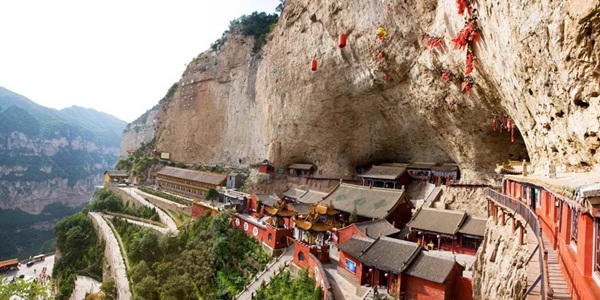
National 5A-level scenic area covering about 40 square kilometers, famous because Jie Zitui "cut his thigh to feed his lord" and later hid here before being burned alive during the Spring and Autumn period. It integrates natural landscapes and cultural sites. Core attractions include: Longtou Temple (birthplace of Jie Zitui culture), Daluo Palace (one of China's largest Taoist building complexes, 110 meters high), Yunfeng Temple (with Tang Dynasty Buddhist relics and rare hanging coffins), and Shuitao Valley (hundred-meter waterfall clusters and stream canyons). Known for "coexistence of Buddhism and Taoism, integration of mountains and water," it is called "Northern Little Jiuzhaigou" and "Museum of Buddhist-Taoist Culture."
Yunfeng Temple
The core temple of Mianshan, first built during the Cao Wei period of the Three Kingdoms era. The existing structures feature Tang Dynasty architectural styles. Inside are flesh-body Bodhisattva statues, Tang Dynasty Diamond Sutra stone carvings, and most famously, the "clay-wrapped true-body statues" (monks' bodies wrapped in clay after passing away) and hanging coffin groups on the cliff, showcasing the unique charm of ancient funeral culture. The Tiesuo Ridge plank road outside the temple offers spectacular and thrilling views.
Shuitao Valley
The essence of Mianshan's natural scenery, stretching 5 kilometers with over 30 waterfalls, the highest having an 80-meter drop. With babbling streams, lush green trees, and an average summer temperature of 23°C, it features sights like "Five Dragon Waterfall," "Water Curtain Cave," and "Crocodile Rock." It's an excellent place for escaping the heat, playing in the water, and enjoying family-friendly walks along gentle paths.
Practical Information
Accommodation Recommendations
  • Hotel inside Mianshan Scenic Area (near Yunfeng Temple)
  • Hotels in Jiexiu city center
  • Farm stays at the foot of Mianshan
Food Recommendations
  • Jiexiu Guanchang (starch sausage)
  • Mianshan Cold Food Feast (vegetarian)
  • Dandan Noodles
  • Yougao (fried cake)
  • Shazi Bing (sand-baked biscuit)
Travel Tips
  • Mianshan Scenic Area is large; consider taking the sightseeing bus (¥50/person, all-day pass)
  • The hanging coffin area at Yunfeng Temple requires climbing; wear non-slip shoes
  • The Cold Food Feast needs advance reservation to experience historical cuisine related to Jie Zitui
02
Ancient Castle Exploration
Zhangbi Ancient Castle · Houtu Temple · Huiluan Temple · Night View
Highlights

In the morning, explore Zhangbi Ancient Castle to unlock its thousand-year military defense system and underground tunnel wonders. In the afternoon, visit Houtu Temple to appreciate the pinnacle of glazed art, explore Huiluan Temple for ancient tranquility. Return to the city at night to enjoy the ancient city lights.

Attractions Schedule
Zhangbi Ancient Castle
National 4A-level scenic area, world endangered cultural heritage site, first built during the Northern Dynasties. It is a rare military castle with "above-ground fortresses and underground tunnels," covering about 120,000 square meters. Above ground, there are Ming-Qing residential buildings, glazed stele pavilions, Erlang Temple, etc. Underground, the tunnel system stretches 5 kilometers across three levels, including command rooms, granaries, traps, and other facilities, forming a complete attack-defense system. Due to its layout corresponding to constellations, it is known as "China's First Star-Village." It was once a filming location for "Dad, Where Are We Going?"
Houtu Temple
National key cultural relic protection unit, first built during the Northern Wei Dynasty. The existing structures feature Ming-Qing architectural styles and are renowned for exquisite glazed art. Together with Beijing's Forbidden City and Datong's Huayan Temple, it is considered one of "China's Three Major Glazed Architecture Complexes." The glazed tiles and reliefs on Sanqing Hall and the opera stage are brilliantly colored, with dragon patterns and floral designs appearing lifelike. Among them, the "peacock blue" glaze is unique to Jiexiu, representing the pinnacle of Chinese glazed craftsmanship.
Huiluan Temple
First built during the Zhenguan reign of the Tang Dynasty, named because Emperor Taizong of Tang (Li Shimin) stayed here during his return journey. The existing Mahavira Hall is a Jin Dynasty structure, one of the earliest surviving Jin Dynasty wooden buildings in Shanxi. It houses Jin Dynasty murals and Song Dynasty painted sculptures inside, with a unique beam-frame structure that showcases typical northern Shanxi ancient architecture. The temple grounds feature ancient cypress trees and a serene environment.
Practical Information
Transportation Guide
  • From city center to Zhangbi Ancient Castle: take tourist shuttle (6 trips daily, about 30 minutes)
  • From Zhangbi Ancient Castle to Houtu Temple: taxi about ¥25
  • Huiluan Temple is 10 km from city center; accessible by self-driving or township bus
Ticket Information
  • Mianshan Scenic Area: ¥110 (includes entrance) + ¥50 (sightseeing bus)
  • Zhangbi Ancient Castle: ¥65 (includes underground tunnels)
  • Houtu Temple: ¥20
  • Huiluan Temple: ¥15
Travel Tips
  • Zhangbi Ancient Castle tunnels are narrow; consider hiring a guide (¥50/tour) to explain the military layout
  • Houtu Temple glazed buildings look best when photographed in sunlight
  • Photography of Jin Dynasty murals at Huiluan Temple is prohibited; please follow the rules
03
Ancient City Flavors
Zoroastrian Tower · Jiexiu Ancient City · Hongshan Ancient Porcelain Kiln Site · Specialty Shopping · Departure
Highlights

In the morning, visit Zoroastrian Tower to admire the "sky pavilion" wonder, stroll through Jiexiu Ancient City to experience Shanxi merchant old street vibes. In the afternoon, explore Hongshan Ancient Porcelain Kiln to trace ceramic history, then shop at the specialty market before ending your trip.

Attractions Schedule
Zoroastrian Tower
National key cultural relic protection unit, first built during the Ming Dynasty. It is the only surviving Zoroastrian (fire-worshipping religion) architectural relic in China. The three-story tower spans across the street, combining a mountain gate, opera stage, and street-crossing pavilion into one structure. Its intricate wood and brick carvings demonstrate exceptional craftsmanship. Named for housing Zoroastrian deities, it showcases traces of ancient cultural exchange between China and the West.
Jiexiu Ancient City
First built during the Northern Wei Dynasty, the existing street layout dates from the Ming-Qing periods, featuring a "four streets, eight lanes" framework. Preserved structures include Shanxi merchant courtyards (such as Hou Family Courtyard), banks, and pawnshops. Shuncheng Street is concentrated with time-honored shops, making it a living specimen for experiencing Shanxi merchant culture and local customs. Remnants of the ancient city wall and gate ruins still hint at its past prosperity.
Hongshan Ancient Porcelain Kiln Site
Originating in the Tang Dynasty and flourishing during the Song-Jin periods, this is an important ancient porcelain kiln site in Shanxi, famous for producing "Hongshan Kiln" ceramics. Existing remains include dragon kiln sites, ancient wells, and workshop ruins. Excavated ceramics mainly consist of white and black porcelain, with particularly exquisite "oil-spot glaze" pieces. The museum displays a large collection of unearthed ceramics, providing important physical evidence for studying northern Chinese ceramic history.
Practical Information
Experience Activities
  • Zhangbi Ancient Castle tunnel exploration (wear long sleeves to avoid bumps)
  • Mianshan Shuitao Valley bamboo rafting (June-August, ¥50/person)
  • Hongshan Ancient Porcelain Kiln handmade pottery experience (¥80/person)
  • Ancient City Guanchang making experience (¥30/person)
Souvenir Recommendations
  • Jiexiu Guanchang (vacuum-packed)
  • Guanxian Sugar (traditional sweet)
  • Hongshan ceramic souvenirs
  • Glazed craft items
  • Jiexiu walnuts
Departure Guide
  • Jiexiu is about 130 km from Taiyuan; 40 minutes by high-speed rail (Jiexiu East Station)
  • Long-distance buses depart from city center to Taiyuan, Pingyao, Lingshi every 30 minutes
  • Specialty markets support shipping; you can mail purchases directly to reduce luggage burden

Must-Try Foods in Jiexiu

Jiexiu Guanchang (Starch Sausage)

Jiexiu's signature snack, made from buckwheat flour or wheat flour steamed and sliced. Can be served cold, stir-fried, or braised. Chewy and smooth in texture. Named after the Ming Dynasty practice of "pouring into molds." Comes in two varieties: "garlic water cold mix" and "chili sauce stir-fry." It's a common breakfast and street food, earning the title "Jiexiu's Number One Taste."

Jiexiu Dandan Noodles

A Jiexiu specialty noodle dish, different from Sichuan Dandan noodles. Made with hand-pulled noodles topped with local meat sauce, bean sprouts, and sesame paste. Savory with a slight spiciness. Named after the pole-carrying vendors who sold them in early days. The noodles are chewy and the sauce rich. The ancestral recipe at the "Century-Old Noodle House" in the ancient city is especially authentic.

Guanxian Sugar

A traditional Jiexiu sweet originating from the Qing Dynasty. Filled with sesame, peanuts, and sugar, wrapped in maltose, shaped like a cylinder. Crispy and sweet with a "sweet but not greasy" quality. Symbolizing "reunion and perfection," it's an essential New Year item and excellent gift, hailed as "the king of Jiexiu sweets."

Shazi Bing (Sand-Baked Biscuit)

A Jiexiu specialty baked pastry made from flour and sesame, baked using hot sand. Crispy on the outside, soft inside, savory and delicious. Easy to carry and long-lasting, it was once a staple for traveling Shanxi merchants. Now a common street snack, it's known as "the Shanxi merchant's travel biscuit."

Travel Tips for Jiexiu City
Best Travel Periods
  • Spring (April-May): Wild flowers bloom on Mianshan Mountain; wander through Zhangbi Ancient Fortress to trace ancient history
  • Summer (June-August): Beat the heat at Shuitao Valley of Mianshan Mountain, perfect for family water activities
  • Autumn (September-October): Clear skies and light clouds; stunning autumn scenery at Mianshan Mountain and the ancient fortress, ideal for photography
  • Winter (December-February): Exquisite glazed roof tiles of Houtu Temple blanketed in snow; experience the authentic New Year vibe of the ancient city
Must-Try Local Delicacies
  • Jiexiu Cold Noodle Jelly (Try the cold mixed version at time-honored jelly shops in the ancient city)
  • Jiexiu Dan Dan Noodles (Ancestral recipe at century-old noodle house on Shuncheng Street)
  • Guanxian Sugar (Freshly made in winter with rich mellow sweetness)
  • Sand Pancakes (Crisp outside and soft inside when fresh out of the oven, best paired with lamb soup)
  • Mianshan Cold Food Feast (Vegetarian dishes featuring cuisine rooted in historical legends)
Budget Reference
  • Admission Tickets: Around 260 RMB (covers Mianshan Mountain, Zhangbi Ancient Fortress and other scenic spots)
  • Accommodation: 120-260 RMB per night
  • Catering: 60-100 RMB per day
  • Transportation: 50-100 RMB (including shuttle rides within scenic areas)
  • Total Estimated Cost: 600-1200 RMB
Frequently Asked Questions
  • What is the connection between Mianshan Mountain and Jie Zitui? → In the Spring and Autumn Period, Jie Zitui lived in seclusion on Mianshan Mountain with his mother. Duke Wen of Jin set the mountain on fire to force him out, yet Jie Zitui died clinging to a tree. Later people established the Cold Food Festival to honor him, hence the mountain’s reputation.
  • Can visitors walk through the entire tunnel network of Zhangbi Ancient Fortress? → Around 1.5 kilometers of tunnels are open to tourists; a full walk takes roughly 1 hour, with narrow passages only wide enough for one person to pass.
  • Why are the glazed tiles of Houtu Temple famous? → Crafted from high-quality local Jiexiu glaze ore with distinctive hues such as peacock blue, they adopt exquisite firing techniques and retain vibrant colors after hundreds of years.
  • What religion does the God of Fire Pavilion honor? → It commemorates Zoroastrianism, an ancient Persian fire-worshipping faith that blended with local Chinese culture after spreading eastward. The God of Fire Pavilion in Jiexiu is China’s sole surviving Zoroastrian architectural relic.