Royal Botanic Garden Edinburgh Travel

The Royal Botanic Garden Edinburgh (RBGE) — founded in 1670 by two Edinburgh physicians, Robert Sibbald and Andrew Balfour, as Scotland's first physic garden, growing from tennis court size into a 70-acre scientific sanctuary and one of the world's five great botanical gardens. 350 years of history have produced the world's tallest Victorian palm house (21.95m), Europe's largest collection of Chinese wild plants, a rock garden with 5,000 alpine species, and a visual feast of spring rhododendron blooms woven through a 165-metre herbaceous border. A one-day in-depth tour traverses temperate, tropical and arid climate zones, from Chilean oil palms to Yunnan rhododendrons, from giant water lilies to a 200-year-old paper reed palm, embracing a living plant encyclopedia beyond the city's bustle.

1670
Year founded
70
Acres of landscaped gardens
21.95m
World's tallest palm house
FREE
Garden entry (greenhouses extra)
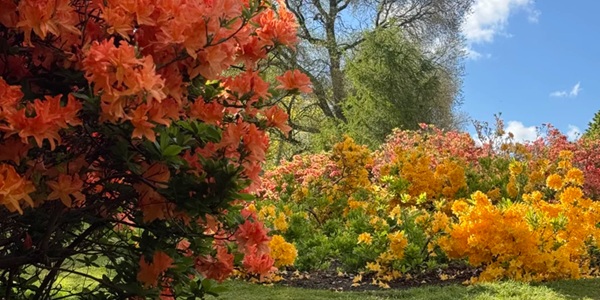
Royal Botanic Garden Edinburgh Victorian palm house and spring rhododendron panorama
Royal Botanic Garden Edinburgh
One of the world's five great botanical gardens founded in 1670, 70 acres of gardens including the world's tallest Victorian palm house (1858), Europe's largest collection of Chinese wild plants, rock garden and spring rhododendron blooms, with free garden entry

Royal Botanic Garden Edinburgh One-Day In-Depth Tour

From the world's tallest Victorian palm house's tropical rainforest to Yunnan rhododendron seas, journey through 350 years of plant exploration history, wandering through a 70-acre living plant encyclopedia

Duration
1 day (extendable to 3-day Edinburgh in-depth tour)
Main Destinations
Glasshouse Range, Rock Garden, Chinese Hillside, Queen Mother's Memorial Garden, Woodland Garden
Suitable For
Families, plant lovers, photography enthusiasts, couples, nature fans
Budget per person
£7-£15 (garden free, greenhouse tickets main cost)
01
Global Plant Kingdom Crossing Tour
Glasshouse Range · Rock Garden · Chinese Hillside · Queen Mother's Memorial Garden · Woodland Garden
Highlights

Depart from Waverley Station in the morning, heading north along Princes Street through Stockbridge, walking approximately 25 minutes to reach the John Hope Gateway visitor centre at the West Gate (Arboretum Place). Enter the glasshouse range first — six interconnected glasshouses forming "Windows on the World," from the towering date palms and banana trees of the Tropical Palm House, through the cactus forest of the Arid House, to the giant water lilies and cacao trees of the Rainforest House, crossing 10 climate zones in 1 hour. Then step outdoors, climbing the winding paths of the Rock Garden where 5,000 alpine species compete for attention among the stones, with spring rhododendrons and snowdrops blanketing the slopes. Move on to the Chinese Hillside — a terraced planting area modelled on Yunnan mountain landscapes, with waterfalls and bamboo groves creating an Eastern atmosphere, its 16,000 Chinese wild plant collections making it the largest in Europe. In the afternoon, explore the Queen Mother's Memorial Garden's maze and stone pavilion, feel the cathedral-like stillness among giant redwoods in the Woodland Garden, and finally stroll along the 165-metre Herbaceous Border flanked by century-old beech hedges, with blooms progressing from spring through autumn. Allow 3-4 hours; leave with the scent of flowers clinging to your clothes.

Attractions
Glasshouse Range & Windows on the World
The glasshouse range is the garden's crown jewel. The octagonal Tropical Palm House, built in 1834, was Britain's tallest glasshouse at the time; in 1836, the first tropical palm flowering in Britain caused a national sensation. Completed in 1858, the Temperate Palm House at 21.95m still holds the record as the "world's tallest traditional palm house," its Bishopriggs sandstone walls paired with a curved cast-iron dome creating an imposing presence. From 2022-2026 it underwent a £58 million Edinburgh Biomes project comprehensive restoration, with over 5,000 bespoke glass panes replaced one by one, reopening on 2 October 2026. The interior is divided into 10 climate zones — the Tropical Rainforest House with banana, cacao and giant water lilies (Victoria spp.) whose floating leaves can reach 2m in diameter in summer; the Arid House with surreal cacti and succulents; the Plants & People House displaying rice, sugar cane, coffee and other economic crops. Approximately 600 specimen plants include many endangered wild species, including the Chinese Trachycarpus princeps palm reaching 8m tall, believed to be the tallest cultivated specimen outside China. Tickets £7-£10, advance online booking strongly recommended.
Rock Garden & Chinese Hillside
The Rock Garden was begun in 1870 by curator James McNab, transforming a former quarry into what now holds approximately 5,000 alpine species from mountain ranges worldwide, making it the garden's most visually impactful outdoor space. Plants from Chile, China, Japan, North America and South Africa are arranged in distinct zones, with spring dwarf rhododendrons and alpine anemones carpeting the crevices — peak bloom is late spring to early summer, with European Pulsatilla, North American Penstemon, countless crocuses and snowdrops flowering in succession, while autumn brings Colchicum and Pinus sylvestris 'Aurea' needles turning from green to gold. The adjacent Chinese Hillside formally opened in 1997, representing Europe's largest collection of Chinese wild plants — plant hunter George Forrest made seven expeditions deep into Yunnan between 1904 and 1932, bringing back thousands of specimens that transformed British gardens. The hillside is modelled on Yunnan topography, with winding paths, waterfalls, bamboo groves and a Chinese pavilion ("T'ing"), containing approximately 16,000 conserved plants arranged by altitude gradient, with western Yunnan rhododendrons blazing like flames in spring. This is also a secret treasure spot for Edinburgh photographers.
Queen Mother's Memorial Garden & Woodland Garden
The Queen Mother's Memorial Garden was completed in 2006, honouring Queen Elizabeth the Queen Mother (1900-2002) — who loved Scotland deeply and personally tended the garden at the Castle of Mey in Caithness. Inspired by the Eassie Cross, the garden is divided into four quadrants representing different world regions, centred on an "E"-shaped maze of sweet gale (Myrica gale) — a native Scottish Highland plant traditionally used in royal wedding bouquets and also for perfume and flavouring. The garden features roses named after her ("Queen Elizabeth"), lilies, delphiniums and giant Matilija poppies, with a central stone pavilion engraved with the names of societies and charities she supported. The neighbouring Woodland Garden was established in the 1930s-40s, with extensive conifers creating ideal microclimates for Himalayan and Chinese alpine rhododendrons. The Upper Woodland Garden features a "tree cathedral" of coast redwoods (Sequoia sempervirens) and giant sequoias (Sequoiadendron giganteum), their canopies interlacing like a cathedral dome, dappled sunlight filtering through needles to create the garden's most breathtaking quiet corner. In autumn, thousands of gentians form a blue sea of flowers.
Herbaceous Border & Inverleith House
The 165-metre Herbaceous Border is one of Britain's most spectacular perennial flower displays, backed by a 150-tree century-old beech hedge forming a natural windbreak and visual frame. Blooming from April through October — lupins and oriental poppies in spring, delphiniums, cosmos and globe amaranth in summer, asters and ornamental grasses swaying in autumn — colour never ceases. A path beside the border leads to Inverleith House, an 18th-century neoclassical mansion once the garden curator's residence, now used for contemporary art exhibitions and educational activities, its front lawn being the perfect spot for summer picnicking and sunbathing. Nearby are the Scottish Heath Garden showcasing Highland native plant communities, and the Botanic Cottage demonstrating medicinal plant history — this 1770s building was the world's first structure specifically designed for botanical teaching, relocated and restored here. Follow the path to Willow Pond, where herons and mallards often paddle serenely, bringing a peaceful end to a day's plant journey.
Practical Info
Getting There
  • Approx 25-min walk from Waverley Station north via Princes Street
  • Lothian Bus 8/23/27 stops at East Gate (Inverleith Row)
  • Bus 29/42 stops at West Gate (Arboretum Place)
  • Tram to York Place then transfer by bus or walk
  • Limited paid on-street parking at Arboretum Place
  • Free wheelchair loan available (John Hope Gateway)
Tickets
  • Garden areas: Completely free (donations welcome)
  • Glasshouse Range: Adult £7-£10 (from Oct 2026 reopening)
  • Student/Senior (65+): £6-£8
  • Children (5-15): £4-£5
  • Family ticket: approx £18-£22
  • Members and patrons free, 48-hour advance booking privilege
  • Strongly recommend booking timed slots online; demand high after reopening
  • Free guided tours at 11:00 and 14:00 in the glasshouses
Travel Tips
  • Garden is large; wear comfortable walking shoes + waterproof jacket
  • Glasshouses are very humid; remove outer layer before entering
  • Spring (Apr-May): Rhododendrons and cherries at peak bloom
  • Summer (Jun-Aug): Open until 20:00, evening visits have special charm
  • Winter (Nov-Jan): Garden closes at 16:00, note the time
  • Three catering outlets on site; picnics allowed (designated areas)
  • Photography freely permitted; drones and professional tripods require permission

Must-Eat Foods Near the Royal Botanic Garden

Gateway Café & Restaurant

Located inside the John Hope Gateway visitor centre, the garden's most formal dining venue. The menu centres on seasonal ingredients harvested that day from the Kitchen Garden's organic beds — spring asparagus and pea salad, summer tomato tart, autumn pumpkin soup, with ingredients travelling mere metres from soil to plate. 160 indoor seats plus 40 outdoor seats in a bright space with floor-to-ceiling windows overlooking the garden. Breakfast, lunch and afternoon tea all available. Average £12-£25.

Terrace Café

Set beside the lawn in front of Inverleith House, the garden's most relaxing rest stop. Handmade pastries, freshly baked scones, daily soups and sandwiches are all made fresh by the on-site kitchen. The signature Botanical Cream Tea (£19) incorporates herbs and edible flowers freshly picked from the Kitchen Garden, with lavender scones and rosehip jam creating a stunning impression. Outdoor seating faces the Edinburgh skyline and lawns, making this arguably the city's best afternoon tea spot when afternoon sunlight streams down. Average £8-£18.

Hamiltons of Stockbridge

A multi-award-winning community fine dining restaurant in the heart of Stockbridge, just a 5-minute walk from the garden's South Gate. The menu changes with the seasons — Scottish scallops with pea purée, slow-braised lamb shoulder with mint jasmine sauce, local sea trout with lemon butter, paired with carefully selected wines and creative cocktails (signature Rum and Raisin milk punch). Warm wood interior and friendly service make it the top choice for rewarding your taste buds after a garden visit. Average £20-£35.

The Scran & Scallie

A community gastropub on Comely Bank in Stockbridge, created by an award-winning Edinburgh chef team, elevating traditional Scottish home cooking to fine dining standards. Signature haggis (Wellington-wrapped version), fish and chips with mushy peas, whisky caramel pudding, and an unforgettable Cullen Skink smoked haddock chowder. Cosy tartan upholstery and wood bar create a Highland pub atmosphere, with an excellent selection of local craft beers. Average £15-£30.

Royal Botanic Garden Edinburgh Travel Tips
Best Time to Visit
  • Spring (Apr-May): Rhododendrons, cherries, magnolias at peak bloom
  • Summer (Jun-Aug): Greenest season, open until 20:00
  • Autumn (Sep-Oct): Red leaves and gentian blue seas intertwine
  • Winter (Nov-Feb): Glasshouse warmth + Christmas light display
  • Glasshouses reopen 2 October 2026 — don't miss it
Must-Try Foods
  • Kitchen Garden seasonal lunch
  • Botanical Cream Tea floral afternoon tea
  • Haggis Wellington — upgraded Scottish national dish
  • Cullen Skink smoked haddock chowder
  • Local craft beer and whisky tasting
Budget Reference
  • Garden entry: Free
  • Glasshouse tickets: £7-£10 (from 2026 reopening)
  • Meals: £10-30/meal
  • Accommodation: £80-200/night (Stockbridge area)
  • Total: £20-50 (day trip, excluding accommodation)
FAQ
  • Is the garden really free? → Yes, permanently free
  • Do I need a separate ticket for the glasshouses? → Yes, £7-£10
  • Can I picnic? → Yes, in designated areas
  • Is there parking? → Limited paid on-street parking
  • When do the glasshouses reopen? → 2 October 2026
  • Is it wheelchair accessible? → Yes, free wheelchair loan available

Explore More Edinburgh Areas