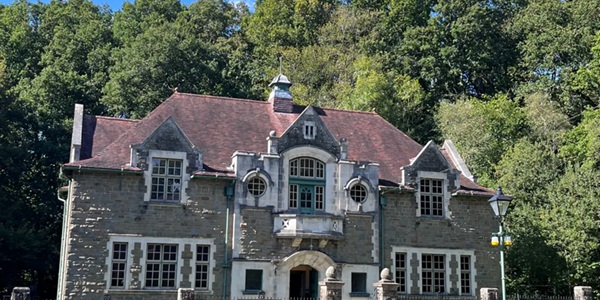
St Fagans — one of the world's leading open-air museums, set in a magnificent 400-year-old estate on the outskirts of Cardiff. Since 1948, more than 50 original buildings from across Wales have been dismantled brick by brick, relocated and faithfully reconstructed here — from Iron Age thatched roundhouses to medieval painted churches, from ironworkers' cottages to Victorian pubs, from Welsh-language classrooms to traditional bakeries — every step is a journey through time. The museum's core narrative is "everyday life in Wales," with craftspeople speaking Welsh, blacksmiths hammering at anvils, and bakeries wafting the aroma of freshly baked loaves. Free admission, the ultimate model of cultural heritage preservation.
From Iron Age thatched roundhouses to Victorian pubs, from medieval painted churches to the aroma of traditional bakeries — traverse two thousand years of Welsh everyday life in a single day
In the morning, take bus 32A from Cardiff city centre (about 30 minutes) to the museum (self-drive parking £7/day). Collect a free map and guide booklet at the Visitor Centre, then head first to the Iron Age Celtic Village — step into thatched roundhouses, see hearth embers and hand-spun wool demonstrations, and feel the warmth of life from 500 BC. Follow the main path to the Rhyd-y-Car ironworkers' cottages — six terraced houses furnished to represent six eras: 1805, 1850, 1890, 1920, 1950 and 1985, with furniture, radios and cookers evolving decade by decade like a time machine. At the blacksmith forge, watch the smith hammer red-hot iron bars into sickles and door hinges using 19th-century methods, sparks flying. For lunch, enjoy a Welsh afternoon tea at the Gwalia Tea Room in the castle forecourt, then tour St Fagans Castle — a late 16th-century Elizabethan manor house with original oak-panelled halls and Victorian additions, surrounded by Italianate terraced gardens, rose gardens and carp ponds. In the afternoon, visit the Gweithdy Craft Centre to see weavers at 18th-century looms and woodturners crafting bowls on lathes; next door, the Derwen Bakehouse uses a 1900 brick oven to bake traditional Welsh bread — just follow the aroma. Finally, raise a pint at the Vulcan Inn — an 1853 Victorian workers' pub relocated from central Cardiff — and soak in the social atmosphere of 1915 dockworkers. End the day on the lawns watching the sunset, leaving free of charge.
A living bakehouse within the museum, relocated from Aberystwyth in 1900. The brick oven is wood-fired to 200°C, baking traditional Welsh loaves, rhubarb bread, Hot Cross Buns and Pembroke sweet bread. Follow the aroma of malt to find it — freshly baked bread can be purchased at the counter. The bakehouse follows Evan Jenkins' original 1900 family recipe; when reopened in 1987, Christine Jenkins lit the first fire herself, and the same recipe is still used today. Budget: £3-6 per person.
Y Gegin is located in the main building, the museum's largest restaurant, serving hot meals, sandwiches, cakes and coffee from 9:30-16:30, with lunch options including Welsh Cawl (stew) and Glamorgan vegetarian sausages. Gwalia Tea Room recreates a 1930s style, serving traditional Welsh afternoon tea in vintage bone china — Bara Brith (tea-soaked fruit loaf), Welsh Cakes and scones. Both face the castle lawns — dining on the terrace on sunny days is wonderfully relaxing. Budget: £8-15 per person.
An 1853 Victorian workers' pub relocated from Adam Street in central Cardiff, reopened in May 2024. The main bar area recreates its 1915 appearance — sawdust floor, cast-iron bar, period posters — serving local craft beers and cider. Next door, PysgOdyn offers traditional beer-battered fish and chips (served in paper cones). Sit at the century-old oak bar with a pint and imagine the chatter of dockworkers. Budget: £10-18 per person.
A 200-year-old traditional Welsh country pub in the centre of St Fagans village, a 2-minute walk from the museum gates. Signature Welsh pork belly slow-roasted for 6 hours with crispy crackling, served with apple sauce and seasonal vegetables. The drinks list focuses on Welsh local craft beers, with Gower Gold and Tiny Rebel as regulars. Just a short walk from the museum — the perfect spot for a post-visit pint and proper meal. Budget: £15-25 per person.