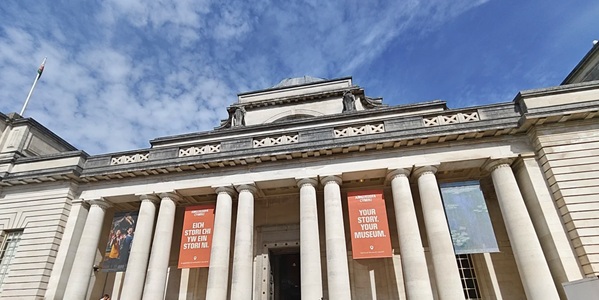
National Museum Cardiff Travel Guide

National Museum Cardiff — the brightest cultural jewel of Cathays Park: a neoclassical masterpiece founded in 1905 and officially opened in 1927, home to one of the world's most important Impressionist and Post-Impressionist collections — Monet's San Giorgio Maggiore at Dusk, Van Gogh's Rain at Auvers, Renoir's La Parisienne and Rodin's bronze cast of The Kiss shine quietly here. Downstairs unfolds 4.6 billion years of Welsh evolutionary epic: from the Big Bang to the age of dinosaurs, from mammoths to the world's largest leatherback turtle. Free entry, one museum, art and nature in equal measure — all in a single day.

Free
Permanent Admission Free
1927
Officially Opened
4.6B
Years of Evolution
7
Turner Originals on Display
National Museum Cardiff Panorama
National Museum Cardiff
A neoclassical cultural temple in Cathays Park, Cardiff — a world-class art and natural history museum with free admission

National Museum Cardiff In-Depth Tour

From the Impressionist light of Monet and Van Gogh to the 4.6-billion-year epic of Welsh evolution, from the ancient roar of dinosaur fossils to the avant-garde expressions of contemporary Welsh art — travel through time and civilisation in a single day

Duration
Half day - 1 day
Main Destinations
Impressionist Gallery, Evolution of Wales, Archaeology Galleries, Welsh Art Gallery, Clore Discovery Centre
Suitable For
Art lovers, families, natural history enthusiasts, cultural travellers
Budget Per Person
£0-£25 (Free admission)
01
A Dual Feast of Art and Nature
Impressionist Gallery · Evolution of Wales · Archaeology Galleries · Welsh Art · Clore Discovery Centre · Oriel Restaurant
Highlights

Start your morning with a 20-minute walk from Cardiff Central Station or take a bus to Cathays Park. Approach the museum along Gorsedd Gardens, admiring the imposing Portland stone facade and Doric colonnade, then ascend the steps through the bronze doors into the 30-metre-high domed entrance hall — pink glass skylights cast soft light, polished marble columns and floors reflect the grandeur of a temple. Head straight to the first-floor art galleries. Pause in the Davies Sisters Bequest Impressionist gallery: Monet's Venetian dusk and Rouen Cathedral series, Van Gogh's Rain at Auvers from the final months of his life, Renoir's La Parisienne exhibited at the first Impressionist exhibition in 1874, Cézanne's Zola's Dam — and seven Turner seascape originals displayed together. In the afternoon, descend to the "Evolution of Wales" gallery, travelling from the Big Bang through the age of dinosaurs: the Welsh dinosaur Dracoraptor hanigani skeleton, Europe's earliest dinosaur footprint fossil, and life-sized reconstructions of mammoths and woolly rhinoceroses. Finally, pull open drawers at the Clore Discovery Centre to touch real fossils and Bronze Age artefacts, and browse the museum shop for Welsh handmade souvenirs. End the evening with a Welsh-inspired dinner at the Oriel Restaurant beneath the grand hall.

Attractions
Impressionist & Post-Impressionist Gallery
The museum's most brilliant jewel, bequeathed by the Davies sisters (Margaret and Gwendoline Davies) in 1951 and 1963, elevating Wales to an international art destination. Three Monet Water Lilies and Venetian dusk series, Renoir's La Parisienne (shown at the first Impressionist exhibition in 1874), Van Gogh's late masterpiece Rain at Auvers, Cézanne's Zola's Dam (the first Cézanne in a UK public collection), Pissarro landscapes — and Rodin's bronze cast of The Kiss. Seven JMW Turner seascape oil paintings are displayed together, once misjudged as forgeries and locked away for half a century, later confirmed as genuine through the BBC's Fake or Fortune programme and scientific testing — their value soaring from thousands to millions of pounds. Each painting carries a collector's tale.
Evolution of Wales & Natural History Galleries
A magnificent journey through time from the Big Bang 4.6 billion years ago to modern Wales. Volcanic eruption films and aerial footage of Welsh landscapes explain the formation of mountains and valleys; real lunar rock fragments and meteorites are within touching distance. Trilobites, ammonites and ichthyosaur fossils reveal ancient marine life; the Welsh dinosaur Dracoraptor hanigani — a small agile theropod discovered on Penarth Beach in 2014, one of the most complete dinosaur skeletons found in Wales. Europe's earliest dinosaur footprint fossil (Brontozoum thomasi), discovered in Nottage village in 1878, is quietly displayed. In the Ice Age gallery, life-sized reconstructions of mammoths and woolly rhinoceroses command attention, alongside a 9-metre humpback whale skeleton and the world's largest leatherback turtle suspended mid-air (2.88 × 2.74 metres, found on Harlech Beach).
Welsh Art & Archaeology Galleries
The third floor presents a complete panorama of Welsh art and material culture from 230,000 years ago to the Middle Ages. In the archaeology galleries: Palaeolithic flint tools, Neolithic megalithic tomb artefacts, Bronze Age gold torcs and weapons, Roman legionary pottery and equipment from the Caerleon fortress — each piece inscribed with the resilience and creativity of Britain's westernmost people. The Welsh Art gallery brings together classical landscapes by Richard Wilson (known as the "father of British landscape painting"), Thomas Jones's pioneering townscapes, portrait masterpieces by siblings Augustus John and Gwen John, marble works by sculptor John Gibson (Queen Victoria's favourite artist), David Jones's poetic watercolour world, Kyffin Williams's wild Anglesey mountain vistas, and contemporary works by Francis Bacon, David Hockney, Rachel Whiteread and others. Works by Ceri Richards and Luke Jones also rotate regularly.
Natural History of Wales & Clore Discovery Centre
The "Natural History of Wales" gallery presents Welsh native wildlife across four ecosystems — forest, coast, mountain and wetland — with lifelike models of foxes, red deer, puffins, basking sharks and humpback whales, a firm favourite with families. The Clore Discovery Centre is the museum's most creative space: hundreds of drawers contain touchable dinosaur bones, tropical insect specimens, Bronze Age weapons and Welsh ceramic fragments, with microscopes and magnifying glasses letting "little scientists" examine mysterious objects up close. You can bring your own "mystery finds" for expert identification on site. The museum shop offers Welsh-language children's books, art postcards, handmade ceramics and educational toys — the perfect stop for "Welsh memories" souvenirs.
Oriel Restaurant, Coffee Bar & Grand Entrance Hall
Located on the lower ground floor, the Oriel Restaurant is one of the most elegant dining spaces in any UK museum, with arched ceilings and marble columns creating a temple-like atmosphere. The menu focuses on Welsh local ingredients: homemade soups, Welsh rarebit, roast lamb pie, children's lunchbox platters; desserts recommend Welsh cakes and apple crumble. The main hall Coffee Bar serves freshly brewed cappuccinos, handmade cakes and sandwiches, facing the 30-metre-high domed entrance hall where pink glass skylights shift with the changing daylight — the perfect spot for an afternoon break. The restaurant includes a children's play area and full baby-changing facilities.
Practical Information
Getting There
  • Nearest station: Cathays (5-min walk)
  • Cardiff Central Station: approx 20-min walk
  • Bus routes 53/85 stop directly outside museum
  • From Cardiff Bay: Bay Car (route 6) then 35
  • Rear car park £6.50/day (Blue Badge holders free)
Tickets & Fees
  • Permanent exhibitions: permanently free
  • Special exhibitions may charge £5-£12
  • Recommend booking free timed-entry tickets online in advance
  • Lockers: £1 refundable deposit (main hall reception)
  • Large luggage storage available (suggested donation £5)
  • Wheelchair/pushchair accessible throughout
Travel Tips
  • Allow 2-4 hours; half a day for in-depth visit
  • After 3pm usually quieter
  • Free family activity sheets and gallery treasure hunt trails available
  • Closed Mondays (except Bank Holiday Mondays)
  • Non-commercial photography permitted; no flash or tripods
  • Guide dogs allowed; other pets not permitted

Best Eats Near National Museum Cardiff

Park House

A benchmark restaurant on Park Place, south of the museum — Michelin recommended in 2017, Wine Spectator Award of Excellence in 2018. The head chef interprets modern European cuisine using Welsh local ingredients; the signature lamb chops and Welsh beef are unforgettable, and the wine list is impressively extensive. One of Cardiff's most celebrated restaurants, visited by Ed Sheeran, with an elegant atmosphere perfect for special occasions. Just a 2-minute walk from the museum. Budget: £30-55 per person.

Henry's Cafe Bar

A long-established Cardiff city centre bar-restaurant on Park Place, open for over 30 years with consistent quality and relaxed atmosphere. The signature cheeseburger uses Monterey Jack cheese with smoked bacon and BBQ sauce; steak night (Wednesday) with a drink is just £15. Creative cocktail menu — the perfect spot for a relaxed drink after visiting the museum. 3-minute walk from the museum. Budget: £15-25 per person.

The EarlyBird

A brunch specialist near the museum, focusing on local ingredients with a seasonally rotating menu. Abundant vegan options — avocado toast, chickpea pancakes, oatmeal bowls — and coffee made with Welsh locally roasted beans. Weekend brunch is extremely popular; arrive early or book ahead. 5-minute walk from the museum. Budget: £10-18 per person.

Cardiff Bakestones (Inside Cardiff Market)

The Welsh cake pilgrimage site inside Cardiff Market on St Mary Street. Freshly baked Welsh Cakes emerge from the bakestone — crisp outside, soft within, dusted with sugar and fragrant with currants and nutmeg. Traditional, cream-cheese-jam, and coconut varieties each have their own charm. Featured multiple times by the BBC. The market is about a 12-minute walk from the museum — the perfect place to pick up a taste of Wales to take home. Cash only! Budget: £3-6 per person.

National Museum Cardiff Travel Tips
Best Time to Visit
  • Year-round: indoor attraction, perfect for rainy days
  • After 3pm: fewest visitors, quiet enjoyment of masterpieces
  • Special exhibition season (spring/autumn): rotating major temporary shows
  • Avoid Monday closures (except Bank Holidays)
Must-Try Foods
  • Welsh Cakes
  • Welsh Rarebit
  • Cawl (Welsh stew)
  • Welsh Lamb Chops
  • Oriel Restaurant Homemade Soup
Budget Reference
  • Museum admission: free
  • Special exhibition tickets: £5-£12
  • Dining: £10-25
  • Parking: £6.50/day
  • Total: £0-£45
Frequently Asked Questions
  • Is it really free? → Yes, permanent exhibitions are permanently free
  • Do I need to book? → Recommend booking free timed-entry tickets online
  • Can I take photos? → Non-commercial photography allowed; no flash
  • Is it wheelchair accessible? → Fully accessible throughout, including accessible toilets
  • Is there a Chinese audio guide? → Not currently; recommend downloading the English family activity sheet

Explore More of Cardiff