Brighton West Pier Ruins Travel

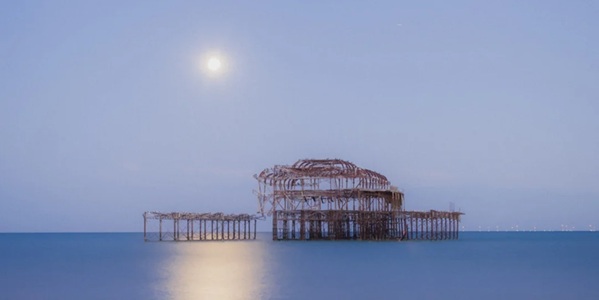
Brighton's West Pier Ruins — the most elegant Victorian seaside ruin in Britain, the most photographed "ghost" landmark on the English coastline. On 6 October 1866, designed by Britain's most renowned pier architect Eugenius Birch, the West Pier opened to the public. Its 1,115-foot cast-iron skeleton was driven into the English Channel seabed using screw pile technology, with an Indo-style domed concert hall seating 1,400 — military band performances, champagne dinners and paddle steamer excursions made it the pinnacle of British Empire seaside resort culture. Yet time was merciless: closed in 1975 due to high maintenance costs, the walkway collapsed in a 2002 storm, two fires in March and May 2003 (suspected arson) reduced the concert hall and pavilions to charred iron skeletons, and a 2014 storm snapped the pier in two, sending most of it into the sea. Today, the charred cast-iron skeleton stands in shallow water, listed as a Grade I listed building — the only pier ruin in the UK to receive this honour, protected by the West Pier Trust. From October to February each year, thousands of starlings perform murmurations above the ruins, settling on the iron frames after sunset — Brighton's most breathtaking free natural spectacle. This is a photographer's paradise, a historian's contemplative space, and a shrine to Romantic ruin aesthetics.

1866
Year Built
2003
Two Fires Destroyed
Grade I
Protection Level
£0
Admission (Free)
Brighton West Pier Ruins Victorian cast-iron skeleton sunset silhouette against English Channel
Brighton West Pier Ruins
Charred twisted Victorian cast-iron skeleton stands in the shallow waters of the English Channel, silhouetted at sunset like a giant beast's spine piercing the sky, winter starlings swirling like black smoke around the iron frames, the i360 observation tower rising beside it — ruins and future in dialogue

Brighton West Pier Ruins In-Depth Tour

From the Victorian cast-iron skeleton to the sunset silhouette photography sanctuary, from the winter starling murmuration spectacle to the dialogue between ruins and the i360 tower — step into the most stunning ruin aesthetics on the English coast

Duration
1-3 hours (can extend to a Brighton seafront half-day trip)
Main Destinations
Ruins Panorama, i360 Tower, Lower Promenade, Kings Road Arches, Victorian Bandstand, Hove Lawns
Best For
Photography enthusiasts, ruin aesthetics lovers, history buffs, bird watchers, artsy travellers
Budget per Person
£0-£23 (ruins free, i360 optional from £18.50)
01
Ruins Seafront Discovery Tour
Ruins Panorama & Sunset Silhouette · i360 Tower · Seafront Promenade & Arches · Victorian Bandstand · Hove Lawns Pastel Beach Huts
Highlights

From Brighton train station, walk south along Kings Road for about 15-20 minutes to reach the seafront. From afar, you'll see the West Pier's charred cast-iron skeleton standing in the shallow waters of the English Channel — like the spine of a giant beast piercing the skyline, or human civilisation reclaimed by nature. The ruins are free and open 24 hours a day, but the best times are one hour after sunrise (soft light, few people) or 30-60 minutes before sunset (stunning silhouettes, the sky woven in pink, purple and gold). Start by viewing the ruins from the upper Kings Road promenade, then descend the steps to the lower seafront walkway, approaching the pebble beach for a low-angle shot — the iron skeleton against the open sky creates immense dramatic tension. At low tide, the cast-iron pillars emerge from the pebble beach, offering excellent long exposure photography material; at high tide, the base submerges, making the ruins appear to float on water. Continue west along the lower promenade for about 10 minutes, passing the base of the i360 tower, to reach the Victorian Bandstand — an octagonal cast-iron open-air bandstand built in 1884, where military bands still perform on summer Sunday afternoons. Further west lies Hove Lawns with its pastel-painted beach huts, glowing in the golden afternoon light. In winter (November-February), be sure to return to the ruins 30 minutes before sunset — thousands of starlings perform murmurations above the iron frames, swirling vortex-like shapes shifting in the twilight for 10-30 minutes before suddenly dropping into the frames to roost — a breath-taking spectacle. After exploring, grab a hot chocolate and fish and chips at a seafront café, sitting on a bench watching the last golden light fade from the ruins.

Attractions
West Pier Ruins Panorama & Sunset Silhouette (West Pier Ruins & Sunset Silhouettes)
The remains of a sea palace designed by Eugenius Birch in 1866. The 1,115-foot cast-iron skeleton was driven into the seabed using screw pile technology, once housing an Indo-style concert hall seating 1,400 and fine dining restaurants. Two fires in 2003 consumed the wooden structures, leaving only the charred, twisted iron skeleton standing in shallow water — creating instead a brutal and magnificent ruin aesthetic. Best photo spots: the pebble beach directly south of the ruins for low-angle shots (excellent long exposure when cast-iron pillars emerge at low tide); the eastern side of the Kings Road lower promenade looking back (framing both West Pier ruins and Palace Pier to the east, creating a powerful old-new contrast). Arrive 30 minutes before sunset for the most dramatic silhouette contours; in winter (November-February), the starling murmuration after sunset is a must-see. Note: the ruin structure is extremely unstable — do not approach or climb; shore viewing only.
i360 Tower & Ruins Dialogue Across Time (British Airways i360 Observation Tower)
A 162-metre observation tower rising from the root of the West Pier ruins, designed by Marks Barfield Architects — the same team behind the London Eye — opened on 4 August 2016, billed as "Europe's tallest moving observation platform." The circular glass pod slowly ascends to 138 metres, offering 360-degree panoramic views of the English Channel, South Downs and Seven Sisters white cliffs. The most stunning perspective is looking down from above — the charred twisted West Pier ruins on your left, the lively intact Palace Pier on your right — one dead, one alive, one quiet, one bustling — a century of seaside entertainment history unfolding beneath your feet. On clear days you can see the Isle of Wight in the distance. Tickets £18.50-23 (cheaper with advance booking), recommended for the sunset flight to capture the ruins silhouette. The pod features the Nyetimber Sky Bar, serving local sparkling wine and craft ale. Note: visibility depends on weather; sea fog significantly reduces the view and refunds are not given — check the forecast before your visit.
Lower Promenade & Kings Road Arches (Lower Promenade & Kings Road Arches)
The most vibrant stretch of Brighton's seafront. The upper level is Kings Road roadway and upper promenade; the lower level is a walkway hugging the pebble beach, connected by steps and wheelchair-accessible ramps. 256 Victorian arches (Kings Road Arches) stretch from the Hove boundary to Palace Pier, numbered 1 to 256, historically used for mooring fishing boats, beach huts and cafés. Today some arches have been converted into bars, clubs, restaurants and music venues — Brighton Music Hall boasts the UK's largest heated beachfront outdoor bar, overlooking the sea between the two piers. The arches on the west side (near West Pier) are smaller and more intimate; those on the east side are larger and grander. Walking along, grey pebble beach and crashing waves on your left, colourful cast-iron railings and archways on your right, the ruins skeleton always in view in the distance. This is the launch point for Brighton Swimming Club (founded 1858) — early morning winter swimmers can often be seen jumping into the Channel from the pebble beach. The lower promenade features public toilets, benches and bicycle hire points — the core artery of seafront strolling.
Victorian Bandstand & Hove Lawns Pastel Beach Huts (Brighton Bandstand & Hove Beach Huts)
A Victorian gem built in 1884, reached by walking west along the lower promenade for about 10 minutes from the ruins. Designed by Brighton Borough Surveyor Phillip Lockwood, the cast-iron components were crafted by Glasgow's Walter Macfarlane & Co.'s Saracen Foundry. The octagonal dome and intricate cast-iron filigree are hailed as "one of the finest surviving Victorian bandstands in England," listed as a Grade II listed building. Restored to its original state in 2009, it now hosts free open-air concerts by military bands and jazz ensembles every Sunday 14:00-16:00 in summer (June-August) — listening to music in the sea breeze is one of Brighton's most authentic pleasures. The ground floor houses a café and can be hired for weddings and ceremonies (available April-September). Further west lies Hove Lawns — a broad expanse of green extending to the beach, lined with rows of pastel-coloured wooden beach huts in mint green, butter yellow and coral pink, glowing like a fairy tale in the golden afternoon light. Historically rented annually to Brighton ratepayers, these huts are equipped with electricity and drainage — living fossils of British seaside holiday culture. The lawns feature volleyball nets and picnic areas — the perfect relaxing finish after viewing the ruins.
Practical Information
Transport
  • Train from London Victoria/London Bridge ~50-75 min
  • From Brighton station to West Pier ~15-20 min walk
  • Walk south along Kings Road or take bus 77 to i360 stop
  • Paid parking on Kings Road (extremely competitive in summer)
  • Seafront walkway fully accessible with ramps and steps
Tickets
  • West Pier Ruins: Free (viewable 24 hours)
  • i360 Observation Tower: £18.50-23 (cheaper with advance booking)
  • Senior (60+): £16.50-21
  • Child (4-15): £9-12.50
  • Under 4: Free, wheelchair users: Free
  • West Pier Centre: Free admission (Friday-Monday 12:00-15:00)
Travel Tips
  • Ruins viewable 24 hours; best 30 minutes before sunset
  • Winter (Nov-Feb) for starling murmuration; arrive 30 min before sunset
  • For silhouettes, go down to pebble beach for low-angle shots
  • Low tide exposes cast-iron pillars — excellent for long exposure
  • Entering the ruins is strictly prohibited — structure is extremely unstable
  • Strong sea winds year-round — bring a windproof jacket

Must-Try Food Near West Pier

West Pier Fish & Chips

A classic British fish and chip takeaway at 122 Kings Road, directly facing the West Pier ruins and i360 tower — the perfect spot to eat while viewing the ruins. Signature battered cod is crispy outside and tender inside, with generous portions served with thick-cut chips and mushy peas, budget £8-12 per person. Buy a portion, sit on a beach bench and watch the sunset cast golden light on the charred iron skeleton — this is Brighton's most British romance. Open year-round, longer queues in summer peak season.

The Salt Room

A premium modern British seafood restaurant at 106 Kings Road, directly facing the West Pier ruins and i360, with floor-to-ceiling glass windows offering uninterrupted sea views. Signature dishes include charcoal-grilled whole sea bass with brown butter and capers, plus an oyster bar and Scottish scallop ceviche. The menu changes seasonally, sourcing ingredients from the day's catch in the English Channel. Budget £45-60 per person; book a window table in advance. Also serves afternoon tea and cocktails — the top choice for a fine dinner after viewing the ruins.

The Grand Brighton Afternoon Tea

Located in the conservatory of the five-star Grand Brighton Hotel at 97-99 Kings Road, overlooking Kings Road and the sea. Classic afternoon tea set £29.95 per person, featuring selected teas, finger sandwiches, freshly baked scones with authentic clotted cream and jam, and精致的 French pastries. Unlimited refills of tea and treats, with themed desserts for Halloween and other occasions. The conservatory is lavishly decorated with an elegant atmosphere — the perfect indulgence after exploring the ruins. Advance booking required.

Drift Bar & Kitchen

A seafront bar and restaurant adjacent to the i360 tower, featuring an outdoor terrace overlooking the West Pier ruins and the entire coastline — one of Brighton's largest heated beach terraces. The menu focuses on seafood and grills, paired with creative cocktails and local craft ales. Sitting on the terrace at sunset, the ruins silhouette gradually fades into the twilight against a pink sky, sea breeze carrying salt and music — this is Brighton's chilliest evening experience. Budget £20-35 per person, with heaters and wind protection in winter.

Brighton West Pier Ruins Travel Tips
Best Time to Visit
  • Viewable year-round; avoid July-August school holiday peak
  • Sunset beautiful all year; summer approx 20:30, winter approx 16:00
  • November-February is starling murmuration season; best 30 min before dusk
  • Overcast days give the ruins more atmosphere; storm aftermath waves crashing against iron most dramatic
  • High tide makes ruins appear to "float"; low tide exposes pillars on pebble beach
Must-Try Foods
  • West Pier Fish & Chips battered cod with mushy peas
  • The Salt Room charcoal-grilled sea bass with brown butter
  • The Grand Brighton afternoon tea scones with clotted cream
  • Drift Bar sunset cocktails + seafood platter
  • Boho Gelato handmade Italian gelato (24 rotating flavours)
Budget Reference
  • Ruins visit: £0 (completely free)
  • i360 Tower: £18.50-23
  • Fish and chips takeaway: £8-12
  • Premium seafood dinner: £45-60
  • Total: £0-80 (flexible spending)
FAQs
  • Can I go onto the ruins? → Strictly prohibited — structure extremely unstable and illegal
  • Do I need to book? → Ruins free, no booking; i360 recommended to book in advance
  • When to see starling murmuration? → November-February, 30 min before sunset; check local birdwatcher social media
  • Can I take photos? → Anytime; the ruins are Brighton's most photogenic landmark
  • Is it worth visiting? → The UK's most unique ruin landscape, completely free — absolutely worth it

Explore More of Brighton