Brighton Royal Pavilion Travel

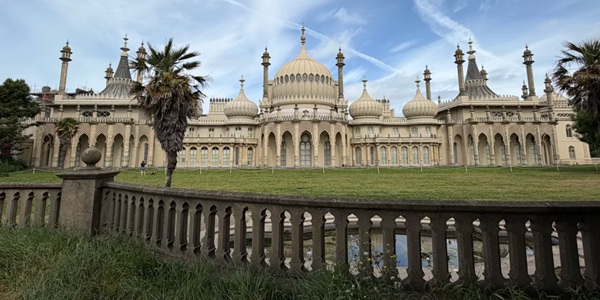
Brighton Royal Pavilion — George IV's seaside Oriental fantasy and Britain's most rebellious royal palace. In 1787, the then Prince of Wales, George, rented a modest fisherman's cottage by the Brighton shore; no one imagined it would evolve into a maritime palace blending Indian Mughal domes with Chinese Chinoiserie extravagance. Architect John Nash sketched an onion-domed, minaret-spiked skyline inspired by the Taj Mahal, while interior designers Frederick Crace and Robert Jones transformed the interiors into a One Thousand and One Nights dream with coiled-dragon chandeliers, hand-painted Chinese wallpapers, and lotus-shaped crystal lights. During WWI, it became a hospital for Indian wounded soldiers, its 600 beds hosting one of the empire's most moving cross-cultural chapters. Today, attracting over 400,000 visitors annually, it remains Brighton's undisputed spiritual landmark.

1787
Year Established
1823
Nash Renovation Completed
400K+
Annual Visitors
£19.50
Adult Ticket (ref.)
Brighton Royal Pavilion Indo-Chinese Oriental palace exterior and gardens
Brighton Royal Pavilion
White onion domes and minarets sketch a dreamlike skyline beside the English Channel; the Banqueting Room's coiled-dragon chandelier weighs one ton; the Music Room's lotus dome gleams with hand-painted gold; the garden lawns form Brighton's most poetic green heart

Brighton Royal Pavilion In-Depth Tour

From Indian Mughal domes to Chinese-style luxurious interiors, from the Regent's pleasure palace to a WWI Indian military hospital — step into Britain's most extraordinary royal building

Duration
Half day to 1 day (can extend to a 2-day Brighton trip)
Main Destinations
State Rooms, Banqueting Room, Music Room, Long Gallery, King's Bedroom, Gardens, Tearoom
Best For
Architecture lovers, history buffs, royal enthusiasts, photographers, cultural travellers
Budget per Person
£19.50-£40 (ticket + afternoon tea)
01
Oriental Palace Exploration
State Rooms Entrance · Banqueting Room Dragon Chandelier · Music Room Lotus Dome · Long Gallery · King's Bedroom · Gardens · Tearoom
Highlights

A 10-15 minute walk from Brighton station brings you to the city centre, where the Royal Pavilion's white domes soon appear against the blue sky — a hybrid of the Taj Mahal and a Russian palace, yet touched with English garden elegance. Arrive half an hour after opening for the smallest crowds; explore the interiors before the gardens. Step through the main entrance into the Regency-style grand foyer, where bamboo-patterned banisters and blue-tiled fireplaces create a strong Chinese atmosphere. Next is the Banqueting Room — the palace's most breathtaking space: a giant coiled dragon sprawls across the ceiling, its silver claws gripping a one-ton crystal chandelier (gasolier), hand-painted Chinese wallpapers cover the walls, and replica 1820s dessert porcelain rests on long tables. Then enter the Music Room, its ceiling painted as a blooming lotus flower, trompe-l'œil bamboo columns encircling the space, while hand-painted Chinese genre scenes cover the walls. The Long Gallery's stained-glass ceiling and hanging lanterns guide you through the palace. Upstairs, the King's Bedroom displays Chinese export wallpaper returned by Queen Victoria, restoring its former glory. Finally, stroll the gardens — Britain's only fully restored Regency-period landscape — where lawns spread like carpets at the palace's feet, and organically grown hydrangeas and dahlias bloom among the borders. End your visit at the second-floor tearoom with a pot of Sussex tea and scones on the balcony overlooking the gardens.

Attractions
State Rooms & Entrance Hall
Pass through the Indo-Saracenic-style main gate designed by John Nash, entering an entrance hall where emerald-green and gold walls, bamboo-patterned banisters, and Chinese lacquer furniture instantly immerse you in the Regent's Oriental dream. The hall connects to the Saloon — a circular space serving as the core hub of the State Rooms sequence, its ceiling painted with botanical leaf patterns, gold leaf glittering in sunlight. To the left lies the Red Drawing Room; to the right, the path to the famous Banqueting Room. Between 1815-1823, Nash used hidden cast-iron frames to support large-span interiors, making this building both a Romantic masterpiece and a pioneer of industrial-era engineering.
Banqueting Room & Coiled-Dragon Chandelier
The most jaw-dropping space in the entire palace. Replica 1820s dessert course porcelain is laid out on long tables — in that era, dessert was served as a grand standalone course, not merely an afterthought. But the true star is the ceiling: a massive silver coiled dragon dives from the dome, its claws clutching a one-ton crystal chandelier, its scales glinting under the lights. Walls are covered in hand-painted Chinese wallpaper depicting pavilions, landscapes, and figures; the red-and-gold colour scheme creates an overwhelming sense of luxury. George IV hosted banquets here for over a hundred guests, with champagne flowing and bands playing in the corners — the pure embodiment of Regency hedonism.
Music Room & Long Gallery
The Music Room was George IV's private concert venue. Its dome is painted as a giant water lotus — petals unfolding layer by layer, golden stamens at the centre, as if a never-wilting lotus blooms above your head. Walls feature trompe-l'œil bamboo columns and hand-painted Chinese genre-scene wallpapers, with ladies strolling in gardens and scholars playing the qin, vivid and lifelike. Connected to the Music Room is the Long Gallery — a corridor linking the main State Rooms — boasting some of the finest stained-glass ceilings in Britain, with hanging Oriental-style lanterns casting colourful shadows in daylight. Once used by guests to socialise between banquet courses, it remains the most ceremonial section of the visitor route. Together, these spaces represent the pinnacle of European Chinoiserie art.
Royal Pavilion Gardens & Tearoom
A Regency-style landscape planned by John Nash in the 1820s, and the only fully restored Regency garden in Britain. Symmetrical lawns spread like green carpets at the palace's feet, while carefully selected exotic plants — hydrangeas (first introduced from China in 1789), dahlias, tiger lilies, chrysanthemums, and Chinese lantern plants — recreate the botanical illustrations found on the palace's Chinese wallpapers. The gardens follow strict organic principles; butterflies, bees, and birds thrive here, and summer sees open-air musical performances. The second-floor Tearoom features a sunny balcony overlooking the entire garden, serving Sussex blend tea, traditional sandwiches, scones with clotted cream and jam, and cakes — the perfect place to rest after touring the palace. Gardens are free; tearoom £8-15 per person.
Practical Information
Transport
  • From London Victoria/London Bridge: train ~50-75 min
  • From Brighton station to Pavilion: ~10-15 min walk
  • Pavilion located in centre of Pavilion Gardens, next to The Lanes
  • National Rail 2FOR1 ticket offer available with train travel
Tickets
  • Adult: £19.50 (online approx £17-18)
  • Child (5-18): £11.75
  • Family (1 adult + 4 children): £31.25
  • Family (2 adults + 4 children): £50.75
  • Brighton residents (BN1-3/BN41): £14.75
  • Under 5s: Free, disabled carer free
  • Audio guide included, multiple languages available
Travel Tips
  • Apr-Sep 9:30-17:45, Oct-Mar 10:00-17:15
  • Arrive half an hour after opening or after 3pm for fewer crowds
  • Online tickets require booking at least 1 day in advance
  • No flash photography indoors; gardens freely photogenic
  • Allow 1.5-2.5 hours for the visit

Must-Try Food Near the Royal Pavilion

Royal Pavilion Tearoom

A refined tearoom on the second floor of the palace with a sunny balcony overlooking the gardens. Serves locally blended Sussex tea, finger sandwiches, freshly baked scones with clotted cream and jam, and daily-changing cakes. Georgian-style interiors echo the palace atmosphere. £8-15 per person — ideal for a mid-visit break or afternoon tea. Apr-Sep 10:00-17:00, Oct-Mar 10:30-16:30.

Regency Restaurant

A 5-minute walk from the Pavilion, this seafront arches institution has operated for nearly 60 years since 1965. Its red sign is unmistakable, with floor-to-ceiling windows facing the beach and pier. Signature dishes include grilled lobster with garlic butter, grilled scallops, seafood risotto, and enormous seafood platters. Fresh ingredients, generous portions, and reasonable prices make it Brighton's most popular seafood restaurant. £25-40 per person; book window seats in advance.

Riddle & Finns (Champagne & Oyster Bar)

Founded in 2006 in The Lanes, this iconic Brighton seafood restaurant offers champagne paired with oysters — eight oysters served with different sauces (lemon, Mexican salsa, Bloody Mary, cream), freshly caught and sweetly succulent. Also features seafood platters, grilled lobster tails, and fine dining. Elegant and romantic atmosphere, perfect for a luxurious dinner after visiting the Pavilion. £30-50 per person.

Pavilion Gardens Cafe

An independent café next to the Pavilion Gardens, operating since 1941 and beloved by Brighton locals. Famous for daily-baked rock cakes — crisp outside, soft inside, rich butter aroma. Serves breakfast, salads, sandwiches, and afternoon tea. Outdoor seating sits beside the Pavilion Gardens lawn; enjoy coffee while watching pigeons stroll in the spring sun — a perfect way to experience local Brighton life. £6-12 per person.

Brighton Royal Pavilion Travel Tips
Best Time to Visit
  • Open year-round; avoid school holiday peaks (Jul-Aug very crowded)
  • Summer (Jun-Aug): Gardens in full bloom, frequent outdoor concerts
  • Winter (Nov-Feb): Warm interiors, special Christmas decorations
  • Overcast days actually suit exterior photography — domes look atmospheric under grey skies
Must-Try Foods
  • Pavilion Tearoom Sussex tea + scones
  • Regency Restaurant grilled lobster with garlic butter
  • Riddle & Finns champagne with oysters
  • Pavilion Gardens Cafe freshly baked rock cakes
  • Pier-side fish and chips + seagull dodging experience
Budget Reference
  • Adult ticket: £19.50 (online £17-18)
  • Audio guide: Included free with ticket
  • Afternoon tea: £8-15
  • Gardens: Free
  • Total: £19.50-40 (Pavilion + tea only)
FAQs
  • Can I take photos? → No flash indoors; gardens freely photogenic
  • Do I need to book? → Recommended to book online 1 day ahead; walk-ins may queue
  • Is there a Chinese audio guide? → Audio guide offers multiple languages including Chinese
  • Are the gardens free? → Yes, gardens are open free all day
  • Is it worth visiting? → One of Britain's most unique buildings — absolutely worth it

Explore More of Brighton