Shennongjia Forestry District Travel

Shennongjia Forestry District, Hubei Province – the roof of Central China, a World Natural Heritage site. Famous for its primeval forests, alpine wetlands, rare animals and plants, and the mysterious wild man legend. This 4-day 3-night in-depth tour includes ecological adventure, geological wonders, and folk custom experience.

3253
meters (The highest peak in Central China)
91%
Forest coverage rate
4000+
Species of vascular plants
600+
Species of vertebrates
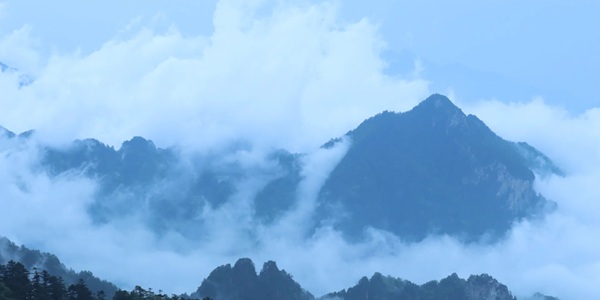
Sea of clouds landscape in Shennongjia primeval forest
Shennongjia Primeval Forest - The Roof of Central China
A World Natural Heritage site, China's first heritage site included in the "Triple Crown" list of UNESCO's Man and the Biosphere Reserve, Global Geopark, and World Heritage under three major conservation systems

4-Day 3-Night Primitive Ecological Adventure in Shennongjia Forestry District

Climb the roof of Central China, tour alpine wetlands, admire geological wonders, pay homage to the ancestor Yan Di, and explore the mysterious veil of the green miracle at 31°N latitude

Trip Duration
4 Days 3 Nights
Main Destinations
Shennongding, Dajiuhu, Tianshengqiao, Shennongtan, Guanmenshan
Suitable For
Outdoor enthusiasts, nature explorers, photography lovers, family with kids
Per Capita Budget
¥1200-¥1800
01
The Roof of Central China
Shennongding · Fengjingya · Jinhouling
Itinerary Highlights

After arriving at Shennongjia Forestry District, head to Shennongding Scenic Area to climb the roof of Central China, visit scenic spots such as Fengjingya and Jinhouling, and check in to a hotel in Muyu Town in the evening.

Attraction Arrangement
Shennongding Scenic Area
The core scenic area of Shennongjia, with an altitude of 3105.4 meters, known as "the roof of Central China", featuring primeval forests, alpine meadows, sea of clouds and other natural landscapes.
Fengjingya (Scenic Ridge)
The best viewing spot in Shennongding Scenic Area, at an altitude of 2950 meters, offering a bird's-eye view of deep valleys and the magnificent scenery of rolling sea of clouds.
Jinhouling (Golden Monkey Ridge)
The main habitat of golden snub-nosed monkeys, with dense primeval forests and crisscross waterfalls and streams, an ideal place to observe the activities of golden snub-nosed monkeys.
Practical Information
Accommodation Recommendations
  • Muyu Town Hotels
  • Shennongding Villa
  • Featured Homestays
Food Recommendations
  • Shennongjia Wild Vegetables
  • Wild Fungus Stewed Local Chicken
  • Alpine Potatoes
  • Wild Honey
Travel Tips
  • Keep warm due to high altitude
  • Prepare non-slip hiking shoes
  • No smoking in the scenic area
02
Alpine Wetland
Dajiuhu · Wetland Ecology · Morning Mist Scenery
Itinerary Highlights

Go to Dajiuhu National Wetland Park in the early morning to watch the morning mist, tour the nine alpine lakes throughout the day, experience wetland ecology, and take photos of natural scenery.

Attraction Arrangement
Dajiuhu National Wetland Park
One of China's most beautiful alpine wetlands, composed of nine lakes of varying sizes, at an altitude of 1700 meters, known as "Wetland among clouds, Nine Lakes in heaven".
Wetland Observation Deck
The best viewing spot in Dajiuhu, equipped with high-power telescopes and bird illustrated books, where you can observe dozens of rare bird species, an ideal place for bird photography.
Sika Deer Garden
A featured scenic spot in Dajiuhu, where you can observe sika deer up close and learn about wetland ecosystem and animal protection.
Practical Information
Transportation Guide
  • 30 minutes by bus from Muyu Town to Dajiuhu
  • Sightseeing cars and cruise ships available in the park
  • It is recommended to reserve the whole day
Ticket Information
  • Wetland Park: Free
  • Sightseeing Car: ¥30
  • Cruise Ship: ¥50
Travel Tips
  • Keep quiet when bird watching
  • Prepare sun protection and mosquito repellent in summer
  • Best lotus viewing period: June-August
03
Geological Wonders
Tianshengqiao · Guanmenshan · Folk Custom Experience
Itinerary Highlights

Visit Tianshengqiao Scenic Area in the morning to admire the waterfall wonders, visit Guanmenshan Natural Museum in the afternoon, and experience Tujia folk culture.

Attraction Arrangement
Tianshengqiao Scenic Area
Centered on the Tianshengqiao geological wonder, waterfalls gush out from the rock walls, forming a unique landscape of "a waterfall on the bridge, and a bridge under the waterfall".
Guanmenshan Scenic Area
A group of natural ecology museums, including Geological Museum, Biological Museum, Scientific Expedition Museum, etc., an excellent place to learn about the natural history of Shennongjia.
Tianshengqiao Waterfall
The waterfall plunges down from the Tianshengqiao cave, with a drop of tens of meters, roaring water sound and misty air, presenting a spectacular scenery.
Practical Information
Experience Projects
  • Tujia Song and Dance Performances
  • Folk Craft Experience
  • Natural Science Popularization Education
  • Hiking Adventure
Featured Activities
  • Waterfall Photography
  • Folk Culture Experience
  • Nature Observation
  • Geological Investigation
Travel Tips
  • Be careful of slipping in the waterfall area
  • The museum provides professional explanation
  • Folk performances have fixed schedules
04
Cultural Tracing
Shennongtan · Xiangxiyuan · Return Trip
Itinerary Highlights

Pay homage to the ancestor Yan Di at Shennongtan in the morning, visit the source of Xiangxi River, and learn about the legend of Shennong tasting hundreds of herbs. Buy local specialties in the afternoon and end the trip.

Attraction Arrangement
Shennongtan Scenic Area
Built to commemorate Yan Di (Shennong), including Shennong Altar, Millennium Cedar King, Twenty-Four Solar Terms Garden, etc., a sacred place for worshipping the ancestor of the Chinese nation.
Xiangxiyuan (Xiangxi Source)
The source of Xiangxi River, a tributary of the Yangtze River, with clear water quality. According to legend, Wang Zhaojun once washed yarn here, leaving behind the legend of Zhaojun.
Millennium Cedar King
A millennium-old Keteleeria davidiana in Shennongtan, with a tree age of more than 1200 years, a height of 48 meters and a chest diameter of 2.8 meters, known as the "King of Trees in Shennongjia".
Practical Information
Specialty Recommendations
  • Shennongjia Hundred-Flower Honey
  • Wild Rock Fungus
  • Shennong Tea
  • Chinese Medicinal Materials
Return Trip Guide
  • 30 minutes' drive from Shennongjia Station
  • Specialty stores provide cold chain mailing
  • Last bus departs at 18:30
Cultural Tips
  • Keep solemn at Shennong Altar
  • Do not carve on ancient trees
  • Protect water source environment

Must-Try Foods in Shennongjia Forestry District

Wild Fungus Stewed Local Chicken

Selected wild fungi and free-range local chickens are stewed slowly. The soup is mellow and nutritious, which is a classic nourishing dish in Shennongjia mountain areas.

Shennongjia Wild Vegetables

Various wild vegetables picked from primeval forests, natural and pollution-free, with fresh taste and unique mountain flavor.

Alpine Potatoes

Potatoes grown in high-altitude mountainous areas have large temperature difference between day and night, high starch content, soft and sweet taste, which is a popular farmhouse food.

Shennong Wild Honey

Honey brewed by wild bees collecting alpine flowers, pure natural, rich in nutrition, with strong floral fragrance.

Shennongjia Overall Travel Tips
Best Travel Season
  • Spring (April-May): Flowers bloom, pleasant temperature
  • Summer (June-August): Cool summer resort, lotus viewing
  • Autumn (September-October): Golden forest, sea of clouds viewing
  • Winter (November-March): Snow scenery, ice and snow landscape
Food Guide
  • Wild Fungus Stewed Local Chicken
  • Various Wild Vegetables
  • Alpine Potatoes
  • Wild Honey & Honey Drinks
Budget Reference
  • Total Scenic Tickets: ¥380-450
  • Accommodation: ¥200-380 per night
  • Catering: ¥100-160 per day
  • Transportation: ¥120-200
  • Total Budget: ¥1200-1800 per person
Common Q&A
  • Is altitude sickness easy to occur? → The altitude is moderate, most people will not have altitude sickness
  • Can wild monkeys be fed? → Feeding wild animals is strictly prohibited
  • Do I need to book tickets in advance? → It is recommended to book tickets on official platforms in peak seasons
  • What to prepare for mountain climbing? → Hiking shoes, warm clothes, sunscreen and drinking water