Fengyang County Tourism, Chuzhou City, Anhui Province
Fengyang County, Chuzhou City, Anhui Province – the birthplace of Ming culture and the hometown of China's rural reform, known as the "hometown of emperors, flower drum dance, and reform". It integrates Ming Dynasty imperial mausoleums, karst landforms, reform culture and folk art, featuring iconic attractions such as Ming Huang Mausoleum, Wolf Lane Valley, and Xiaogang Village. Experience a full day of historical culture and reform spirit.
One-Day Cultural and Reform Tour of Fengyang County
Ming Huang Mausoleum Culture, Wolf Lane Valley Wonders, Xiaogang Village Reform, Jiushan Cave Scenery
Visit Ming Huang Mausoleum in the morning to learn about the imperial mausoleum culture of the Ming Dynasty and explore Wolf Lane Valley to admire karst landform wonders; tour Xiaogang Village in the afternoon to experience the birthplace of rural reform and visit Jiushan Cave to enjoy cave scenery; climb Fengyang Drum Tower in the evening to overlook the panoramic view of the county town.
- Buses in the county town can reach Fengyang Drum Tower
- Self-driving or chartered car is recommended to visit Ming Huang Mausoleum and Wolf Lane Valley
- Fengyang Bus Station has tourist special lines to various towns and townships
- Walking is required to visit inside the attractions
- Ming Huang Mausoleum: ¥50
- Wolf Lane Valley: ¥80
- Xiaogang Village: Free
- Jiushan Cave: ¥60
- Fengyang Drum Tower: ¥30
- Fengyang Stuffed Tofu
- Imperial Kitchen Sesame Oil
- Meishi Salted Goose
- Fengyang Vermicelli Sheet
- Xiaogang Village Grapes
Must-Try Foods in Fengyang County
Fengyang Stuffed Tofu
A traditional famous dish of Fengyang, said to be a royal dish of the Ming Dynasty. It is made by frying tofu stuffed with minced meat, crispy on the outside and tender on the inside, fresh and delicious, and is the most representative food of Fengyang.
Imperial Kitchen Sesame Oil
A specialty of Fengyang with a long history, pressed from high-quality sesame seeds using traditional crafts, rich in flavor and excellent in quality, making it an ideal condiment for cooking.
Meishi Salted Goose
A specialty food of Meishi Town, Fengyang, made from locally raised geese marinated and cooked in salt water, with tender meat, salty and delicious taste, and unique flavor.
Fengyang Vermicelli Sheet
A traditional snack of Fengyang, made from mung bean or sweet potato starch, crystal clear and smooth in taste, which can be eaten in various ways such as cold mixing and soup cooking.
- Spring (April-May): Pleasant climate, with blooming flowers in Wolf Lane Valley
- Autumn (September-November): Grapes ripen in Xiaogang Village, with beautiful scenery
- The cave is cool in summer, a great summer resort
- Avoid the rainy season, pay attention to safety on slippery mountain roads
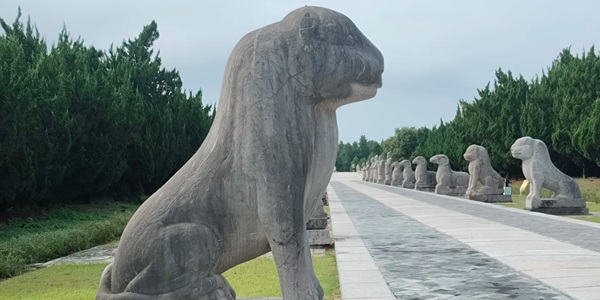
- Admire the exquisite stone carvings at Ming Huang Mausoleum and learn about Ming Dynasty mausoleum culture
- Explore the karst landform wonders in Wolf Lane Valley
- Visit the Household Contract Responsibility System Memorial Hall in Xiaogang Village and experience the reform spirit
- Appreciate the colorful stalactite landscapes in Jiushan Cave
- Climb high and look far at Fengyang Drum Tower to enjoy the panoramic view of the county town
- Tickets: About ¥100-220
- Catering: ¥60-130
- Transportation: ¥40-90
- Shopping: ¥50-150
- Total: ¥100-320
- What is the difference between Ming Huang Mausoleum and Ming Xiaoling Mausoleum? → Ming Huang Mausoleum was built by Zhu Yuanzhang for his parents, while Ming Xiaoling Mausoleum is Zhu Yuanzhang's own mausoleum
- Why is Wolf Lane Valley named so? → Because wild wolves once roamed here and the terrain is as complex as a maze
- What is the Xiaogang Village Household Contract Responsibility System? → In 1978, 18 rural households in Xiaogang Village implemented the "household contract responsibility system", initiating China's rural reform
- What specialties can I bring back from Fengyang? → Imperial Kitchen Sesame Oil, Fengyang Vermicelli Sheet, Xiaogang Village Grapes (seasonal)